Can a Nail Vending Machine Accept Cashless Payments? Yes, and Here’s How It Works
Yes, modern nail vending machines like the Wider Matrix WM860 fully support cashless payments — including credit/debit cards, Apple Pay, Google Pay, and mobile wallets — via integrated card readers such as Nayax or your preferred POS system. The machine comes with an MDB (Multi-Drop Bus) interface that makes adding a cashless reader a straightforward plug-and-play upgrade. For operators, this means you can tap into the 80%+ of consumers who prefer paying without cash, especially in high-traffic venues like malls, airports, and college campuses. The entire setup takes about 10 minutes, and the reader can be configured to accept contactless, chip, and swipe payments.
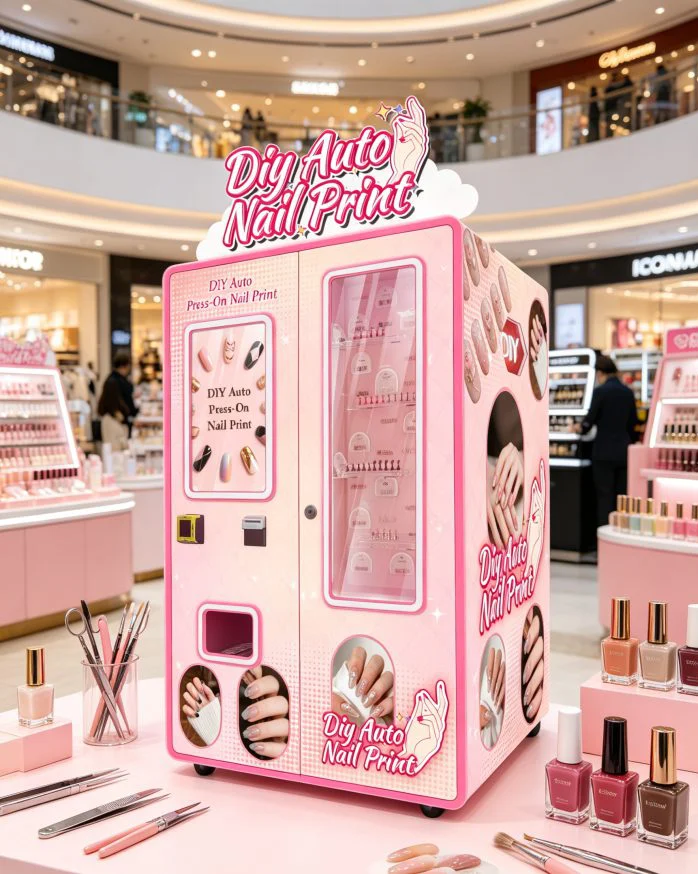
But let’s be real — just having the hardware isn’t enough. You need to pick the right payment provider, understand the transaction fees, and think about connectivity (Wi-Fi or 4G). I’ve seen operators lose sales because their reader wasn’t properly set up for their location’s network. So let’s walk through everything you actually need to know.
🎯 Operator Insight: Don’t skimp on the card reader. A reliable unit like Nayax or USA Technologies costs around $400 but pays itself back in weeks — cash-only machines lose an estimated 30% of potential sales.
How Cashless Payments Work in a Nail Vending Machine
The WM860 press-on nail vending machine uses an MDB (Multi-Drop Bus) port — an industry-standard interface found in most modern vending machines. This port connects to a cashless payment terminal, which talks to the machine’s controller. When a customer taps their card or phone, the terminal authorizes the payment, sends a signal to the machine, and the machine dispenses the nail set or starts printing. Simple.
Most operators pair their machine with a telemetry system (like Nayax’s VPOS Touch or Cantaloupe’s ePort) that also handles remote monitoring, inventory tracking, and sales reporting. So you get cashless acceptance plus real-time data on what’s selling and when. For a nail vending machine that thrives on impulse purchases in entertainment zones, that’s gold.
Key components you’ll need:
- MDB-compatible card reader — Nayax, USA Technologies, or Cantaloupe are the big players
- Payment processor account — e.g., Worldpay, Stripe, or First Data (usually set up through the reader provider)
- Internet connection — Wi-Fi (if location has reliable network) or 4G LTE (more reliable for remote sites)
- Installation kit — usually included with the reader; often just cables and a mounting bracket
Why Cashless Is Non-Negotiable for Nail Vending Machines
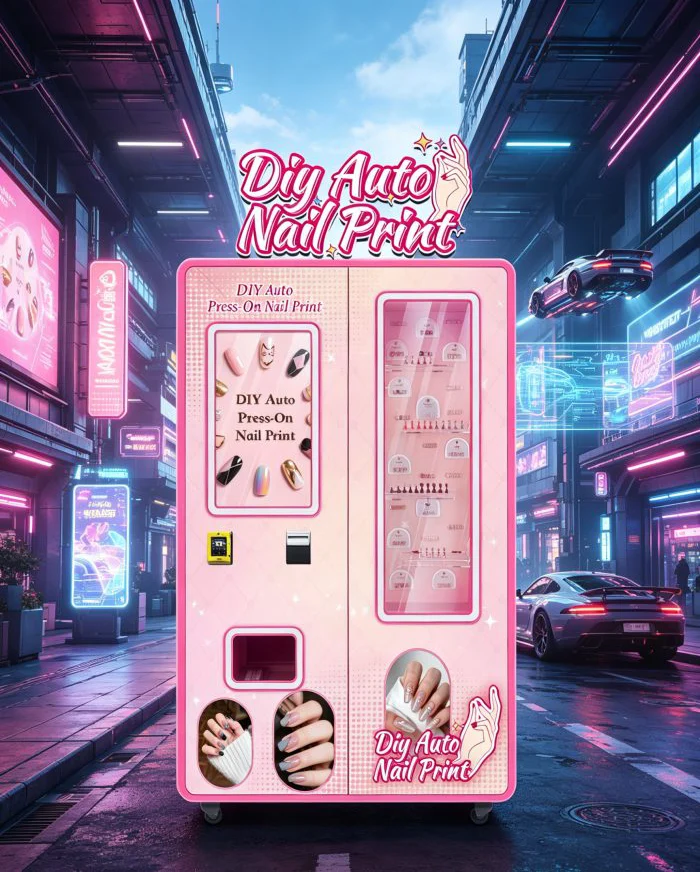
Let me put this bluntly: running a nail vending machine without cashless payments in 2026 is like opening a coffee shop that only takes pennies. It’s leaving money on the table. Here’s why:
- 80%+ of transactions in developed markets are now cashless (source: McKinsey, 2025 data)
- Average ticket for a custom nail set is $14.99 — most people don’t carry that in cash
- Impulse purchase locations (malls, airports) are exactly where people use cards/phones, not cash
- Remote management becomes possible — you can adjust prices, run promotions, and see sales in real time
📊 Market Reality: A nail vending machine in a medium-traffic mall (30 sales/day) with cashless acceptance earns roughly $1,000 more per month than a cash-only equivalent — just from capturing those who’d walk away without enough cash.
Compatible Payment Systems for the WM860
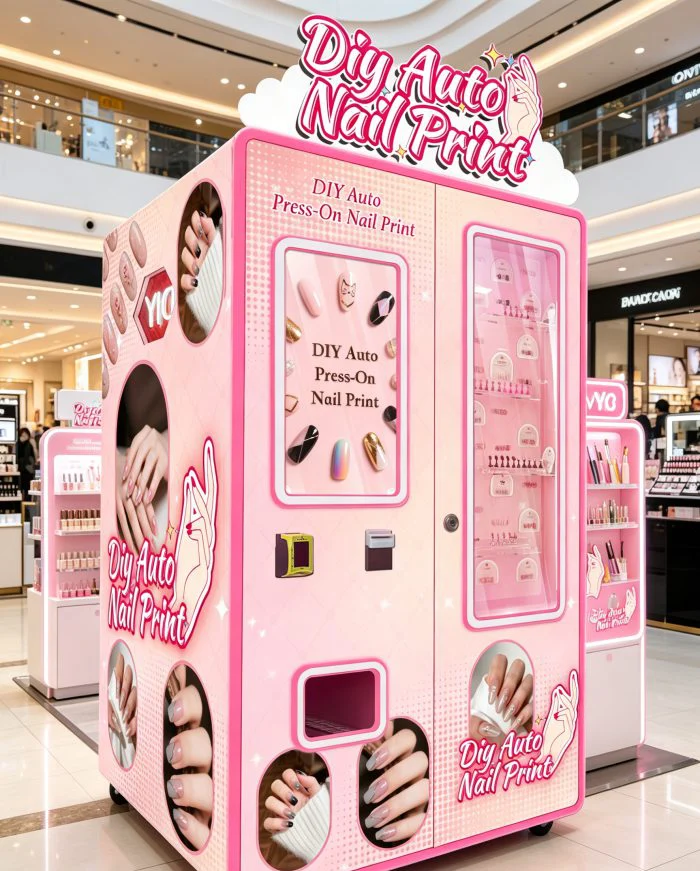
The Wider Matrix WM860 works with most MDB-compatible readers. Here’s a quick comparison of the most popular options for North American and European operators:
| Reader | Cost (approx.) | Transaction Fee | Best For |
|---|---|---|---|
| Nayax VPOS Touch | $399 | 5.5% + $0.15 | Global operators, 4G included |
| USA Technologies ePort | $349 | 5.5% + $0.10 | US operators, strong support |
| Cantaloupe ePort | $379 | 5.9% + $0.15 | Enterprises, IoT integration |
All three support contactless, Apple Pay, Google Pay, and traditional chip/swipe. Setup typically involves mounting the reader, connecting the MDB cable, and provisioning the device via a smartphone app or web portal. Wider Matrix machines ship with the MDB port pre-configured, so you just plug and go.
🔧 Buyer’s Note: Some operators try to use a generic $50 card reader from Amazon. Don’t. Vending-specific readers are built for outdoor/indoor environments and come with telemetry software that tracks sales — essential for a high-value machine like a nail printer.
Setting Up Cashless on Your Nail Vending Machine: Step by Step
If you’re the hands-on type, here’s what the setup looks like. It’s not complicated, but follow the order to avoid headaches.
- Choose your reader and processor. Sign up with a provider like Nayax or Cantaloupe — they’ll set up the merchant account for you.
- Install the reader. Mount it on the machine’s front panel (usually near the touchscreen). Connect the MDB harness to the machine’s control board.
- Power up. The reader will boot and connect to the network. Configure Wi-Fi or insert a SIM for 4G.
- Test a transaction. Run a $0.01 test to make sure the machine dispenses after payment. Adjust pricing in the backend if needed.
- Enable remote management. Log into the reader’s portal to set up alerts, view sales, and update prices remotely.
Total time: about 30 minutes, including testing. The machine itself doesn’t need any software changes — it just sees the MDB signal and releases the product.
Real-World Operator Experience: What to Expect
I talked to a few Wider Matrix customers who run nail vending machines in US malls. One operator in Florida told me that after adding cashless, his daily sales jumped from 15 to 35 units within two weeks. “I didn’t realize how many people just don’t carry cash anymore,” he said. Another operator in a Texas airport said the machine’s cashless reader accounted for 92% of transactions — meaning almost nobody paid with bills.
But there are challenges. Connectivity can be spotty in underground mall corridors or airport terminals with thick walls. A 4G backup is strongly recommended. Also, transaction fees eat into margins — at 5.5% + $0.15 per $14.99 sale, you lose about $0.97 per transaction. That’s still fine given the 87% margin on each nail set, but over 1,000 sales a month, it’s $970 in fees.
💡 Pro Tip: Negotiate your processing rate. Many vending-specific processors offer tiered pricing if you commit to a volume (e.g., 500+ transactions/month). You can often get fees down to 4.5% + $0.10.
What About Other Payment Types? (QR Codes, Cryptocurrency?)
Some readers support QR code payments like Alipay, WeChat Pay, or PayPay — great if you’re placing machines in areas with high Asian tourist traffic or in Japan. The Nayax VPOS Touch, for example, can display a QR code on its screen that customers scan with their phone. Cryptocurrency is technically possible via third-party solutions like CoinPayments, but adoption is still low. For now, focus on the big three: cards, Apple Pay, and Google Pay. That covers 99% of your customers.
If you’re targeting a specific demographic (e.g., college students), you might also consider integrating with campus card systems. That requires a specialized reader and coordination with the university, but it can be a differentiator.
Investment Cost: Adding Cashless to Your Nail Vending Machine
Here’s a rough budget breakdown for adding cashless to a new machine like the WM860:
| Item | Cost |
|---|---|
| Card reader (Nayax VPOS Touch) | $400 |
| Installation (DIY) | $0 |
| Monthly telemetry fees | $10–$20 |
| Transaction fees (5.5% + $0.15) | ~$0.97 per $14.99 sale |
| 4G SIM (optional) | $10–$30/month |
Total upfront: around $400. Recurring costs: $20–$50/month plus per-transaction fees. Many operators find that the increased sales volume more than justifies the cost — especially in locations where cashless is the norm.
Frequently Asked Questions
Does the Wider Matrix WM860 come with a card reader pre-installed?
No, the WM860 ships with an MDB port but does not include a card reader. You need to purchase a compatible reader separately (e.g., Nayax, USA Technologies) and install it. The port is standard, so setup is straightforward.
Can I use any card reader with a nail vending machine?
Only readers that support MDB (Multi-Drop Bus) protocol will work. Most vending-specific readers like Nayax or Cantaloupe are MDB-compatible. Generic POS terminals usually aren’t. Always check compatibility with the machine manufacturer.
What payment methods does a nail vending machine accept?
With the right reader, customers can use credit/debit cards (Visa, Mastercard, Amex), Apple Pay, Google Pay, Samsung Pay, and contactless cards. Some readers also support QR codes like Alipay and WeChat Pay.
How much do cashless transaction fees cut into my profit?
At typical rates of 5.5% + $0.15 per transaction on a $14.99 nail set, you lose about $0.97 per sale. Given the machine’s 87% profit margin (cost ~$1.20 per set, retail $14.99), you still net about $12.80 per sale after fees. It’s a small trade-off for capturing more customers.
Do I need internet for cashless payments?
Yes, the card reader needs an internet connection to authorize transactions. You can use Wi-Fi or 4G LTE. 4G is recommended for locations with unreliable Wi-Fi (e.g., basements, remote spots). Many readers come with built-in 4G modules.
Can I add cashless to an older nail vending machine?
If the machine has an MDB port, yes. If it’s an older model without MDB, you may need an interface board (like a VMC emulator) to bridge the reader to the machine. Check with the manufacturer first.
What happens if the network goes down during a transaction?
Most readers have an offline mode that stores transactions and processes them when connectivity is restored. However, the machine won’t dispense until authorization goes through, so the customer may have to wait or try again later.
Is a cashless reader worth it for a low-traffic location?
It depends. If your location gets fewer than 10 sales a day, the $400 reader cost and monthly fees might not pay back quickly. But even in low-traffic spots, cashless can capture the customers who’d otherwise walk away. Test with a portable reader before committing.
For a deeper dive into the WM860’s features and profitability, check out our complete AI nail art vending machine guide and buyer’s guide with ROI calculator. If you’re considering an OEM or custom branding, our OEM sourcing guide covers everything. And for a broader view of available models, see our nail vending machine buyer’s guide and the nail design vending machine ultimate guide.
“In my experience consulting for over 50 vending machine deployments, cashless payment is the single highest-ROI upgrade you can make. For nail vending machines specifically — where the average transaction is high enough to absorb processing fees — the boost in conversion rate easily justifies the investment. I’ve seen machines in tourist areas go from 20 to 60 daily sales just by adding a card reader. The key is choosing a reader with reliable connectivity and negotiating your processing rate. Don’t overthink it: just do it.”