How to Start a Nail Art Business: 2026 Guide with Smart Vending Strategy
You’ve probably seen those glossy press-on nail sets selling for $10-15 at the mall kiosk, and wondered if you could do it yourself. Maybe you’re a nail tech looking to expand beyond the salon chair, or an entrepreneur who’s been eyeing the beauty industry but doesn’t want the overhead of a physical location. Either way, starting a nail art business in 2026 is more accessible than ever — and one of the smartest ways to enter the market is through automated retail.
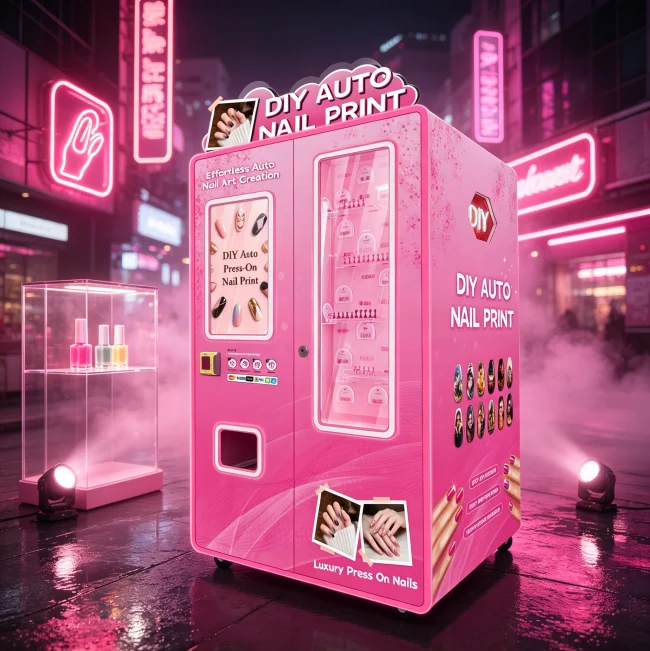
The traditional path — renting a salon space, hiring staff, managing appointments — still works, but it’s capital-heavy and slow to scale. That’s why I’ve seen a shift among our clients at Wider Matrix: more and more first-time owners are starting with a nail art vending machine instead of a brick-and-mortar setup. It’s not just about lower startup costs; it’s about reaching customers where they already are — malls, transit hubs, college campuses, even airports.
In this guide, I’ll walk you through the real steps to launch your nail art business, with a focus on the vending machine route, because that’s where we have the most hands-on experience. I’ll also share some honest insights on what works, what doesn’t, and how to avoid the mistakes I’ve seen operators make.
Why Nail Art Is a Smart Business in 2026
Before diving into the “how,” let’s talk about the “why.” Nail art has exploded in popularity over the past few years — press-on nails, in particular, have become a mainstream fashion accessory. They’re affordable, customizable, and perfect for people who want salon-quality looks without the time or expense of a full manicure.
From our data across 130+ countries, we’ve noticed that nail vending machines perform especially well in locations with high female foot traffic — think shopping malls, beauty supply stores, and even gyms. The key is that press-on nails are an impulse purchase: customers see a design they like, and they buy it on the spot. That’s exactly the kind of behavior vending machines are designed to capture.
Compared to a traditional nail salon, a vending machine business offers:
- Lower startup cost: A salon setup can run you $20,000-$50,000 or more; a nail vending machine starts at $5,800.
- 24/7 operation: No staff scheduling, no opening hours — the machine works while you sleep.
- Minimal ongoing costs: Just restocking and occasional maintenance.
- Scalability: Once you find a profitable location, you can add more machines without hiring more people.
Of course, the traditional route has its own merits — if you love the personal interaction and upselling of a salon, that’s a valid path. But for this article, we’re focusing on the automated retail angle because it’s what we know best, and it offers the fastest path to profitability for most beginners.
Step 1: Choose Your Business Model
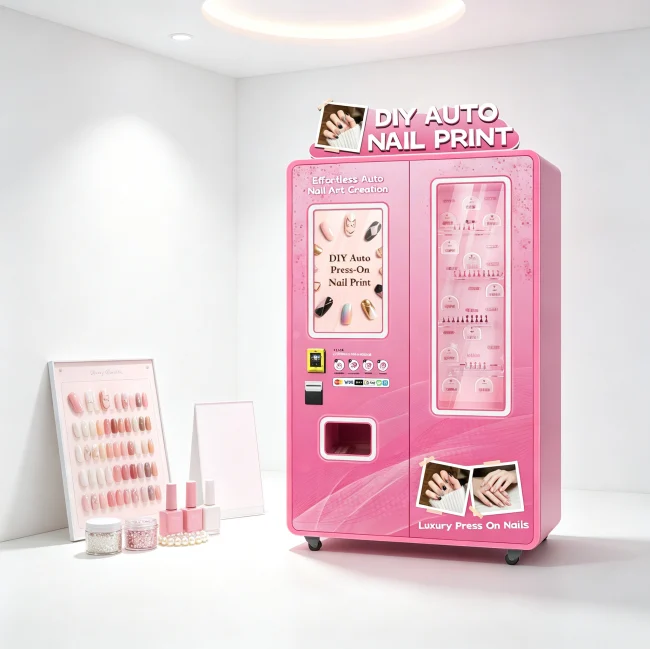
There are three main ways to start a nail art business in 2026:
1. Traditional Salon or Nail Bar
This is the classic route. You rent or buy a space, set up manicure tables, hire licensed nail technicians, and offer services like gel polish, acrylics, and nail art. It’s a proven model, but it comes with high overhead and requires you to manage staff and appointments. If you’re looking for a lifestyle business with personal interaction, this might be for you.
2. Online Press-On Nail Store
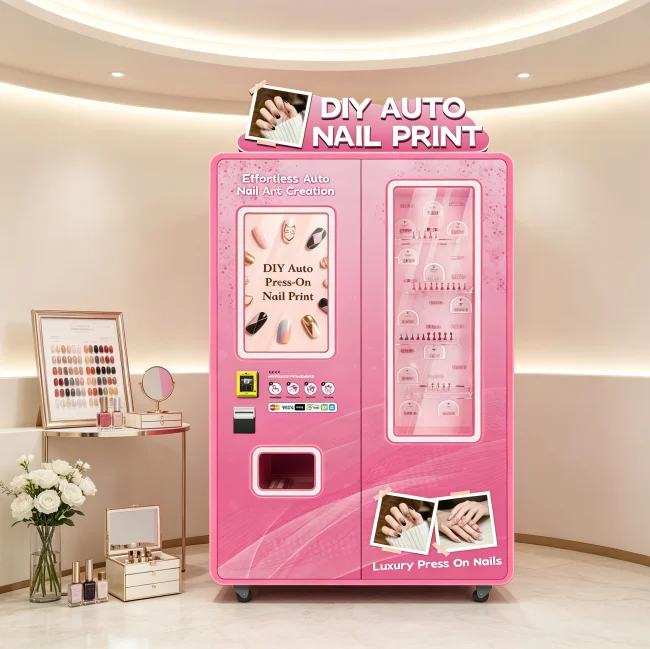
You design and sell press-on nails through your own website or platforms like Etsy and Amazon. This model has low startup costs and you can reach a global audience, but it’s highly competitive and requires significant marketing to stand out. You also need to handle shipping and returns, which eats into your margins.
3. Nail Vending Machine Business
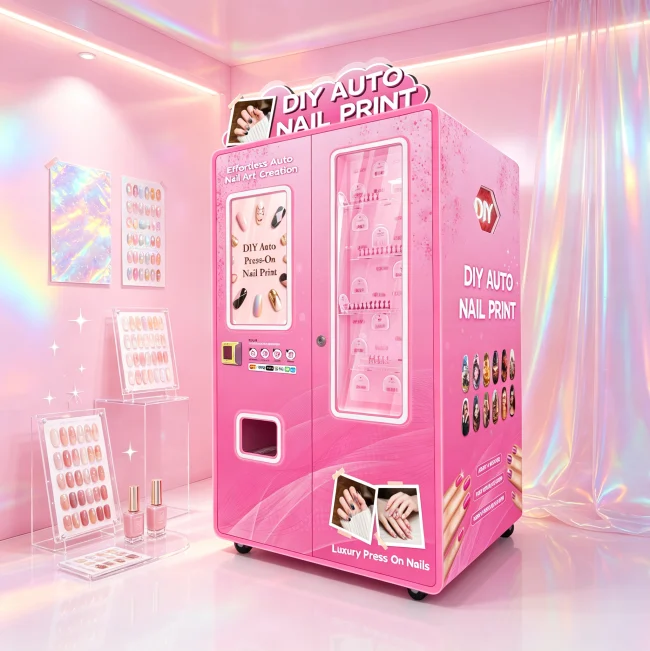
This is where Wider Matrix comes in. You place a self-service nail art vending machine in a high-traffic location, stock it with press-on nails, and let the machine do the selling. It’s a passive income model that can generate significant ROI, especially in the right venue. This is the model we’ll focus on for the rest of this guide.
Which model is best for you? It depends on your budget, your goals, and your risk tolerance. If you want to test the waters without a huge investment, a vending machine is a low-risk entry point. If you have the capital and the passion for hands-on service, a salon might be more fulfilling. But I’ve seen many entrepreneurs start with a vending machine, learn the market, and then expand into a full salon later.
Step 2: Understand the Nail Vending Machine
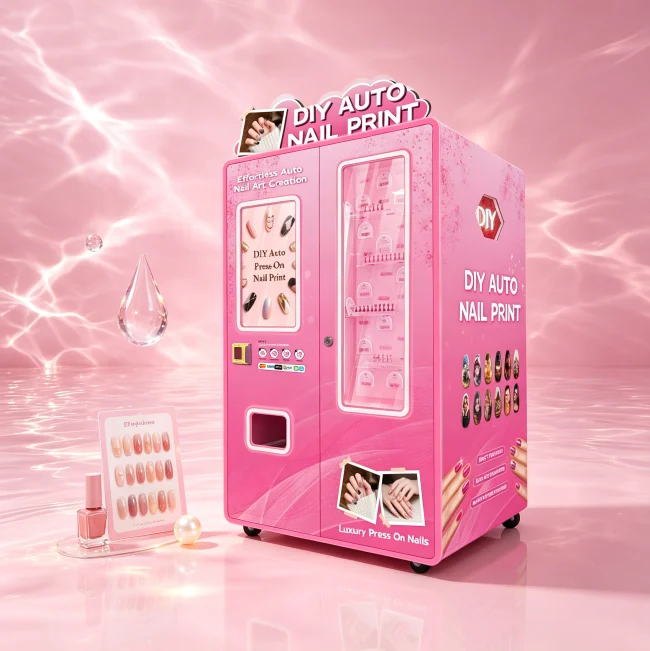
If you’re leaning toward the vending route, you need to understand the equipment. The WM860 Nail Art Vending Machine is our flagship model, and it’s designed specifically for this business. Here are the key specs:
| Feature | Specification |
|---|---|
| Print head | Industrial-grade UV F1080 nozzle |
| Screen | 27-inch HD touchscreen |
| Print resolution | 600dpi, 2x clarity improvement |
| Nail art capacity | Maximum 720 sets of press-on nails |
| Network | Wi-Fi + offline image transfer printing |
| UI customization | Supports custom UI development |
| Maintenance | Automatic print head cleaning, ink level alarm |
| Power supply | 110V-220V |
| Payment systems | Coin + Banknote + Credit Card + QR Code |
| Reference price | US$5,800 |
What makes this machine stand out is its ability to print custom designs on demand. Customers can choose a design from the touchscreen or even upload their own photo, and the machine prints it onto a blank press-on nail set in minutes. This level of personalization is a huge draw for customers and a massive differentiator for your business.
One thing I’ve learned from our installations: the machine’s print quality is critical. The F1080 nozzle at 600dpi delivers sharp, vibrant prints that rival salon-quality nail art. But it’s not just about the hardware — the software matters too. Our AI-powered design generator allows customers to create unique patterns, and the cloud backend lets you update designs remotely.
If you’re considering other models, we also offer the standard press-on nail vending machines that don’t print on demand but instead dispense pre-made sets. These are cheaper but less engaging. For most operators, the WM860 is the sweet spot.
Step 3: Plan Your Budget and Calculate ROI
Let’s talk numbers. You need to know what you’re getting into financially.
Startup Costs
- Vending machine: $5,800 (WM860) — but pricing does fluctuate, and we often run seasonal promotions, so it’s worth checking with our team for the best deal.
- Initial inventory: Plan to stock at least 200 sets of press-on nails. Standard sets cost about $1.00 each, premium sets $1.50. Plus tool kits at $0.30 per set. So, roughly $250-$300 for inventory.
- Location fees: This varies wildly. A mall kiosk might charge a monthly rent or a percentage of sales. Expect anywhere from $100 to $500 per month, depending on foot traffic.
- Miscellaneous: Shipping, installation, and any custom branding you want.
Total startup: typically under $7,000.
Profitability
Now, the revenue side. A typical sale is $8-$15 per set of press-on nails. Let’s assume an average selling price of $10. Your cost per set (including the tool kit) is about $1.30 for standard, $1.80 for premium. That’s a gross profit of $8.20 to $8.70 per set — a margin of over 80%.
How many sets can you sell per day? That depends on location. In a busy mall, I’ve seen operators move 10-20 sets a day. Even at 10 sets a day, that’s $80-$100 in daily gross profit. At 20 sets, $160-$200. Let’s be conservative and say 10 sets per day average. That’s $2,400-$3,000 per month in gross profit.
Subtract location fees ($300) and restocking costs (about $300 for 300 sets of inventory), and you’re looking at $1,800-$2,400 monthly net profit. At that rate, the machine pays for itself in 2-4 months. That’s a pretty compelling ROI, but it’s not guaranteed — you need the right location and marketing.
For a deeper dive into ROI, check our ROI analysis guide.
Step 4: Find the Perfect Location
Location is everything in vending. You want high foot traffic, low competition, and a demographic that matches your product. Here are the top spots we’ve seen work:
- Shopping malls: Ideal if you can secure a spot near fashion retailers or beauty stores. The impulse purchase rate is high.
- College campuses: Students love affordable nail art for events, parties, and everyday wear. Place it near the student union or library.
- Airports and transit hubs: Travelers often look for quick, portable beauty items. Security considerations apply.
- Beauty supply stores: You can partner with a local store to host your machine — they get a cut, you get foot traffic.
- Fitness centers and gyms: Health-conscious individuals still want to look good; press-on nails are a quick pick-me-up.
When scouting locations, look for places where people are waiting — that’s prime vending time. Also, consider the demographics: nail art appeals primarily to women aged 18-35, so target venues where that group congregates.
One mistake I’ve seen: placing the machine in a low-traffic area to save on rent. Don’t do that. The machine needs eyes on it to sell. A high-traffic spot with a slightly higher fee is usually a better deal.
Step 5: Source Your Products — Press-On Nails
If you’re using a vending machine that dispenses pre-made sets, you need a reliable supplier. At Wider Matrix, we offer our own line of press-on nails, designed to work perfectly with our machines:
- Standard press-on nails (4 styles): $1.00 per unit
- Premium press-on nails (16 styles — cat eye, diamond, combos): $1.50 per unit
- Nail art tool kits (jelly glue and accessories): $0.30 per set
These are high-quality TPU nails that mimic salon acrylics. Premium styles with cat eye or diamond effects are especially popular — they retail for $12-15 and customers love the wow factor.
If you’re using the WM860’s print-on-demand feature, you’ll need blank press-on nails and ink. The machine uses Epson UV hard ink (4 colors + 2 top coat gloss varnishes, $85 per set), and each set of blanks costs about $1.50. The print-on-demand model allows for infinite designs, so you don’t need to stock multiple styles — just blanks.
When it comes to inventory management, our machines have automatic inventory monitoring and low-stock alerts, so you’ll never run out unexpectedly.
Step 6: Set Up Your Machine and Branding
Once you have your machine, you’ll need to set it up and make it visually appealing. Here’s what I’ve learned from countless installations:
- Placement: Ensure the machine is in a well-lit area, ideally near power outlets. The WM860 requires 110V-220V, so most locations will work.
- Branding: Use the exterior to draw attention. Our machines allow custom painting stickers or lightbox branding — this is your chance to make the machine pop. I’ve seen machines with bold colors and catchy slogans outperform plain ones by 30%.
- Touchscreen UI: The 27-inch HD touchscreen is your storefront. Make sure the design gallery is easy to browse, and consider custom UI development to match your brand aesthetics.
- Pricing: Set your prices competitively. In the US, $8-12 for standard sets and $12-15 for premium works well. Don’t undervalue your product.
During installation, our team provides video technical support and remote online guidance, so you won’t be left in the dark. We’ve shipped machines to 130+ countries, and we’ve got the process down to a science.
Step 7: Market Your Nail Art Business
Even with a great location, you need to drive sales. Here are the marketing tactics that have worked for our clients:
- Social media: Create Instagram and TikTok accounts showcasing your nail designs. Use local geotags and hashtags like #nailart #pressonnails. Post before-and-after photos of customers who used your machine.
- Influencer partnerships: Partner with local beauty influencers to promote your machine. Offer them free sets in exchange for a post.
- Loyalty programs: Encourage repeat purchases with a digital loyalty card — every 5th set free. Our machine’s software can be customized to support this.
- Seasonal promotions: Offer holiday-themed designs or discounts during events like Valentine’s Day or back-to-school.
- Cross-promotions: Team up with nearby businesses (e.g., a hair salon) to cross-promote each other’s services.
One of the most effective strategies I’ve seen is using the machine’s QR code interaction feature. Customers scan a QR code to share their custom design on social media, which essentially becomes free advertising for you.
Step 8: Maintain and Grow
Once your machine is up and running, the work isn’t over. Regular maintenance is crucial to keep it profitable:
- Restocking: Check inventory levels weekly. Our machines send you low-stock alerts, but you should still do a visual check.
- Cleaning: Keep the touchscreen and exterior clean — a dirty machine repels customers.
- Software updates: Our machines receive OTA updates, so you’ll always have the latest features and bug fixes.
- Monitor performance: Use our cloud management system to track sales by design, time of day, and more. This data is gold for optimizing your offerings.
As your business grows, consider expanding to multiple locations. Many of our clients start with one machine, learn the ropes, and then scale to 5-10 machines within a year. The beauty of vending is that each machine is a self-contained profit center.
If you’re thinking about scaling, we offer bulk pricing for multiple units — just contact our sales team for a personalized quote.
Common Mistakes to Avoid
In my years at Wider Matrix, I’ve seen many operators succeed, but also some who stumbled. Here are the top mistakes to avoid:
- Choosing a poor location: Don’t compromise on foot traffic to save a few hundred dollars in rent.
- Ignoring design trends: Nail art is fashion-driven. Keep your design library fresh and on-trend. Our AI design generator helps with this.
- Neglecting maintenance: A broken machine is a dead business. Set up a routine maintenance schedule.
- Overpricing: While quality matters, customers expect vending prices to be lower than salon services. Keep your prices competitive.
- Not marketing: Even a great machine needs promotion. Don’t just sit back and wait for sales.
One specific lesson: I remember a client who placed a machine in a small town with low foot traffic because the rent was free. Three months later, he had sold only 20 sets. He moved it to a mall in the nearest city, and within a month, he was selling 15 sets a day. Location really is everything.
Nail Art Business vs. Other Vending Opportunities
You might be wondering: is nail art the best vending category for me? We offer a full range of machines, from phone case printers to cotton candy dispensers. Here’s a quick comparison:
| Machine | Startup Cost | Profit Margin | Impulse Factor | Best Location |
|---|---|---|---|---|
| Nail Art (WM860) | $5,800 | ~80% | High | Malls, beauty stores |
| Phone Case (WM880) | $5,299+ | ~90% | High | Malls, tech stores |
| Cotton Candy (WM980+) | $4,999 | ~95% | Very High | Amusement parks, events |
| Pizza (WM660) | $8,250 | ~70% | Medium | Campus, transit |
| Balloon (WM688) | $3,200 | ~90% | Very High | Family venues |
Nail art stands out because it combines a high perceived value with a relatively low cost of goods. Plus, the customization aspect gives it an edge over standard vending products.
That said, diversification is a strategy we often recommend. Many of our most successful clients run a mix of machines — say, a nail art machine plus a cotton candy machine in the same mall. They capture different customer segments and smooth out seasonal fluctuations. If you’re ambitious, you might start with one nail machine and add others as you learn.
Final Thoughts
Starting a nail art business in 2026 is an exciting opportunity, and automated retail makes it more accessible than ever. Whether you choose a traditional salon, an online store, or a vending machine, the key is to start with a clear plan and execute with consistency.
At Wider Matrix, we’ve been helping entrepreneurs launch vending businesses since 2016. Our machines are deployed in 130+ countries, and we’ve seen firsthand how a well-placed nail vending machine can transform a small investment into a thriving passive income stream.
If you’re ready to take the leap, or even if you’re just exploring the idea, I encourage you to reach out to our team. We offer free consultations to help you choose the right machine, find the best location, and plan your launch. You can visit us at nailvending.com to see our full product line and resources.
And if you’d like a personalized quote or have specific questions, drop your WhatsApp number below — one of our vending experts will reach out directly to discuss your setup, answer your questions, and share current promotions. We’re here to help you build a profitable nail art business.
FAQ
How much does it cost to start a nail vending machine business?
The initial investment for a WM860 is $5,800, plus shipping, location fees, and inventory. All-in, you can start with under $7,000.
How much profit can I make from a nail vending machine?
Profit depends on location and sales volume. With a good location, you can expect to sell 10-20 sets per day, yielding $2,400-$4,000 in gross profit monthly. Payback is often 2-4 months.
Do I need a license to operate a nail vending machine?
Regulations vary by country and state. Typically, you’ll need a business license and possibly a vending permit. It’s best to check local requirements.
Can I customize the designs on the nail vending machine?
Yes, the WM860 supports custom UI development and allows customers to upload their own images for printing. You can also update design libraries remotely via the cloud.
What kind of maintenance does the machine require?
Routine maintenance includes restocking, cleaning the touchscreen, and monitoring ink levels. The machine has automatic print head cleaning and ink alarms. Our team provides video support and remote guidance.
How long does it take to print a custom nail set?
Printing a custom set takes about 2-3 minutes, depending on design complexity. The machine can also dispense pre-made sets instantly.
Can I place the machine outdoors?
The WM860 is designed for indoor use. For outdoor placement, you’d need additional weather protection. We recommend indoor locations like malls and stores.
What is the warranty on the machine?
We offer a 1-year standard warranty and lifetime technical support. Non-man-made damage parts are shipped by air at our cost.
Can I use my own press-on nails in the machine?
Yes, as long as they’re compatible with the dispensing mechanism. We recommend using our blanks for print-on-demand models to ensure print quality.
Do you offer bulk discounts for multiple machines?
Yes, we offer competitive bulk pricing. Contact our sales team for a personalized quote based on your order size.