Nail Art Vending Machine Price 2026: Real Costs & Profit Insights
So you’re curious about what a nail art vending machine actually costs. Maybe you’ve seen one at a mall and wondered if it’s worth the investment. Let’s get straight to the point: the WM860, our industrial-grade UV nail art vending machine, has a single-unit reference price of US$5,800. But that number only tells half the story. The real question isn’t just the sticker price—it’s what that machine can earn back for you, and how the total cost breaks down when you factor in consumables, maintenance, and location.
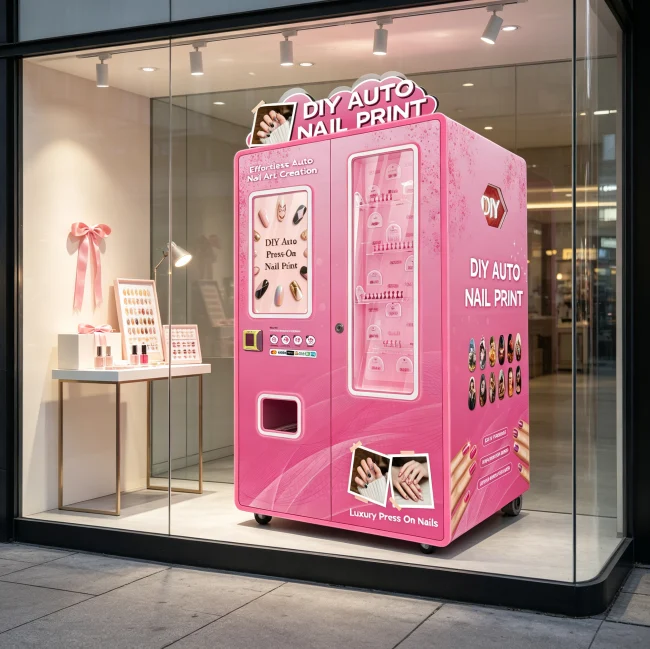
I’ve spent the past decade installing these machines across 130+ countries, and I can tell you: nail art vending is one of the most underrated automated retail categories. The margins are healthy, the product is impulse-friendly, and the machines are surprisingly reliable. But pricing—both the upfront cost and the ongoing expenses—is where most operators get confused. So let’s break it down.
What Exactly Are You Paying For?
When you look at a nail art vending machine price, you’re not just buying a box that spits out press-on nails. You’re investing in a complete system:
- Industrial UV printing technology — The WM860 uses an industrial-grade UV F1080 nozzle, the same print head technology used in high-end commercial printers. It delivers 600dpi resolution, which is 2x the clarity of typical consumer-grade printers.
- Touchscreen interface — A 27-inch HD touchscreen lets customers design their own nails or pick from pre-loaded styles. This isn’t a simple vending machine; it’s an interactive kiosk.
- Smart inventory and maintenance — Automatic print head cleaning cycles and ink level alarms mean you don’t have to babysit the machine. It also supports Wi-Fi and offline image transfer, so connectivity isn’t a hurdle.
- Payment flexibility — Coin, banknote, credit card, and QR code options (you choose the configuration).
That US$5,800 reference price includes all of that. But pricing does fluctuate throughout the year, and we frequently run seasonal promotions — worth checking with our team for what’s available right now.
The Real Cost Breakdown: Upfront vs. Consumables
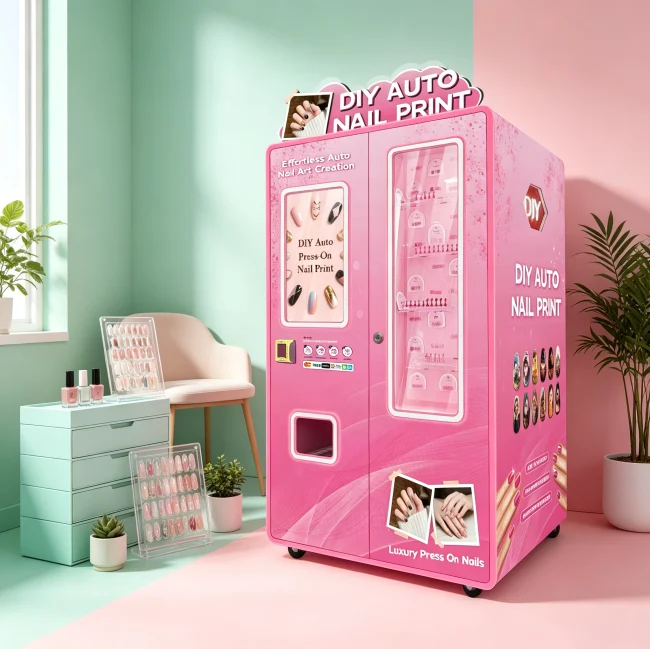
Here’s where most buyers get tripped up. They see the machine price and think that’s the whole investment. In reality, you need to factor in the consumables that keep the business running.
Machine Cost
As mentioned, the WM860 is US$5,800 per unit. That’s the reference price, and many of our clients end up with a better deal after we understand their specific setup and volume needs. For orders of multiple units, contact our team for a personalized quote with volume discounts.
Consumable Costs
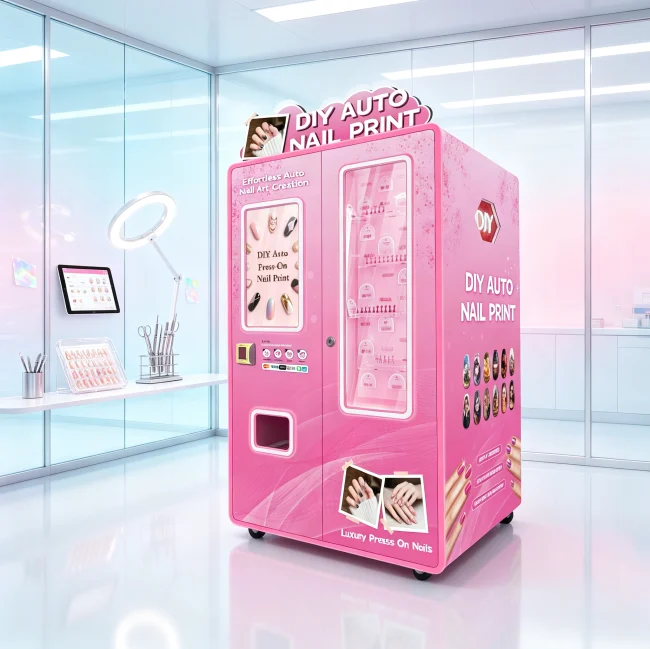
| Item | Cost per Unit |
|---|---|
| Press-on nails (standard, 4 styles) | US$1.00 per set |
| Press-on nails (premium, 16 styles: cat eye, diamond, etc.) | US$1.50 per set |
| Nail art tool kit (jelly glue, accessories) | US$0.30 per set |
| Ink set (4 colors + 2 top coats, 250ml per bottle) | US$85 per set |
So, for a standard set of nails with a tool kit, your cost is about $1.30. For premium nails with a tool kit, it’s about $1.80. If you retail these at $8–15 per set (which is common in malls and salons), you’re looking at gross margins of 80% or more.
ROI: How Long Until You Break Even?
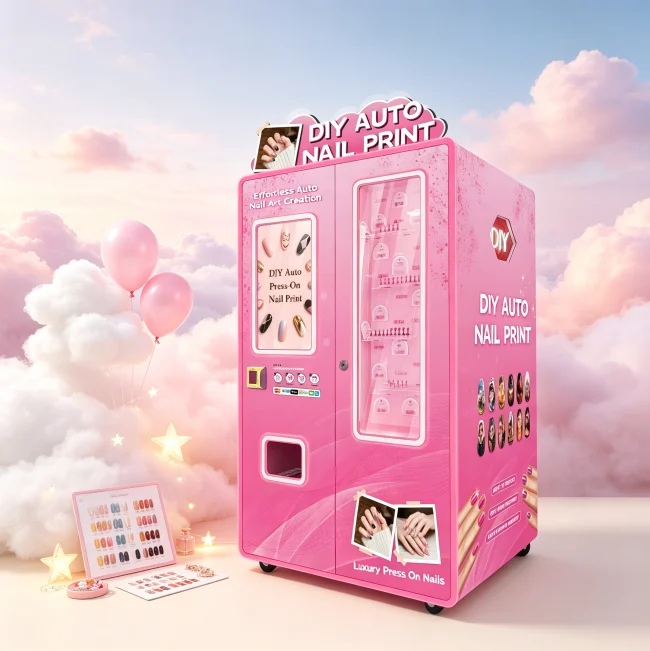
Let’s run some realistic numbers. Suppose you place the machine in a mid-traffic mall or a busy salon. Average sales might be 15–25 sets per day. On the low end, that’s 15 sets × $10 average retail = $150 daily revenue. Subtract your cost per set (~$1.50) and you’re left with roughly $127 daily gross profit.
That means the machine pays for itself in about 46 days—even if you only sell 15 sets a day. If you hit 25 sets daily, payback drops to under a month. And keep in mind, the machine holds up to 720 sets per refill, so you won’t be restocking every day.
Of course, location is everything. A high-traffic spot near a movie theater or a college campus will see much higher volume. In our experience deploying these units, operators who place them near nail salons or beauty supply stores see a natural synergy—customers who are already in the mindset of getting their nails done.
Why Nail Art Vending Works: A Look at Consumer Behavior
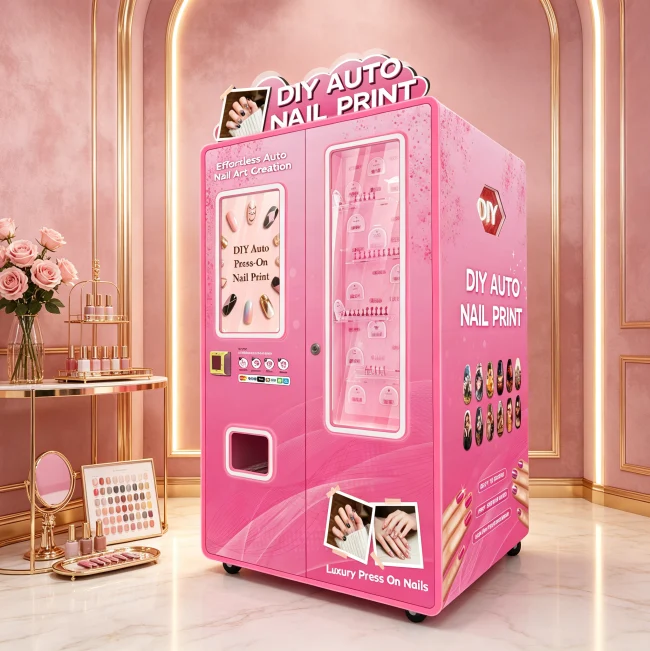
I remember a client in Tokyo who installed five WM860 units in a chain of beauty stores. Their main concern? Print quality on curved nail surfaces. Our F1080 nozzle at 600dpi handled it beautifully, but we had to adjust the dispensing mechanism for their preferred thicker gel-type press-on nails. Once that was sorted, they saw that customers loved the customization aspect—they could design their own nails on the spot, which gave the machine a ‘wow’ factor that drove repeat visits.
Another operator in the UK placed a single unit in a shopping center’s food court. Within three months, she was averaging 30 sales per day during weekends. The key insight? Nail art is an impulse purchase. When someone sees a friend getting custom nails, they want them too. The machine’s interactive screen makes the experience fun and shareable, which is free marketing.
Comparing Models: Is There a Cheaper Option?
If you’re on a tight budget, you might be tempted to look at smaller or generic nail printers. But here’s the honest truth: those cheaper machines often use lower-quality print heads, have limited capacity, and lack the IoT backend that makes remote monitoring possible. In the long run, you’ll spend more on maintenance and missed sales.
Our WM860 is positioned as the mid-to-high tier solution. For a first-time operator, it’s the sweet spot—it’s not the most expensive machine in our lineup (that would be the pizza vending machine at $8,250+), but it’s built to last and offers the features that actually matter: print quality, capacity, and reliability.
What About Other Costs?
Don’t forget these additional expenses:
- Shipping and customs — Depending on your location, this can range from a few hundred to a couple thousand dollars. We can provide CIF quotes to make it easier.
- Installation and training — We offer video technical support and remote guidance, but if you need on-site installation, that’s an extra cost. Most operators do it themselves with our step-by-step videos.
- Maintenance — The machine is designed for low maintenance, but you’ll need to replace ink every 1,500–2,000 prints. That’s roughly $85 per set, which works out to about 4–5 cents per print.
Profitability: Real Data from the Field
Across our global deployments, we’ve seen nail art vending machines generate anywhere from $1,000 to $5,000 per month in gross profit, depending on location and pricing. A typical scenario: a mall kiosk with moderate foot traffic might sell 300–500 sets per month. At an average retail of $10, that’s $3,000–$5,000 in revenue. Subtract consumables (~$450–$750) and you’re looking at $2,500–$4,250 in monthly gross profit.
Of course, there are costs like electricity (minimal), location rent (varies hugely), and occasional maintenance. But the profit potential is real. For a deeper dive into profitability, check out our detailed analysis on nail vending machine ROI and profitability.
Is It the Right Machine for You?
Nail art vending isn’t for everyone. If you’re looking for a machine with ultra-low entry cost, a popcorn machine at $1,800 or a balloon machine at $3,200 might be better starting points. But if you want a product with high perceived value and strong margins, nail art is a solid choice.
One thing to watch: the press-on nail market is growing, but it’s still niche compared to phone cases or cotton candy. You need a location where your target audience—typically women aged 18–40—will see and use the machine. That said, once you find that spot, the machine can be a real cash cow.
What’s Included in the Price?
When you buy a WM860 from us, here’s what you get:
- 1-year standard warranty
- Lifetime technical support (we have a 24/7 engineering team across three shifts)
- Video technical support and remote online guidance
- Software updates included (OTA)
- Tools and spare parts included in the package
- Step-by-step guidance videos on YouTube
No hidden costs. And if you need custom UI branding or exterior customization, we offer full OEM/ODM services—just ask.
Key Takeaways
Let’s recap:
- Machine price: US$5,800 (reference price for WM860)
- Consumable cost per set: ~$1.30–$1.80
- Retail price: $8–15 per set
- Payback period: 1–2 months under normal traffic
- Capacity: 720 sets per refill
If you’re serious about automated retail, nail art is a compelling option. But don’t just take my word for it—do your own research, visit a mall where one is installed, and watch customer reactions. Then, when you’re ready to talk numbers, reach out.
Ready to get started? Visit us at nailvending.com to explore the full range of vending machines we offer. Or, if you want a personalized quote and a chat about your business plan, leave your WhatsApp number and our specialist will reach out with everything you need—pricing, specs, and placement advice. We’re here to help you make an informed decision.
FAQ
How much does a nail art vending machine cost?
The WM860 from Wider Matrix has a single-unit reference price of US$5,800. This includes the machine, but you’ll also need to budget for consumables like press-on nails and ink.
What is the profit margin on nail art vending?
Gross profit margins are typically 80-85% per sale, since your cost per set is around $1.30–$1.80 and retail prices range from $8 to $15. After location costs and other expenses, net margins are still attractive.
How many sets can a nail art vending machine hold?
The WM860 can hold up to 720 sets of press-on nails, which means you won’t need to refill it frequently—ideal for high-traffic locations.
Does the machine require internet to operate?
No. The WM860 supports Wi-Fi and offline image transfer printing, so it can work even without an internet connection. However, for remote monitoring and software updates, internet is recommended.
Can I customize the machine’s appearance or user interface?
Yes. We offer full OEM/ODM services, including custom UI development and exterior branding with stickers or lightboxes. This is a great way to match your brand or venue.
What after-sales support do you offer?
Every machine comes with a 1-year warranty, lifetime technical support, video guidance, and remote troubleshooting. We also have a dedicated engineering team available 24/7 across three shifts.
How long does it take to recoup my investment?
Based on our field data, most operators break even within 1-2 months under normal traffic conditions. High-traffic locations can see payback in as little as a few weeks.
Are there any hidden costs?
No hidden costs from us. Shipping and customs are extra, and you’ll need to purchase consumables, but we’re transparent about all pricing. For detailed specs and a personalized quote, contact us.