Nail Art Vending Machine Canada: The 2026 Operator Playbook
Six months ago, a mall operator in Mississauga called us with a problem. She had a WM860 sitting near a food court entrance, and it was doing okay — maybe 12 to 15 sets a day. Not bad. But not what she expected. Her location was solid, foot traffic was there, and the machine worked flawlessly. So what was going on? Turns out, half her customers didn’t realize they could customize their own nail designs on the touchscreen. They were just buying whatever was displayed in the carousel. Once we updated the UI prompts and added a short animated tutorial on the 27-inch screen, her daily volume jumped past 40 sets within three weeks. That’s the thing about the nail art vending machine business in Canada — the machine is often ready before the operator is.
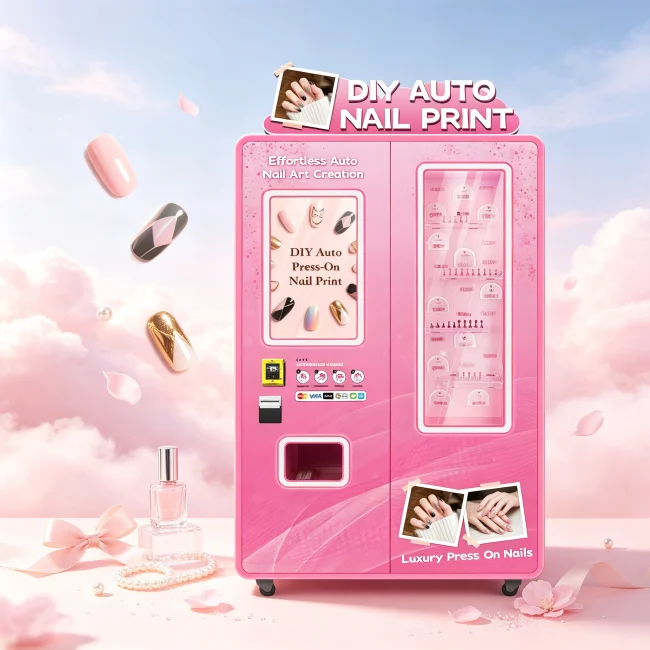
If you’re exploring a nail art vending machine in Canada — whether for a mall kiosk, a salon waiting area, a university campus, or an airport corridor — there’s a specific set of considerations that don’t always show up in generic guides. Canadian retail has its own rhythms, its own demographics, and honestly, its own quirks when it comes to what sells. Let’s walk through what actually matters.
Why Canada Is a Different Beast for Nail Art Vending
Canada’s population is concentrated in a handful of urban corridors — Toronto, Vancouver, Montreal, Calgary, and Ottawa account for the bulk of high-traffic retail real estate. That’s both good news and a challenge. Good news: if you land a spot in one of these metros, you’re tapping into dense foot traffic. Challenge: competition for those spots is real, and landlords want to know you’re not just another gimmick that’ll collect dust in six months.
What we’ve noticed from deployments across Canadian cities is that the demographic sweet spot for nail art vending skews younger than in, say, the U.S. Sunbelt. Think 16 to 34, with a strong secondary market among moms buying for tweens. That matters when you’re deciding on design catalogs and price points. We’ve seen $12 sets move faster than $8 sets in downtown Toronto — counterintuitive, but the perceived quality gap matters to that audience. If you want a deeper breakdown of the business model itself, this guide on what a nail art vending machine actually does covers the fundamentals well.
The WM860: What You’re Actually Working With
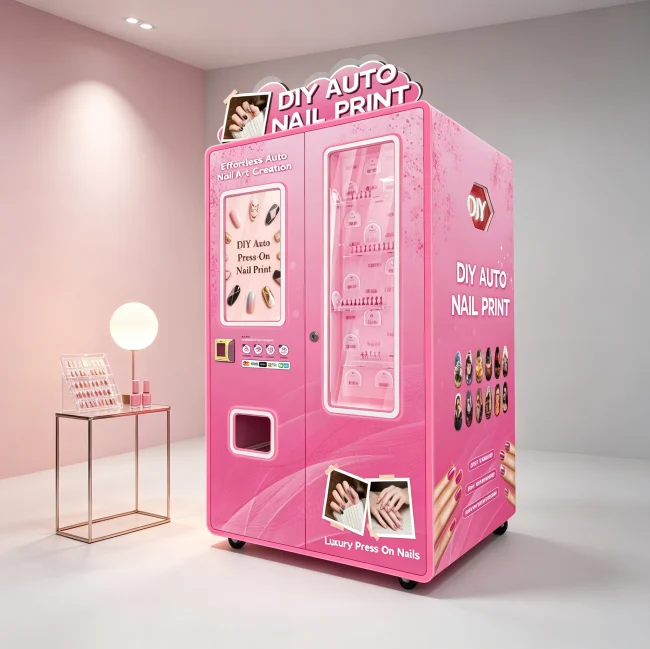
Our WM860 is the machine most Canadian operators start with. Here’s the spec rundown, and I’ll be straight with you about what matters in the Canadian context:
| Specification | Detail |
|---|---|
| Print head | Industrial-grade UV F1080 nozzle |
| Screen | 27-inch HD touchscreen |
| Print resolution | 600dpi, 2x clarity improvement |
| Nail art capacity | Maximum 720 sets of press-on nails |
| Network | Wi-Fi + offline image transfer printing (no internet required) |
| Maintenance | Automatic print head cleaning cycle, ink level alarm |
| Power supply | 110V-220V |
| Payment systems | Coin + Banknote + Credit Card + QR Code (selectable configuration) |
| Reference price | US$5,800 per unit |
That offline image transfer feature? It’s more important in Canada than people realize. Some mall locations have spotty Wi-Fi, especially in older buildings or underground concourses. The WM860 can handle design transfers without an internet connection, which means a dropped signal doesn’t kill your sales. We learned that lesson the hard way after a deployment in a Montreal underground city location where the Wi-Fi was… let’s just say unreliable. The offline mode saved that operator’s launch week.
On the pricing front — that US$5,800 is the single unit reference. We do run promotions throughout the year, and Canadian buyers often qualify for different shipping arrangements depending on province. Worth having a conversation with our team about what’s currently available, especially if you’re ordering before a seasonal push.
Consumables Math: Where the Real Margins Live
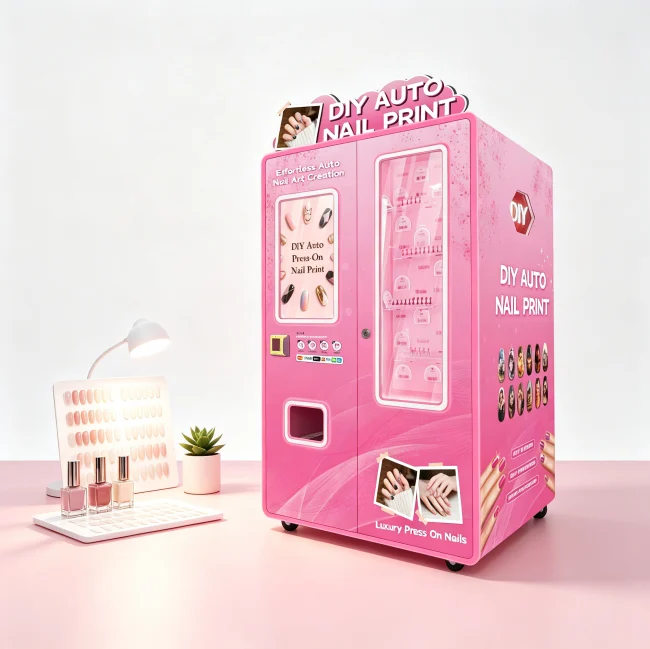
Let’s talk numbers, because this is where most new operators either get excited or get confused.
Standard press-on nails run about US$1.00 per unit. Premium ones — cat eye, diamond, or cat eye + diamond combos — run roughly US$1.50. Add a nail art tool kit at US$0.30 per set. So your all-in consumable cost per sale lands somewhere between US$1.30 and US$1.80.
Retail in Canada? We typically see operators pricing between CAD $12 and CAD $22, depending on location and design tier. A premium set at a downtown Vancouver mall can easily command CAD $20+. That’s a healthy margin by any measure.
The 720-set capacity is another factor people overlook. That’s not a number you’ll burn through in a week at most locations. It means fewer restocking trips, which matters if your machine is in a location that’s a pain to access during business hours. One operator in Halifax told us the 720 capacity was the single biggest reason she chose the WM860 over a cheaper alternative — she could go two full weeks between refills without worrying about stockouts.
If you want to run your own numbers with more detail, this cost and ROI analysis for 2026 breaks it down model by model.
Placement: The Variable That Makes or Breaks You
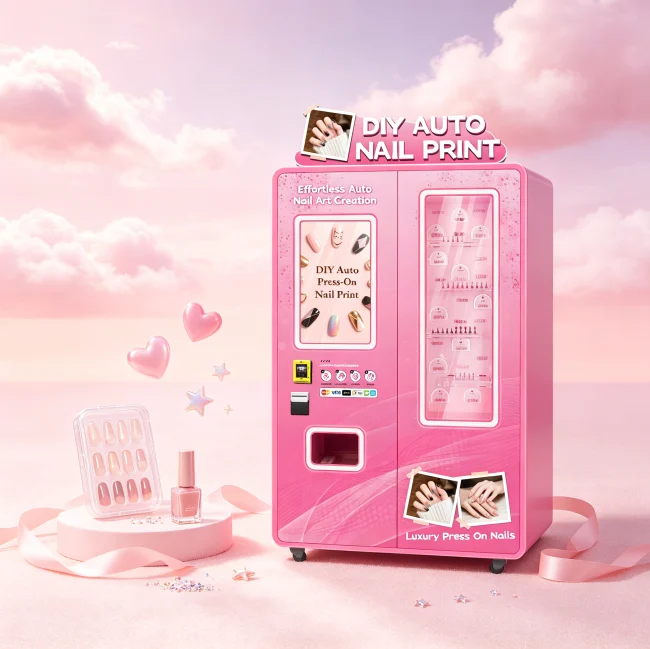
Here’s an uncomfortable truth: a great machine in a bad spot will underperform a mediocre machine in a great spot. Every time. We’ve seen it across 130+ countries, and Canada is no exception.
What works in Canada specifically:
- Malls with strong teen and young adult traffic. Suburban malls in the GTA and Greater Vancouver tend to outperform downtown locations for impulse nail art purchases, simply because the demographic concentration is higher. Our shopping mall placement guide goes deeper on this.
- University campuses and colleges. We’ve had strong results near student unions and library entrances. The 16-24 demographic is your core buyer, and campuses concentrate them in ways few other venues can match.
- Salon and spa waiting areas. Smaller volume, but higher conversion. People are already in a beauty mindset.
- Airport concourses. High traffic but higher rent. Works best with premium design catalogs and credit card payment enabled.
What doesn’t work as well: office building lobbies. We’ve tried it. The demographic skews older, and impulse beauty purchases just don’t happen at the same rate. If you’re considering a location, this data-driven placement blueprint is worth reading before you sign a lease.
A Real Deployment Story from Western Canada
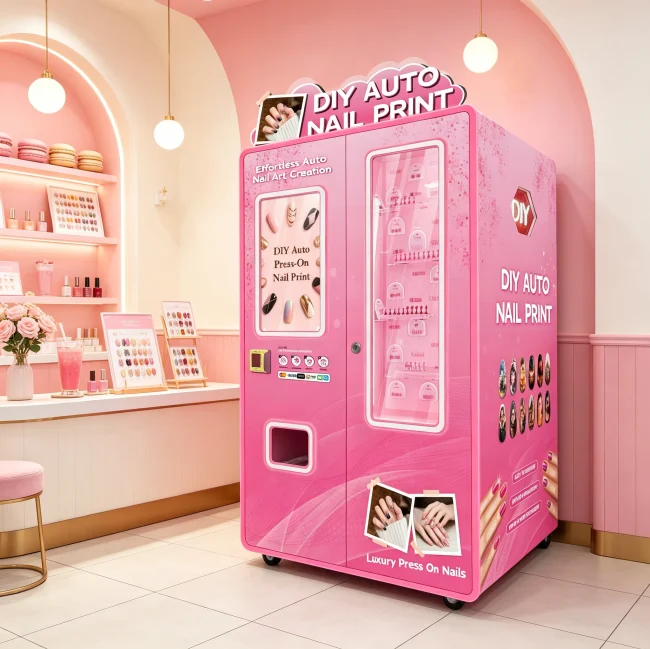
Last fall, we shipped three WM860 units to an operator in Calgary who was placing them across two malls and one community center. The community center placement was the wild card — she wasn’t sure it would work. But here’s what happened: the community center had a weekly youth program that brought in 200+ teens every Saturday. Those Saturdays alone accounted for nearly 40% of that machine’s monthly revenue. The lesson? Don’t dismiss non-traditional venues. Sometimes the traffic isn’t obvious until you see it in the data.
We helped her set up the cloud dashboard so she could track sales by day and hour across all three machines. Within a month, she realized the community center machine needed a premium-heavy inventory mix, while the mall machines sold more standard designs. That kind of granular insight is only possible with IoT monitoring, which comes standard on all our units.
What About Customization and Branding?
Canadian operators sometimes want to put their own brand on the machine — especially if they’re running a salon chain or a retail concept. We support full OEM/ODM customization: custom UI development, exterior sticker wraps, lightbox branding, and dedicated server deployment if you’re running a larger fleet.
One note: UI customization is more valuable than most people think. The default interface is clean and functional, but if you’re targeting a specific demographic — say, a French-speaking market in Quebec — localized UI can meaningfully improve conversion. We’ve done this for operators in Montreal and Quebec City with good results.
For those thinking bigger picture — AI-driven design generation, personalized recommendations, that sort of thing — our AI nail art vending machine guide covers what’s possible in 2026 and beyond.
Certifications and Compliance for Canada
Good news here: our machines carry CE, KC, PSE, and ISO 9001 certifications, and the 110V-220V power supply range means they work across Canadian electrical standards without modification. You won’t need a transformer or a custom electrical setup.
If you’re placing a machine in a food-adjacent area or a location with specific safety requirements, we can provide documentation to support your lease application. Landlords in Canada — especially in larger malls — often want to see certification paperwork before approving a vending installation. We’ve been through that process many times and can help streamline it.
The Competitive Landscape: What Else Is Out There
I’d be doing you a disservice if I pretended we’re the only option. There are other nail art vending machines on the market, and some of them are cheaper. But here’s what we consistently hear from operators who switch to us after trying a lower-cost alternative: the print head quality and reliability make a bigger difference than they expected.
Our F1080 nozzle handles 600dpi printing with a 2x clarity improvement over standard heads. On curved nail surfaces, that clarity is visible. Customers notice. And when customers notice, they come back. A machine that produces blurry or inconsistent prints will kill your repeat business faster than almost anything else.
That said — if your budget is tight and you’re testing a location for the first time, there’s nothing wrong with starting smaller. We’d rather you validate the concept than overcommit. Our buyer’s guide for 2026 walks through the decision framework.
Frequently Asked Questions
How much does a nail art vending machine cost in Canada?
The WM860 has a single unit reference price of US$5,800. Canadian buyers should factor in shipping, duties, and currency conversion. For multi-unit orders, contact our team for a personalized quote — we offer competitive bulk pricing and can often work with your specific setup.
Do I need a business license to operate a vending machine in Canada?
Requirements vary by province and municipality. Generally, you’ll need a business registration and possibly a vending permit from the property owner or municipality. We recommend checking with your local business authority — it’s usually a straightforward process.
How often do I need to restock the machine?
With a 720-set capacity, most operators restock every 10-14 days depending on traffic. The cloud dashboard sends low-stock alerts so you’re never caught off guard.
Can customers design their own nail art on the machine?
Absolutely. The 27-inch touchscreen lets customers browse designs, customize colors and patterns, and even upload their own images in some configurations. The AI design generator can also suggest combinations. For a full breakdown of how this works, check out our nail design vending machine guide.
What happens if the machine breaks down?
All machines come with a 1-year warranty and lifetime technical support. We provide video guidance and remote troubleshooting, and non-man-made damage parts are shipped by air at our cost. Our engineer team operates 24/7 across three shifts.
Is the nail art vending machine profitable in Canada?
With consumable costs around US$1.30-$1.80 per set and retail prices of CAD $12-$22, the margins are strong. Profitability depends heavily on location and traffic. We’ve seen operators hit payback in a few months at good locations, while slower spots take longer.
Does the machine require internet to work?
No. The WM860 supports offline image transfer printing. Wi-Fi is helpful for remote monitoring and software updates, but the machine will continue dispensing even without a connection.
Can I customize the machine’s exterior with my brand?
Yes. We offer custom painting sticker wraps, lightbox branding, and branded UI skins. Minimum order requirements and pricing depend on design complexity — reach out for a quote.
What I’d Tell a Friend Considering This
If you’re serious about launching a nail art vending machine in Canada, here’s the short version: the machine technology is mature, the margins are real, and the market is underserved in most Canadian cities. The variables that matter most are location and design catalog curation. Get those right, and the machine will do the rest.
We’ve deployed machines across 130+ countries since 2016, and Canada remains one of our strongest markets for nail art vending specifically. The demographics line up, the retail culture supports impulse beauty purchases, and the regulatory environment is manageable.
If you want to explore what’s possible — whether it’s a single unit or a multi-location fleet — head over to nailvending.com and take a look at the full product range. We also build phone case machines, puzzle machines, cotton candy, ice cream, popcorn, pizza, balloon, and protein shake vending machines, so if you’re thinking about diversifying across categories, we can support that too.
One last thing: pricing does fluctuate throughout the year, and we frequently run seasonal promotions tied to trade shows and year-end. The reference prices you see here are a starting point — many operators end up with a better arrangement once we understand their specific venue and volume needs. Drop your WhatsApp number below and one of our vending specialists will reach out with a personalized quote, detailed specs, and placement advice tailored to your Canadian market. No pressure, no hard sell — just a conversation about what makes sense for your situation.