You’re not just looking for a machine; you’re evaluating a business investment. The search for a “nail vending machine for sale” is driven by a clear commercial and problem-solving intent. As an entrepreneur, salon owner, or mall operator, you need to cut through the marketing to find a reliable partner and a profitable model. This 2026 buyer’s guide moves beyond basic specs to provide the actionable insights, comparative analysis, and operational mastery you need to make a confident purchase decision and build a successful business.
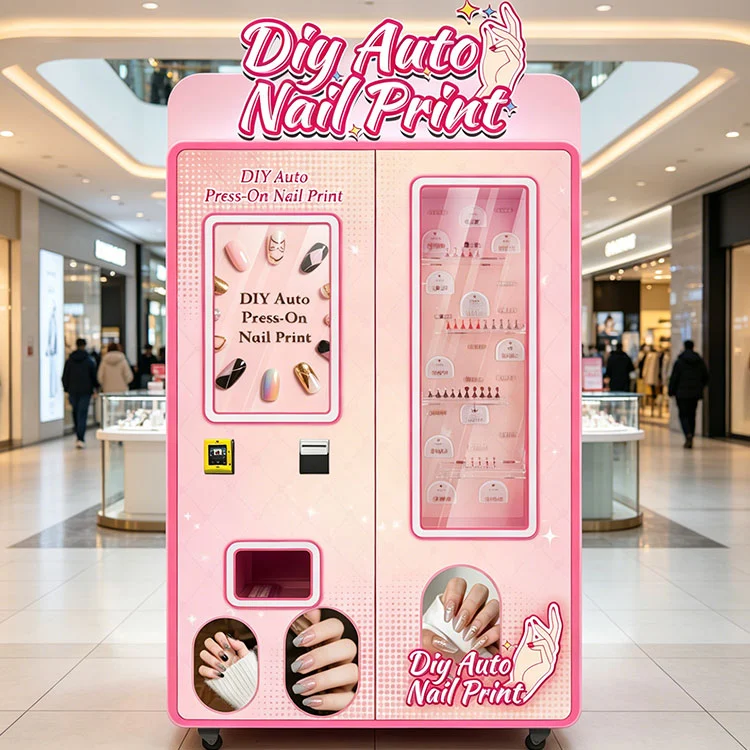
Before diving deep, here’s a quick comparison of leading models to help you narrow your focus.
| Model / Brand |
Key Feature |
Approx. Price Point |
Ideal For |
| Wider Matrix WM860
| AI Smart Recognition, 30-sec Print, 600DPI
| $5,800 (MSRP $8,980)
| High-traffic locations prioritizing speed, quality, and maximum uptime.
|
| Focus Vending / Competitor A
| Manual Alignment, 2-3 min Print
| $4,500 – $6,500
| Budget-conscious entry, accepting potential for more alignment errors and slower throughput.
|
| Generic Alibaba Models
| Basic UV Printing, Varying Quality
| $3,000 – $5,000
| Buyers comfortable with vetting suppliers deeply, managing inconsistent quality, and self-sourcing support.
|
Section 1: Understanding the Nail Vending Business Model
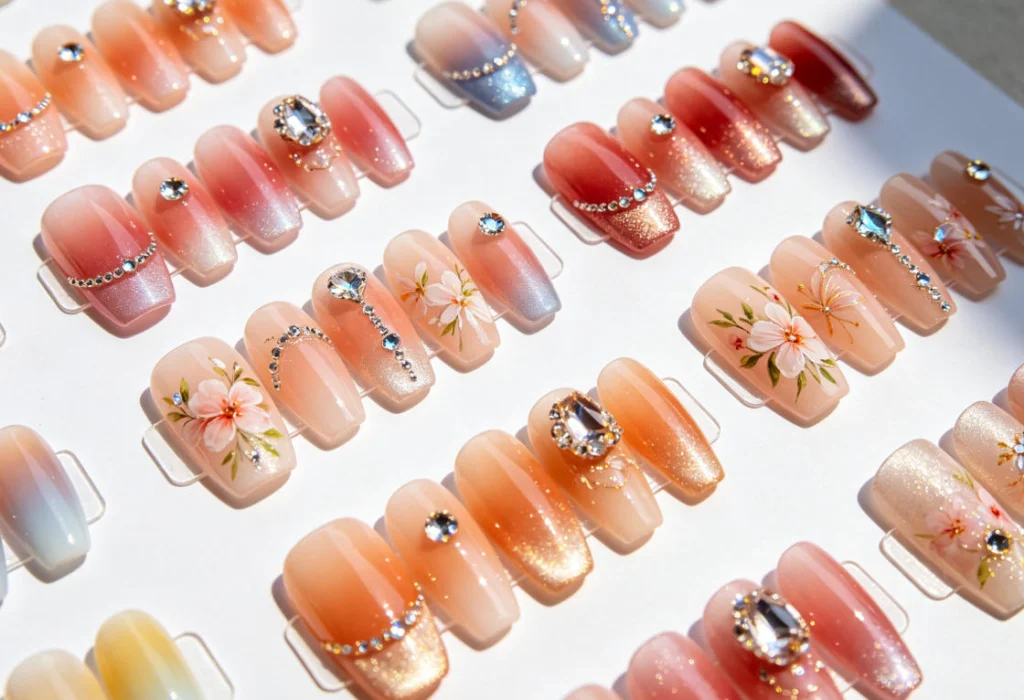
This isn’t just retail; it’s automated, high-margin manufacturing. Your revenue comes from selling custom, press-on nail sets. The allure is the exceptional unit economics.
Revenue Stream: A single sale at a suggested retail price of $14.99.
Cost Breakdown (Per Set):
Nail Set (Wholesale): $0.80 – $1.00
UV Ink: $0.017 (based on 5,000+ prints per cartridge set)
Tool Kit (Glue, etc.): $0.20
Total Production Cost: ~$1.017 – $1.217
Gross Profit Per Sale: ~$13.00+ (87% Margin)
Realistic ROI Timeline: With a well-placed machine averaging 20 sales per day, your initial investment can be recouped in about 31 days. Exceptional locations with 50+ daily sales can see payback in as little as 12 days.
Section 2: Key Features Deep Dive – Why Specs Matter
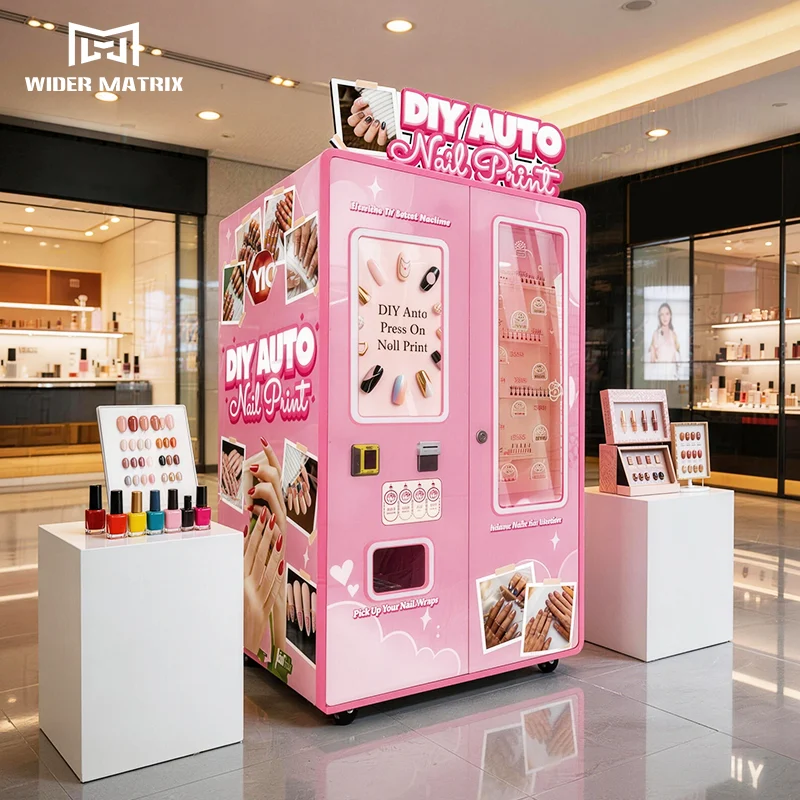
Not all “HD printing” is equal. Here’s what to scrutinize beyond the brochure.
AI Recognition vs. Manual Alignment: This is the single biggest differentiator in print quality and operator hassle. AI Smart Recognition (like in the WM860) automatically detects the nail box position, ensuring perfect alignment every time. Manual systems require frequent calibration, leading to misprints, wasted materials, and customer dissatisfaction.
Print Speed & Total Experience: Look at the complete customer cycle. A “30-second print” is meaningless if curing takes 3 minutes. Industrial-grade dual UV-LED systems cure instantly. The best machines complete the entire custom print-and-cure process in 30 seconds, with a total customer experience under 5 minutes. Slower machines create lines and lose sales.
Printhead Quality (DPI): 600DPI industrial UV printheads (as used in professional printing) deliver sharp, vibrant, salon-quality designs. Consumer-grade printheads (often 300-400 DPI) result in pixelated or blurry art, limiting your price point and repeat business.
Ink Efficiency & Cost: Ink is a recurring cost. High-efficiency systems can deliver 5,000+ nail sets from a single set of cartridges, keeping your cost per print near $0.017. Inferior systems may only yield 1,500-2,000 sets, tripling your operational expense.
Uptime & Remote Management: Your machine must work when you’re not there. Seek features like 24/7 Wi-Fi remote monitoring, real-time inventory/sales dashboards, and a self-healing system that performs automatic diagnostics and reboots to minimize downtime. Cloud infrastructure matters—platforms built on AWS offer superior stability.
Section 3: Top Models Reviewed & Compared
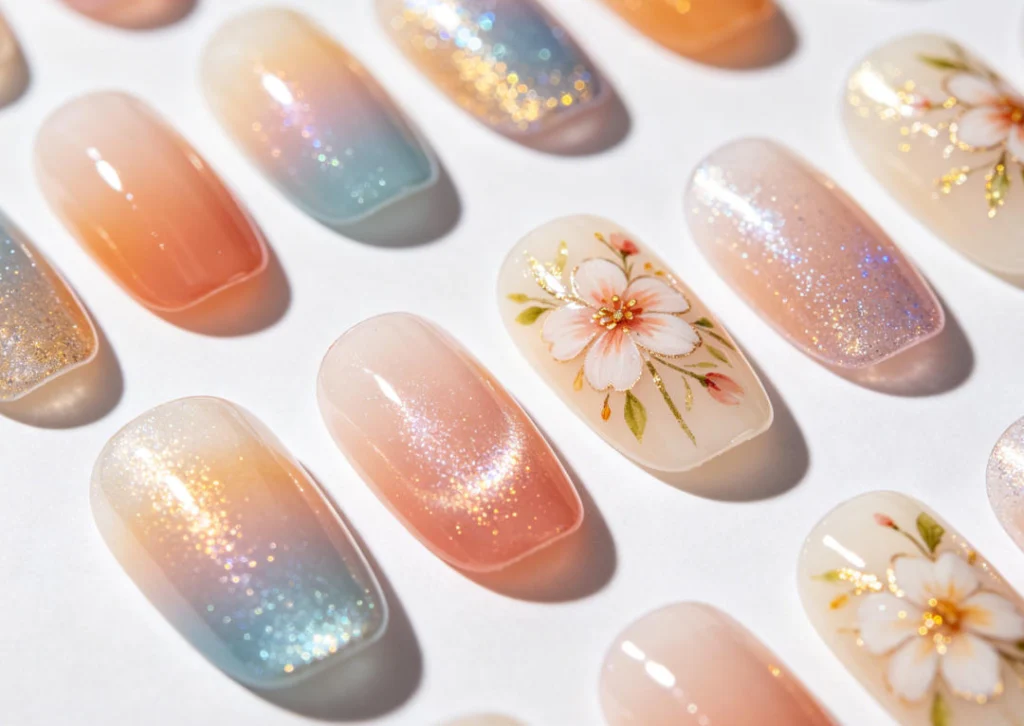
Here’s a detailed, unbiased look at the market leaders.
Wider Matrix WM860 DIY Auto Press-On Nail Print Vending Machine
Pros: Market-leading AI smart recognition eliminates alignment errors. 30-second express print & cure enables the highest possible throughput. 600DPI professional output justifies premium pricing. Exceptionally low ink cost and high cartridge yield. 720-nail capacity reduces refill frequency. Built on robust AWS cloud infrastructure for reliable remote management. Includes a 1-year warranty and lifetime technical support.
Cons: Higher initial investment than generic models, but justified by faster ROI through superior uptime and efficiency.
Ideal For: Serious operators targeting malls, airports, and major entertainment venues where reliability, speed, and premium quality are non-negotiable.
Competitor Analysis (Focus Vending & Generic Models):
Common Drawbacks: Most rely on manual or semi-automatic alignment, leading to consistency issues. Print and cure cycles are often 2-5 minutes, creating bottlenecks. Ink systems are generally less efficient. Remote management capabilities are often basic or non-existent.
Supplier Risk: Generic models from B2B platforms require extreme due diligence. Varying quality control, unclear warranty terms, and potential challenges with after-sales support are significant risks that can erase upfront savings.
Section 4: The Ultimate Purchasing Checklist
Use this list to vet any supplier.
[ ] Company Verification: Do they have a professional website, verifiable contact info, and years of industry presence? (Our team’s deep-rooted experience in automation since 2016 translates into mature product design).
[ ] Certifications: Are products certified to international safety and quality standards (CE, UKCA, RoHS, KC)? This is non-negotiable for public operation and insurance.
[ ] Transparent Pricing: Is the total cost (machine, shipping, duties, payment terminal) clearly outlined? For example, shipping to North America typically adds $900-$1,300.
[ ] Warranty & Support: What is covered (parts, labor, printheads)? Is 24/7 technical support explicitly stated? Beware of vague promises.
[ ] Payment & Logistics: Do they offer secure payment methods and handle export documentation? A global export footprint to over 130 countries indicates proven logistics capability.
[ ] Software Updates: Is the software updated regularly? Is there an ongoing fee for cloud services?
Section 5: Beyond Purchase: Your Operation Mastery Guide
This is the missing information most competitors don’t provide.
Location Sourcing & Negotiation: Don’t just think “high foot traffic.” Target dwell time: college student unions, large salon waiting areas, bowling alleys, family entertainment centers. Approach landlords with a professional proposal: offer 15-25% of gross sales as rent instead of a flat fee. This aligns interests and reduces your fixed cost.
Marketing to Drive Traffic: Use the machine’s own 27-inch HD touchscreen to loop engaging demo videos. Run opening-week promotions (e.g., “First 50 customers get 20% off”). Encourage social media sharing with a unique hashtag for your location.
Basic Maintenance & Troubleshooting: Schedule a weekly 10-minute visual check. Keep the screen clean and ensure the area is dust-free. Most common “errors” are solved by the machine’s self-healing reboot cycle. Always keep 2-3 spare nail cartridges and an ink set on hand to avoid stock-outs.
Frequently Asked Questions (FAQ)
Q: Can the machine print directly on natural nails?
A: No. These machines are designed for press-on nail sets. The process involves printing on a pre-fabricated plastic nail, which the customer then applies with adhesive. This is safer, faster, and more hygienic than direct-to-nail printing.
Q: What is the real monthly cost for nail polish and supplies?
A: It’s remarkably low. If you sell 20 sets per day (600/month), your monthly consumable cost is approximately: Nail Sets ($480-$600) + Ink (~$10.20) + Tool Kits ($120) = $610 – $730. This is against a gross revenue of ~$9,000, highlighting the high-profit margin.
Q: How do I handle machine servicing in another country?
A: Partner with a supplier that has a global support structure. For instance, we provide lifetime technical support with a 24/7 engineer team. For non-man-made damage, replacement parts are shipped by air at our cost, minimizing downtime. Comprehensive step-by-step guidance videos are also available.
Q: Are there any hidden fees after purchase?
A: Be sure to ask about cloud service fees. Some companies charge a monthly subscription after the first year. Our model includes the first year free, with an optional $99/year fee thereafter for continued advanced cloud management on AWS infrastructure.
Q: Is customization available for my business?
A: Reputable manufacturers specializing in custom software and hardware solutions can often accommodate requests for custom UI branding, specific payment integrations, or even dual-purpose configurations (e.g., nails and lashes in one unit). This is a key advantage of working with a technology-driven OEM over a generic reseller.
Finding the right nail vending machine is the first step in launching a profitable, passive income stream. By focusing on the total cost of ownership, operational reliability, and partner support—not just the sticker price—you invest in a business asset designed for long-term success. For a detailed proposal, including a customized ROI analysis for your target location, our technical advisors are ready to provide a 1-on-1 consultation.