Nail Vending Machine Lead Time: Complete 2026 Timeline Guide
Nail vending machine lead time typically ranges from 15 to 45 days depending on customization level, with standard models shipping in 15-25 days and fully customized units taking 35-45 days. For operators planning their launch timeline, understanding these variables can mean the difference between hitting a prime location opening date and losing a seasonal opportunity.

Let’s break down what actually goes into that lead time. It’s not just “waiting for a box to arrive” — there’s a whole chain of events happening behind the scenes.
What Actually Determines Your Nail Vending Machine Lead Time?
Standard Models vs. Custom Configurations
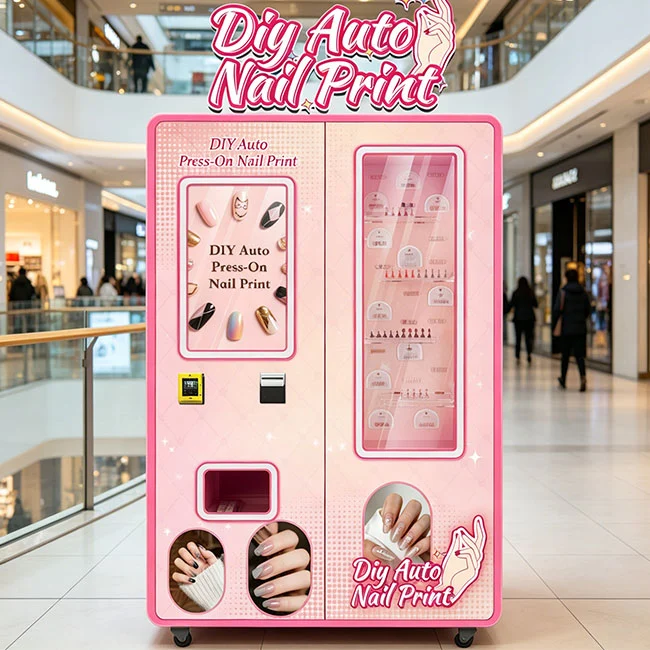
If you’re ordering a standard nail vending machine — say, a pre-configured WM860 with the default 48 nail styles and standard 27-inch touchscreen — your lead time sits on the shorter end. Most manufacturers keep a baseline inventory of these popular configurations.
Standard model lead time: 15-25 days
Custom configurations — like branded UI, specific color schemes, or modified inventory compartments — add time. Custom software integration, unique payment system setups, or specialized hardware modifications can push that timeline to 35-45 days.
Custom model lead time: 35-45 days
Production Capacity and Order Volume
Here’s something most buyers don’t consider: your order size directly impacts lead time. A single unit order moves through production differently than a 20-unit bulk order.
Order SizeEstimated Lead TimeNotes1-2 units (standard)15-25 daysUsually pulled from existing production runs or quick assembly1-2 units (custom)35-45 daysRequires dedicated engineering and software setup10-20 units (bulk)30-50 daysContainer shipping may add time but reduces per-unit cost20+ units (wholesale)45-60 daysManufacturing run scheduled specifically for your order
Shipping Time — The Hidden Variable
Production lead time is just half the equation. Shipping adds another layer. For North American buyers, sea freight from China takes about 25-35 days for standard shipping. Air freight is faster (5-10 days) but significantly more expensive.
So your total timeline looks like this:
Production (15-45 days) + Shipping (5-35 days) + Customs clearance (2-7 days) = Total lead time of 22-87 days
That’s a wide range. But here’s the thing — experienced operators plan for the upper end and celebrate when it arrives early.
💡 Smart Planning Tip: Always add 10-15 business days to the quoted lead time for customs and unexpected delays. This buffer prevents missed launch dates and lost revenue.
How Payment Terms Affect Your Timeline
This one surprises a lot of first-time buyers. Payment terms aren’t just about money — they’re time variables too.
Full upfront payment: Production starts immediately. No waiting.
Deposit-based payment (30-50% deposit): Production begins after the deposit clears, which can take 3-5 business days for international wire transfers. The remaining balance is due before shipment.
Letter of Credit (L/C): Common for large bulk orders, but the bank processing adds 5-10 days to the timeline.
If you’re in a hurry, full payment upfront is your fastest route. But always verify the manufacturer’s payment terms before placing your order — some quote lead times from payment receipt, not order placement.
The Customization Factor — Worth the Wait?
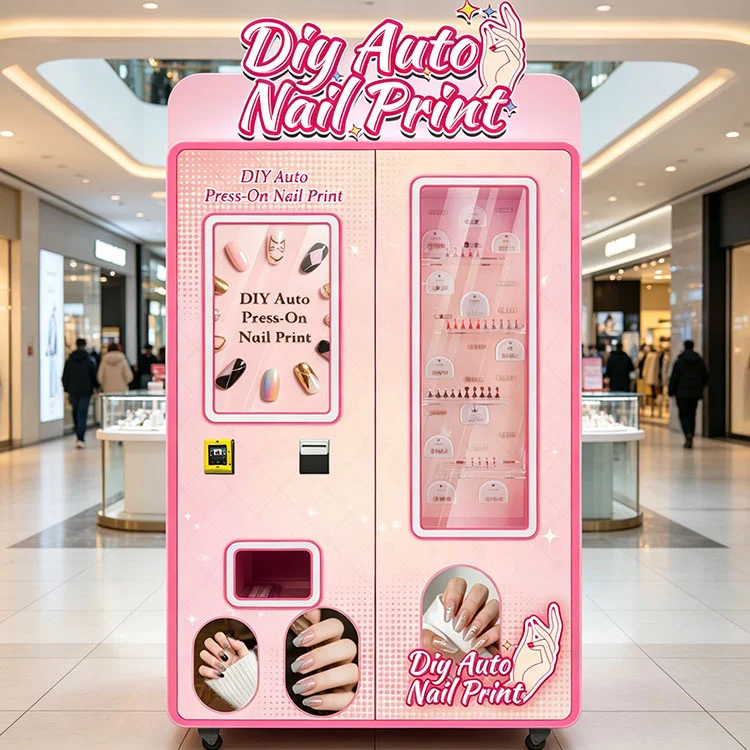
Customization is where things get interesting. A standard machine works fine, but a customized one can double your revenue potential.
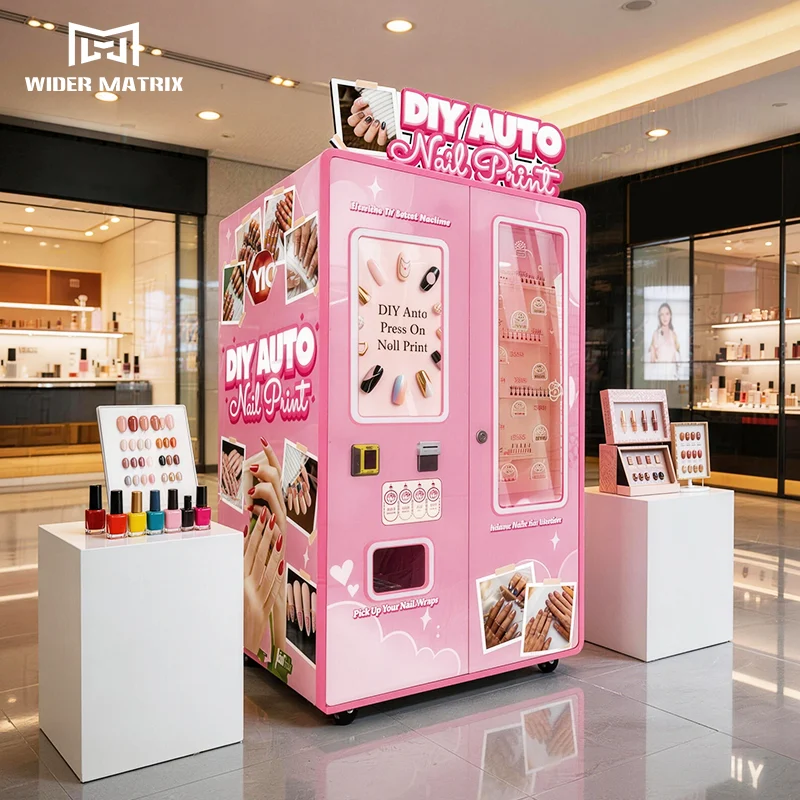
Think about it: branded machines attract more attention. Custom UI means your customers see your brand, not the manufacturer’s. Modified inventory layouts let you stock the nail styles that sell best in your specific location.
But customization takes time. Here’s what typically adds days:
- Custom UI/software development: 7-14 days
- Branded exterior design and printing: 5-10 days
- Modified hardware configuration: 10-20 days
- Additional payment system integration: 3-7 days
For most operators, the revenue boost from customization justifies the extra wait. A branded machine in a high-traffic mall can generate 20-30% more sales than a generic one, according to our operational data.
Supplier Reliability — The Real Wild Card

Here’s the honest truth: not all manufacturers deliver on their promises. Some quote 15-day lead times but deliver in 45. Others disappear after receiving payment.
This is where supplier vetting becomes critical. Over the past 8 years, we’ve seen countless operators lose money because they chose the cheapest option without verifying reliability.
What to look for:
- Established track record: How long has the manufacturer been in business? We started in 2016 and have shipped 3,000 machines to 130+ countries.
- Certifications: CE, UKCA, RoHS, KC — these aren’t just letters. They represent compliance with international safety and quality standards.
- Transparent communication: A reliable supplier provides regular production updates, photos, and video calls during manufacturing.
- After-sales support: What happens if something goes wrong? Our standard warranty covers 1 year with lifetime technical support, and we ship replacement parts by air at our cost for non-man-made damage.
💡 Critical Warning: Avoid suppliers who can’t provide clear lead time breakdowns or refuse video factory tours. These are red flags for unreliable manufacturing and potential delays.
Seasonal Factors That Impact Lead Time
Timing matters more than you’d think. Chinese New Year (January-February) essentially shuts down manufacturing for 2-4 weeks. Orders placed during this window can see 30-60 day delays.
Other seasonal factors:
- Q4 (October-December): Peak production season for global exports. Lead times stretch as factories hit capacity.
- Summer months: Generally faster, as production lines are less congested.
- Trade shows: If the manufacturer is attending major trade shows (like NAMA or EuroShop), production may slow temporarily.
Smart operators plan their orders around these cycles. Ordering in March or September typically yields the fastest lead times.
Real Cost Implications of Lead Time
Every day your machine isn’t operating is lost revenue. At 20 daily sales with $13 profit per nail set, that’s $260 per day in missed profit.
So a 45-day lead time vs. a 15-day lead time costs you $7,800 in potential revenue. Suddenly, paying a premium for faster production makes sense.
But here’s the counterpoint: rushing production can lead to quality issues. A machine that arrives with defects costs more in repairs and downtime than waiting an extra week for proper quality control.
The sweet spot? Standard models from reputable manufacturers with clear production schedules. You get reliability without the extended wait.
How to Get the Fastest Lead Time Possible
If you need your nail vending machine yesterday, here’s your playbook:
- Choose a standard model — No customization means immediate production
- Pay in full upfront — Eliminates payment processing delays
- Request air freight — More expensive but cuts shipping from 30 days to 7
- Order during off-peak seasons — March, April, September, October
- Work with established manufacturers — They have inventory and streamlined processes
For example, our WM860 standard model with full payment and air freight can arrive in North America within 20-25 days total. That’s 15 days production plus 5-10 days air shipping.
💡 Money-Saving Tip: For bulk orders (10+ units), container shipping costs only $300-400 per unit vs. $900-1,300 for individual air freight. The savings often justify the extra 2-3 weeks.
What Happens During Production — A Timeline
Understanding what actually happens during those 15-45 days helps you trust the process:
Days 1-3: Component sourcing and quality check. All parts verified against specifications.
Days 4-10: Assembly. The machine frame, touchscreen, printing system, payment modules, and inventory compartments are assembled and wired.
Days 11-14: Software installation and testing. The operating system, UI, payment integration, and remote monitoring are installed and tested.
Days 15-18: Quality control. Every function tested — printing, dispensing, payment processing, remote management. Any issues fixed before shipping.
Days 19-20: Packaging and documentation. The machine is carefully packed, and all export documents (certificates, invoices, packing lists) are prepared.
For custom orders, add 15-20 days at the beginning for design, engineering, and prototyping.
The Role of After-Sales Support in Lead Time Planning
Here’s something most articles don’t mention: after-sales support affects your effective lead time.
If your machine arrives and you need help setting it up, how long does support take to respond? If a part fails, how fast can you get a replacement?
At Wider Matrix, we provide:
- 24/7 technical support (3 shifts of engineers)
- Step-by-step setup videos on YouTube
- Replacement parts shipped by air at our cost (non-man-made damage)
- Free cloud server management for the first year ($99/year after)
This means even if something goes wrong, your “downtime lead time” is measured in days, not weeks.
Frequently Asked Questions
What’s the average nail vending machine lead time from Chinese manufacturers?
Standard models average 15-25 days for production, while custom configurations take 35-45 days. Add 25-35 days for sea freight to North America or 5-10 days for air freight. Always confirm the lead time starts from payment receipt, not order placement.
Can I get a nail vending machine delivered in under 30 days?
Yes, if you choose a standard model and pay in full upfront. Air freight makes this possible — production takes 15-20 days, and air shipping takes 5-10 days. Expect to pay $900-1,300 for air freight vs. $300-400 per unit for sea freight.
Does customization always increase lead time?
Generally yes. Custom UI, branded exteriors, and modified hardware add 15-20 days to production. However, some manufacturers offer pre-approved customization options that don’t require full engineering cycles. Ask about “semi-custom” options that might save time.
How does Chinese New Year affect lead times?
Chinese New Year (typically January-February) causes 2-4 week factory shutdowns. Orders placed during this period can see 30-60 day delays. Plan ahead — order by mid-December or wait until mid-March for normal lead times.
What certifications should I look for to ensure quality?
CE, UKCA, RoHS, KC, BRC, Kosher, and HALAL certifications indicate compliance with international standards. These aren’t just paperwork — they represent tested quality and safety. Suppliers with multiple certifications typically have more reliable production processes.
Is air freight worth the extra cost?
It depends on your urgency. If you’re losing $260 per day in potential revenue, paying $600-900 extra for air freight makes sense. For bulk orders or operators with flexible timelines, sea freight is more economical.
What happens if my machine is delayed?
Reputable manufacturers provide regular production updates. If delays occur, they should communicate proactively and offer solutions — priority shipping, partial refunds, or expedited production. Always get lead time guarantees in writing before paying.
Can I track my machine during production?
Most established manufacturers offer production tracking — photos, videos, and status updates. Some provide live video calls during key production stages. This transparency builds trust and helps you plan your launch timeline accurately.
Expert Insight
“In the nail vending machine industry, lead time is often underestimated by first-time buyers. They focus on price and features but forget that a 30-day delay can cost $7,800 in lost revenue at typical sales volumes. The smartest operators I’ve worked with always order standard models for their first machine, get it operational, and then order customized units once they understand their market. This approach minimizes risk and gets them generating revenue faster. Also, don’t overlook the importance of after-sales support — a machine that arrives in 15 days but takes 10 days to get support isn’t faster than one that arrives in 25 days with immediate setup assistance.”
— David Chen, Operations Director at Wider Matrix Technology (8 years in automated retail industry)