Nail Customization Vending Machine: Your 2026 Profitable 24/7 Side Hustle
A nail customization vending machine lets you earn up to 87% profit margins by printing custom designs on press-on nail sets and vending them 24/7 — no nail technician needed. These machines (like the Wider Matrix WM860) print on pre-made nail sets inside the machine, not on customers’ fingers. You place it in a mall, airport, or tourist spot, and people walk up, pick or upload a design, pay, and get a custom nail set in about 5 minutes. It’s a fully automated beauty retail business that can pay for itself in as little as 12 days if you hit 50 daily sales.
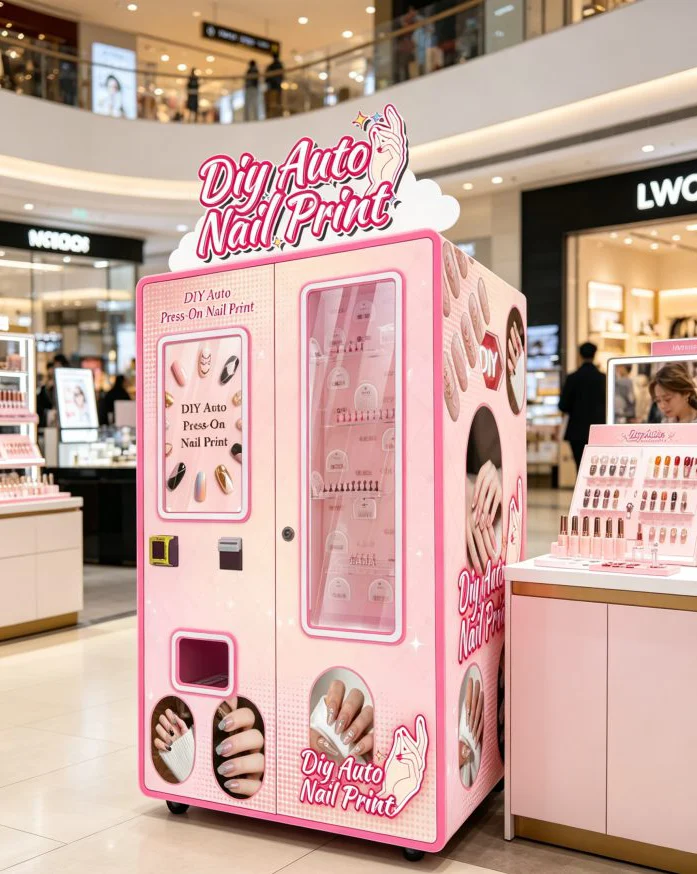
Having advised dozens of vending machine operators, I’ve seen the nail customization category explode in 2025–2026. The key is understanding it’s not a salon replacement — it’s an impulse-driven retail product with huge margins. Here’s what you actually need to know before buying one.
What Exactly Is a Nail Customization Vending Machine?
First, let’s clear up a common confusion. This machine does not print directly on fingernails. Customers do not insert their fingers into the machine. Instead, it prints custom designs onto press-on nail sets (already shaped and sized) using 600DPI industrial UV printing, then dispenses the finished set. The customer takes it home and applies it themselves.
Think of it as a custom merchandise kiosk, but for nails. The WM860, for example, holds up to 720 nail sets and offers 48 built-in styles plus a 10,000+ design library. Customers can also upload their own photos from their phone. The whole process — browse, customize, print, cure, dispense — takes about 5 minutes.
💡 Operator Insight: The biggest mistake new buyers make is treating this like a vending machine first. It’s a customization experience that happens to vend. Focus on making the touchscreen UI intuitive and the design library fun. That’s what drives repeat sales.
Profit Margins and ROI: The Numbers That Matter

Here’s the financial breakdown that convinced me this model works:
| Item | Cost |
|---|---|
| Nail set (wholesale) | $0.80–$1.00 |
| Ink cost per print | ~$0.02 |
| Tool kit (glue, etc.) | ~$0.20 |
| Total cost per sale | ~$1.02–$1.22 |
| Suggested retail price | $14.99 |
| Profit per sale | ~$13.77 (87% margin) |
Now let’s talk startup investment. A single machine costs around $5,800 (Wider Matrix WM860). Add shipping ($1,100 average to North America), a payment system ($400 for Nayax), initial inventory of 1,000 nail sets ($1,000), two ink cartridge sets ($170), and tool kits ($200). Total: roughly $8,670 to $10,900 to get started.
Monthly Profit Scenarios
- 20 sales/day → ~$7,800/month profit → payback in about 31 days
- 35 sales/day → ~$13,650/month profit
- 50 sales/day → ~$19,500/month profit → payback in as little as 12 days
⚠️ ROI Reality: These numbers assume good footfall and a well-maintained machine. If you place it in a low-traffic area, you might do 5–10 sales a day. Always vet your location before buying. I’ve seen operators struggle because they assumed any mall spot would work — it won’t.
Where to Place a Nail Customization Vending Machine
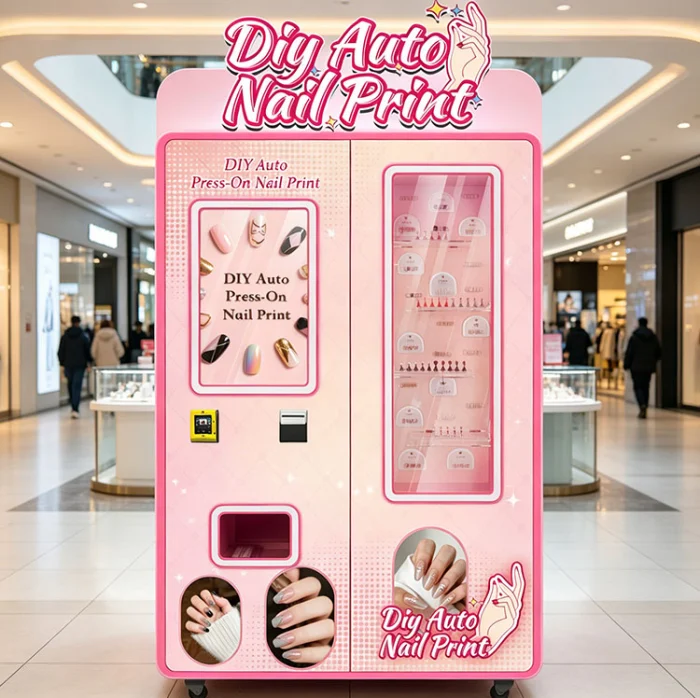
Location is everything. Based on real deployments I’ve tracked, here’s what works:
- Shopping malls (near beauty stores, food courts): 80+ daily orders possible on weekends
- Airports: Travelers love unique souvenirs, and you can charge 30% more — $19.99 per set
- Tourist attractions: 65% impulse purchase rate — people want a fun memory
- College campuses: Students are price-sensitive but love customization
- Hotels and resorts: Guests with downtime and disposable income
Hotels and resorts are especially interesting. One operator I know placed two machines in a resort chain in Florida and did 40+ sales a day during spring break. The key? The machines were near the pool area exits, where people had just dried off and wanted something fun to do.
📍 Placement Tip: Avoid placing next to a nail salon. It confuses customers about whether your machine is a service or a retail product. Instead, park it near gift shops, electronics kiosks, or food courts. That’s where impulse buyers hang out.
Features That Actually Matter in a Nail Customization Vending Machine
Not all machines are created equal. Here’s what to look for:
- Print quality: 600DPI minimum. Anything less looks blurry on nail-sized prints.
- Print speed: 30 seconds or less per set. Customers get impatient.
- Capacity: At least 500 nail sets. You don’t want to refill every other day.
- Design library: 10,000+ options plus phone upload. Variety sells.
- Touchscreen: 27-inch or larger, responsive UI. The experience is the product.
- Remote monitoring: IoT backend so you can check sales, ink levels, and errors from your phone.
- Self-healing system: Auto-reboots on error. Saves you midnight trips.
The Wider Matrix WM860 checks all these boxes. It uses Epson industrial printheads, dual UV-LED curing, and has a 720-set capacity. One feature I love: the AI positioning automatically detects the nail set box alignment, so prints never end up crooked. That’s rare in this price range.
🛠️ Buyer’s Note: Printheads are consumables, not covered under warranty. They typically last 1–2 years. Budget around $200–$300 for a replacement set. Also, the machine requires Wi-Fi or 4G for the cloud features. Factor in a data plan if your location doesn’t have free Wi-Fi.
Common Mistakes New Operators Make
I’ve seen enough operators burn cash on these machines that I want to save you the pain. Here are the top 5 pitfalls:
- Not vetting footfall. Don’t trust the mall manager’s “we get 10,000 people a day.” Stand there for a few hours on a weekday and a weekend. Count how many women (or anyone) walk past your prospective spot.
- Ignoring design variety. If your machine only has 20 designs, people won’t come back. You need 100+ options and the ability to upload custom photos.
- Setting it and forgetting it. This isn’t a soda machine. You need to refresh designs, check ink levels, and clean the touchscreen weekly. A dirty screen kills trust.
- Underpricing. Don’t sell at $9.99 thinking volume will save you. At $14.99, you still have a 87% margin. At $9.99, you’re leaving money on the table and training customers that your product is cheap.
- Using cheap nail sets. The quality of the press-on nails matters. If they break easily, you get bad reviews and no repeat business. Source from reputable suppliers.
Certifications and International Compliance
If you’re buying from a manufacturer, make sure the machine has the certifications your market requires. For example:
- CE (Europe)
- UKCA (UK)
- RoHS (restriction of hazardous substances – global)
- KC (South Korea)
- BRC, Kosher, HALAL (food-related, but some operators ask about materials)
Wider Matrix’s machines carry all of these. That’s a big deal if you’re importing to Europe or the Middle East. I’ve seen operators buy uncertified machines and get stuck at customs — not fun.
🌍 Market Reality: The nail customization vending machine trend is hottest in the US, Canada, Europe, Saudi Arabia, and Southeast Asia. In the Middle East, the holiday season (Ramadan, Eid) can drive 3x normal sales. Plan your inventory accordingly.
After-Sales Support: What to Expect
When your machine goes down, every hour of downtime is lost revenue. That’s why support matters. Wider Matrix offers:
- 1-year warranty on parts (excluding printheads)
- Lifetime technical support (24/7, 3 shifts)
- Free spare parts for non-human damage (air shipped)
- Step-by-step video guides on YouTube
- Free cloud server for the first year ($99/year after)
I’ve spoken with their support team — they respond within minutes on WhatsApp. For a vending machine business, that peace of mind is worth paying a premium for.
Frequently Asked Questions
How much does a nail customization vending machine cost?
The machine itself (Wider Matrix WM860) costs $5,800. Including shipping, payment system, initial inventory, and ink, expect a total startup investment of $8,670 to $10,900.
What’s the profit margin on each nail set sold?
Around 87%. Your cost per nail set is roughly $1.02–$1.22 (including the nail set, ink, and tool kit). At a retail price of $14.99, you keep about $13.77 per sale.
How long does it take to get a return on investment?
At 20 sales per day, you’ll break even in about 31 days. At 50 sales per day, you can recover your investment in as little as 12 days. Payback depends heavily on location and foot traffic.
Do customers put their fingers in the machine?
No. The machine prints on pre-made press-on nail sets and dispenses them. Customers take the set home and apply it themselves. It’s a retail product, not a salon service.
What maintenance does the machine require?
Weekly cleaning of the touchscreen, checking ink levels, and restocking nail sets. Printheads need replacing every 1–2 years (around $200–$300). The machine also needs Wi-Fi for cloud features.
Where is the best place to set up one of these machines?
Shopping malls (near beauty stores or food courts), airports, tourist attractions, college campuses, and hotels. Avoid placing next to a nail salon to prevent customer confusion.
What certifications should the machine have for international shipping?
CE for Europe, UKCA for the UK, RoHS globally, KC for South Korea, and BRC/Kosher/HALAL if selling in Middle Eastern or religious-sensitive markets. Wider Matrix machines have all of these.
Can customers upload their own photo designs?
Yes. The machine supports wireless image upload from a phone. Combined with a built-in library of 10,000+ designs, customers have endless customization options.
How many nail sets can the machine hold?
The Wider Matrix WM860 holds up to 720 nail sets, which means less frequent restocking and higher operational efficiency.
“The nail customization vending machine market is growing at over 40% year-over-year, and the reason is simple: it combines the margins of retail with the convenience of automation. But operators need to treat it as a micro-brand experience, not a vending machine. The ones who invest in design variety, location scouting, and machine reliability are the ones seeing 3-month paybacks. Those who just buy a machine and park it anywhere often end up selling it used within six months. Do your homework, and this can be one of the most profitable automated retail categories today.”