Is a Nail Art Machine Profitable? Real Data & ROI Analysis
Is a nail art machine profitable? Yes — with the right location and model, a press-on nail vending machine can deliver 87% profit margins and pay back in as little as 31 days at 20 sales per day. That’s not a fantasy; it’s based on real operating data from machines deployed globally. The key is understanding what these machines actually do: they print custom designs on press-on nail sets and dispense them — no finger insertion, no salon license needed. For investors, this means a low-barrier entry into the beauty vending space with margins that beat most traditional vending categories.
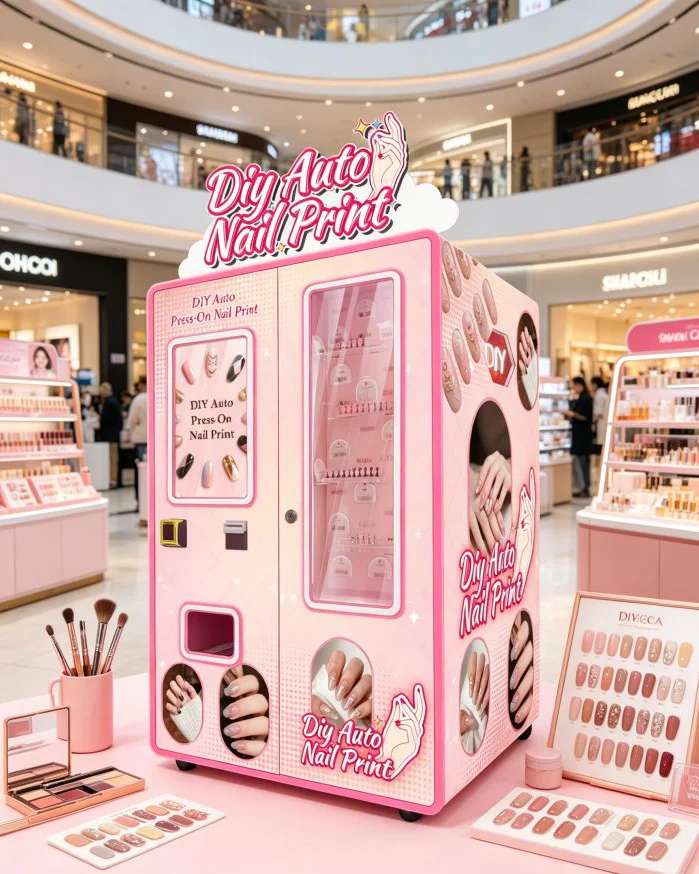
Profitability Breakdown: Costs vs. Revenue
Let’s get straight to the numbers. A press-on nail set costs you about $1.00 to $1.20 to produce (including the nail set, ink, and a tool kit). You can retail it for $14.99. That’s a gross profit of roughly $13.00 per sale — a margin north of 87%. Compare that to snacks or drinks, and you’ll see why this category is turning heads.
| Metric | Value |
|---|---|
| Cost per nail set (incl. ink & kit) | $1.00 – $1.20 |
| Suggested retail price | $14.99 |
| Profit per sale | ~$13.00 |
| Profit margin | 87% |
| Break-even at 20 sales/day | ~31 days |
| Break-even at 50 sales/day | ~12 days |
💡 Location Alert: Profitability hinges on footfall quality. A machine in a low-traffic strip mall will struggle to hit 10 sales a day. Aim for venues with 5,000+ daily visitors who have disposable income and dwell time.
How Much Can You Actually Earn Per Month?
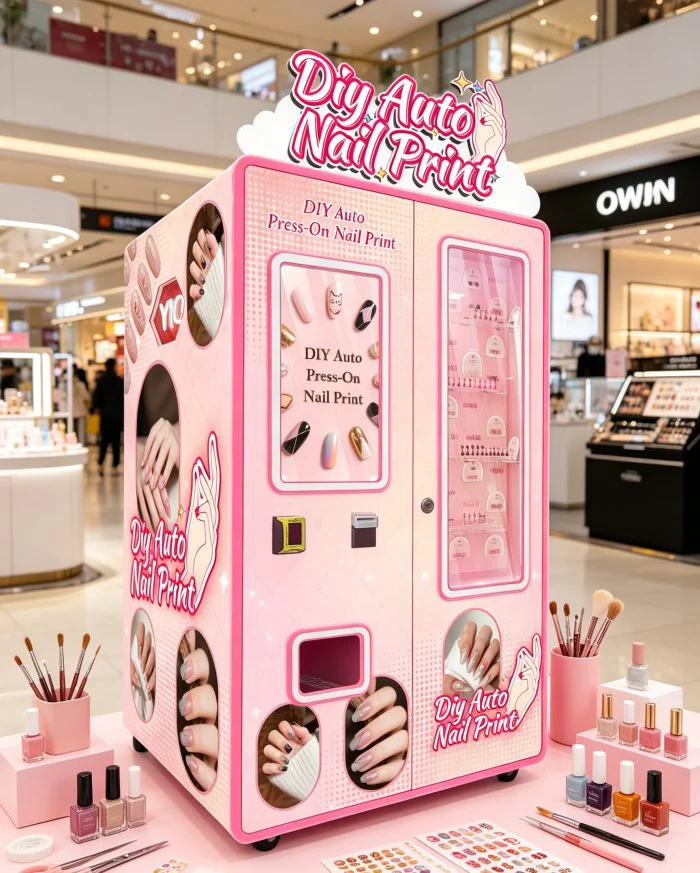
Monthly earnings vary dramatically by location. At 20 sales per day — achievable in a busy mall near beauty stores — you’re looking at about $7,800 monthly profit. At 35 sales daily, that jumps to $13,650. And at peak performance (50 sales per day), you could clear $19,500 a month. For a deeper dive into real monthly numbers, check out how much can a nail vending machine make per month – real profit data & ROI.
What Makes Nail Art Vending Different from Other Machines?
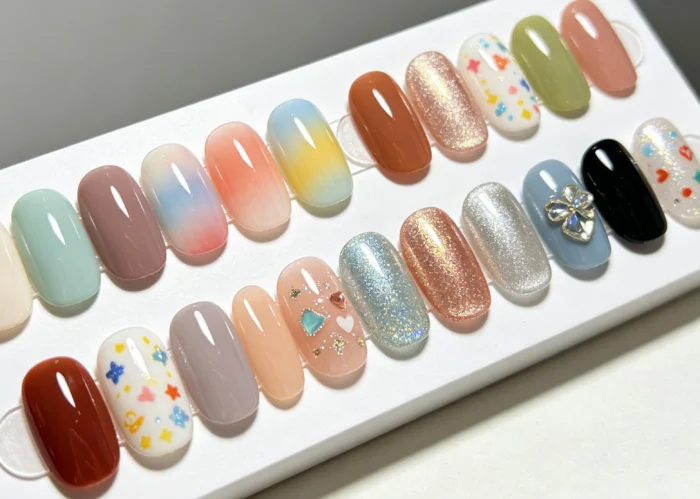
Unlike snack or beverage vending, nail art vending offers customization — a premium service. Customers don’t just grab a product; they design it. They pick from 48 built-in styles or upload their own photo. The machine prints on a press-on nail set in about 30 seconds and dispenses it. This experience is “Instagrammable,” which drives free word-of-mouth marketing. Plus, the consumables cost is tiny: ink runs about $0.017 per set, and you can stock 720 sets before refilling.
Startup Investment: What You’ll Need
Your total startup cost for a single machine runs between $8,670 and $10,900. That covers the machine itself ($5,800), shipping ($1,100 average to North America), a card reader ($400), initial inventory of 1,000 nail sets ($1,000), ink cartridges ($170), and tool kits ($200). Not pocket change, but compared to opening a brick-and-mortar nail salon? It’s a fraction of the cost — and you don’t need staff.
🔧 Operator Insight: Don’t skimp on the payment system. A reliable card reader like Nayax costs more upfront but saves you headaches with connectivity issues. Cash-only machines in a card-heavy market will kill your sales.
Best Locations for Maximum Profit
Where you place the machine makes or breaks your ROI. The sweet spots are shopping malls (especially near beauty or fashion anchors), airports (travelers love impulse beauty buys), tourist attractions (65% impulse purchase rate), and college campuses. Hotels and resorts also work well. Avoid low-traffic areas or spots without a natural connection to beauty or gifts.
Common Mistakes That Kill Profitability
- Placing in a location with under 2,000 daily visitors — you’ll struggle to cover the machine cost.
- Ignoring maintenance — printheads are consumable and need replacement every 1-2 years, costing around $200 each. Budget for it.
- Not rotating designs — offering the same 48 styles for months gets boring. Refresh your library seasonally.
- Underpricing — $14.99 is a sweet spot. Going lower doesn’t significantly boost volume but kills margin.
📊 ROI Reality: Fast payback (under 60 days) is possible but rare. Most operators see 3–6 months to break even. Plan your cash flow accordingly.
Passive Income Potential: Fact vs. Hype
Yes, after setup, the machine runs unattended — you refill consumables every few weeks and collect money. But “passive” isn’t “zero work.” You’ll need to monitor inventory, handle occasional jams, update designs, and manage the payment system. That said, the time commitment is far less than a traditional job. For a look at realistic passive income numbers, read Passive Income Nail Vending Machine: Real Profit Numbers for 2026.
Why Invest in a Nail Vending Machine?
The beauty vending market is growing fast. Nail art vending combines high margins, low labor, and a fun customer experience. It’s a great entry point for entrepreneurs who want to test automated retail without a huge upfront bet. Just go in with eyes open: location is everything, and maintenance isn’t zero. For a full breakdown of upsides and risks, see Why Invest in Nail Vending Machine – A Realistic 2026 ROI & Operations Guide.
💡 Pro Tip: If you’re new to vending, consider starting with one machine in a high-traffic mall. Track sales for 3 months. If you hit 20+ daily sales, then scale. Don’t buy 3 machines at once until you’ve proven the concept.
Frequently Asked Questions
How long does it take to break even on a nail art vending machine?
At 20 sales per day (typical for a good location), you’ll break even in about 31 days. At 10 sales per day, it takes about 2 months. Location quality is the biggest variable.
Do I need a license to operate a nail art vending machine?
In most jurisdictions, no. Because the machine dispenses pre-printed press-on nail sets (no fingernail contact), it’s classified as a retail vending machine, not a salon service. Always check local business and health codes to be safe.
What’s the total startup cost for a nail vending machine business?
Expect to invest between $8,670 and $10,900 for a single machine, including shipping, payment system, initial inventory, and ink. Volume discounts may lower the per-unit cost if you buy multiple machines.
How often do I need to refill the machine?
With a 720-nail-set capacity, you’ll refill every 1–2 weeks at 50 sales/day, or every 3–4 weeks at 20 sales/day. Ink cartridges last about 5,000 prints each, so ink changes are less frequent.
What maintenance does a nail art vending machine require?
Basic cleaning, occasional printhead replacements (every 1–2 years, $200 each), and software updates. The self-healing system on most modern machines minimizes downtime. For pricing and cost breakdowns, see Nail Art Vending Machine Price: 2026 Cost & ROI Analysis for Investors.
Can the machine vend other products besides nail sets?
Yes. Many models also dispense false eyelashes and small beauty accessories. This diversifies your product mix and can boost average transaction value.
What certifications do these machines need for global markets?
Reputable manufacturers like Wider Matrix offer machines with CE, UKCA, RoHS, KC, BRC, Kosher, and HALAL certifications, ensuring compliance in most countries. Always verify the certs for your target market.
Is a nail art machine profitable in 2026 compared to other vending machines?
With 87% margins, nail art vending is among the most profitable vending categories, outperforming snacks (20–30% margins) and even cotton candy (93% margin but lower price point). However, it’s more location-sensitive. For a detailed comparison, visit Is a Nail Vending Machine Profitable in 2026? Data, ROI & Risks.
“In my 8 years advising vending operators, I’ve seen nail art machines deliver the fastest ROI of any specialty vending category — when placed right. The mistake most new buyers make is focusing on the machine price instead of the location deal. Spend two weeks scouting footfall and negotiating rent before you even order the machine. That due diligence is what separates a 30-day payback from a 6-month struggle.”