Does a Nail Vending Machine Need Staff? No Staff, Full Automation
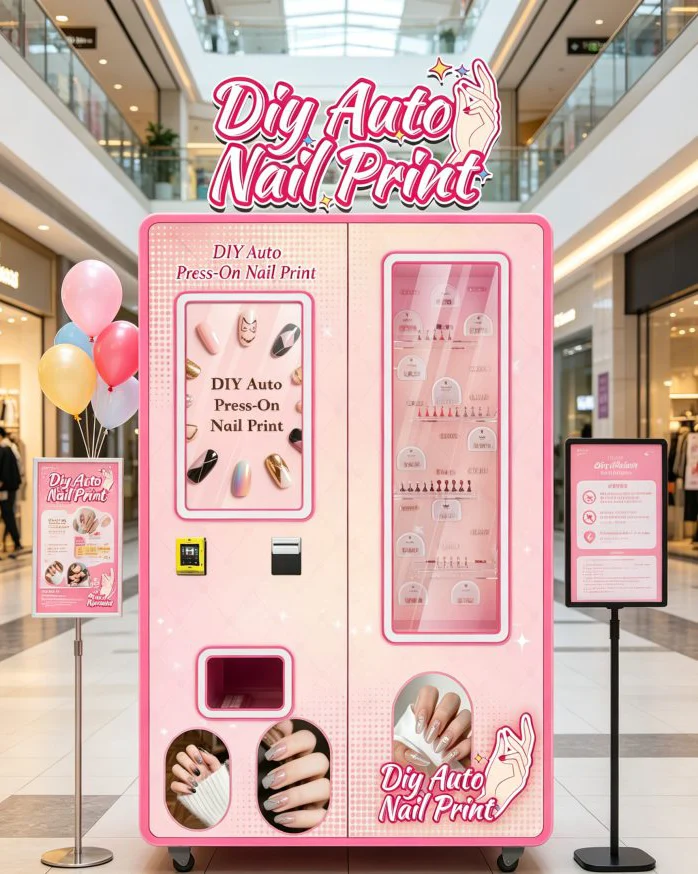
A nail vending machine does not need staff—it’s designed for 24/7 unattended operation. The Wider Matrix WM860, for instance, prints custom press-on nail sets automatically in about 30 seconds, then dispenses them with zero human intervention. You don’t need a nail technician, a salesperson, or even a part-time attendant. The machine handles everything: taking orders, customizing designs, printing, curing, and payment. Think of it like a photo booth that vends nails—customers walk up, pick a design or upload their own, pay, and receive their finished nail set. All you do is restock blank nail sets and ink every few weeks.
How Does It Work Without Staff?
The WM860 is a self-contained automated retail unit. It has a 27-inch touchscreen where customers browse 48 built-in nail styles or upload their own photo. Once they pay (via card, mobile wallet, or cash), the machine’s AI positions the blank nail set, prints at 600 DPI, and cures the ink with dual UV-LED lights—all inside a sealed chamber. The whole process takes about 30 seconds. The printed set drops into a dispense bin, and the customer grabs it. No staff needed at any step.
🔧 Pro Tip: For maximum uptime, set up remote monitoring alerts for low ink or low inventory. That way you know exactly when to refill—without visiting the machine daily.
What About Maintenance and Refilling?
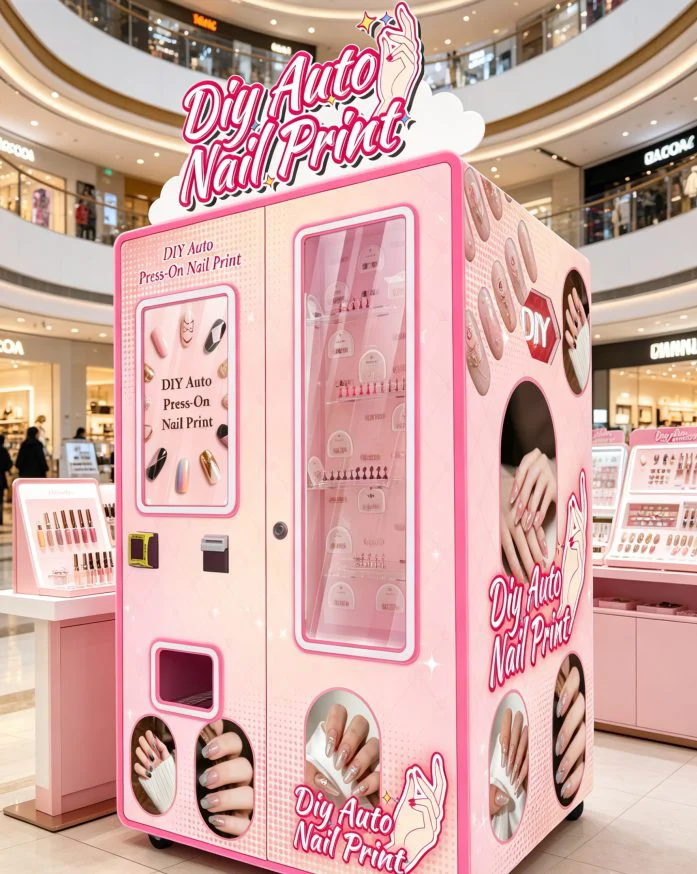
You still need someone to restock blank nail sets, refill ink, and occasionally clean the printhead. But that’s not “staff” in the traditional sense—it’s a part-time errand, like restocking a snack vending machine. A single machine holds 720 nail sets, and one ink set prints about 5,000 sets. So you’re looking at a refill visit every 1 to 3 weeks, depending on sales volume. Most operators handle this themselves or hire a local service for an hour a week.
Compare that to a traditional nail salon, where you need a licensed technician on-site every hour the business is open. The vending machine model eliminates that entire labor cost—which is the biggest expense in beauty services.
Is It Truly “Passive” Income?
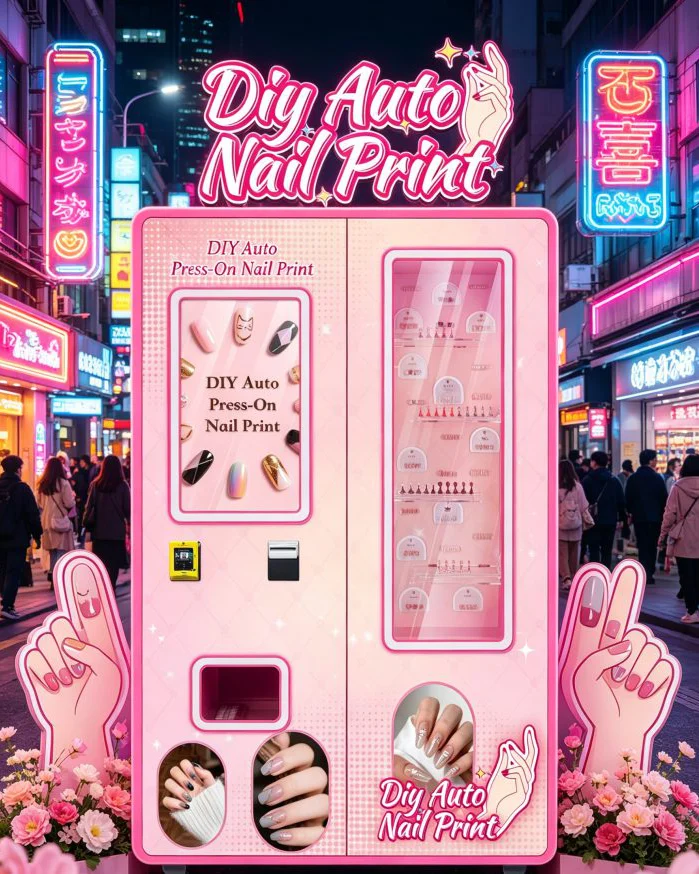
Yes and no. Day-to-day, the machine runs on its own. You collect money and data from the IoT dashboard, and you only show up to refill. But you still need to find the right location, negotiate a placement agreement, and handle occasional technical issues (like a jam or a network drop). That said, once it’s set up in a high-traffic spot—like a mall, airport, or tourist attraction—the daily operations are hands-off.
The table below shows what typical ownership looks like after the first month of operation:
| Task | Frequency | Time Required | Who Does It |
|---|---|---|---|
| Restock nail sets | Every 1-3 weeks | 15 minutes | Owner or cleaner |
| Refill ink | Every 1-2 months | 10 minutes | Owner |
| Printhead cleaning | Every 500 prints | 5 minutes | Owner |
| Remote monitoring | Daily | 2 minutes | Owner (via app) |
📍 Location Alert: Even the best machine fails in a bad spot. Stick to places with at least 500 daily foot traffic and a demographic that spends on beauty—think malls near Sephora or airports with long layovers.
What About Customer Support or Complaints?
Because the machine is unattended, you might wonder: who helps a customer if the machine jams or they’re unhappy with the print? In practice, most issues are preventable. The machine has a self-healing system that auto-reboots and runs diagnostics. If a jam occurs, the transaction is canceled and refunded automatically. For rare cases, you can print a support phone number on the machine or tape a QR code that leads to a WhatsApp chat. But honestly, once the machine is calibrated, issues are very infrequent.
If you’re really worried, you can partner with the venue’s management—they’ll often let you put a small sign: “For assistance, ask at Guest Services.” It’s a low-touch support model that works fine in malls and cinemas.
Who Is This Machine For?
It’s perfect for entrepreneurs who want a side business without hiring employees. Also for existing vending operators looking to add a high-margin beauty product to their route. And yes, for nail salon owners who want to extend their brand to 24/7 locations without adding staff. But if you’re looking for a completely zero-effort money printer—sorry, no machine works like that. You’ll still need to manage the business side: location contracts, marketing, and periodic maintenance.
For a deeper look at the business model, check out our Why Invest in Nail Vending Machine guide and profitability analysis for 2026.
💡 Business Heads-Up: Don’t underestimate the importance of network connectivity. The machine needs stable Wi-Fi or 4G to process payments and upload designs. Test the signal before you commit to a spot.
How Does It Compare to a Nail Salon Staff Model?
A typical nail salon pays about 30-40% of revenue in labor. On top of that, you have scheduling headaches, turnover, and training. A nail vending machine eliminates all of that. The cost per sale is about $1.20 (nail set + ink + toolkit), and you sell for $14.99. That’s an 87% margin with zero labor. The trade-off? You can’t offer custom nail art consultations or fix a client’s broken nail. But for impulse buyers and tourists who just want a cool set of press-ons in 30 seconds, it’s a perfect fit.
Can One Person Run Multiple Machines?
Absolutely. In fact, that’s the whole point. Because each machine requires only a few minutes of attention per week, one operator can easily manage a fleet of 5, 10, or even 20 machines. You just need a car and a planned restocking route. The passive income potential scales nicely—much better than a single salon that requires full-time staff.
Is There Any Regulation That Requires Staff?
In most countries and states, unattended retail vending machines don’t require a licensed employee on site. However, you may need a business license, a sales tax permit, and possibly a vending machine permit from the local health department (though nail sets are not food, so it’s usually straightforward). Always check your local regulations. The machine itself is CE, UKCA, and RoHS certified, so it meets international safety standards.
For a full breakdown of how to get started, read the complete business and user guide and the nail vending machine guide.
🛡️ Buyer’s Note: Some suppliers sell nail “printer” machines that require customers to insert their fingers. These pose hygiene and liability risks. Only buy machines that print on press-on nail sets—like the Wider Matrix WM860—to keep operations staff-free and safe.
Frequently Asked Questions
Do I need to be a nail technician to operate a nail vending machine?
No. The machine does all the work. You don’t need any nail art skills or cosmetology license. Just basic machine maintenance skills (or a willingness to watch a 10-minute tutorial).
How much time does it take to manage a nail vending machine per week?
About 30 minutes to 1 hour per machine, including restocking and checking the IoT dashboard. If you place multiple machines in the same shopping center, you can service them all in one trip.
What happens if the machine runs out of nail sets or ink?
The machine shows a “sold out” message on the screen. You get a low-inventory alert via the IoT app, so you can refill before it’s completely empty. Ink lasts for about 5,000 nail sets.
Can customers get a refund if they don’t like the print?
The machine prints exactly what the customer selects or uploads. If there’s a technical error (like a misprint), the machine will automatically refund or reprint. For subjective complaints, it’s up to you—most operators offer a one-time replacement via a support QR code.
Is the machine safe to leave unattended in a public place?
Yes. It’s built with cold-rolled steel, has an anti-theft locking system, and the internal components are secured. The printing chamber is sealed, so customers can’t access the ink or mechanics. Plus, it’s heavy (~300 kg) and hard to move.
Do I need a special permit to place a nail vending machine?
You’ll need a standard vending machine permit or business license, depending on the city. Nail vending machines are usually classified as general merchandise vending, not beauty services, so no cosmetology license is required. Always verify with local authorities.
How many machines can one person manage?
Experienced operators often run 10-20 machines solo, with a weekly route. The key is grouping machines geographically to minimize travel. Some operators hire a part-time helper for restocking once they hit 30+ machines.
What if the machine breaks down while I’m away?
The self-healing system auto-reboots and runs diagnostics. If the issue persists, the IoT system alerts you and logs the error. Most common problems (like a paper jam) can be resolved remotely or with a quick visit. Wider Matrix provides 24/7 technical support and sends replacement parts by air.
“I’ve been in automated retail since 2016, and the nail vending machine is the first beauty machine that truly runs without a technician on standby. The press-on nail format eliminates the hygiene and skill barriers that made earlier ‘nail printer’ concepts fail. For operators, the real labor is not in running the machine—it’s in scouting the right location and negotiating a fair revenue share. Once that’s locked, the machine is a set-and-forget profit center. Don’t overthink the staff question; think about footfall and dwell time instead.”