Nail Customization Business: How to Start in 2026 with a Vending Machine
Thinking about launching a nail customization business in 2026? You’re not alone. I’ve seen more entrepreneurs pivot to this space in the last two years than in the previous decade combined. The core idea is simple: let customers design their own press-on nails, or offer a kiosk that prints custom art instantly. But the execution — that’s where most people get it wrong.
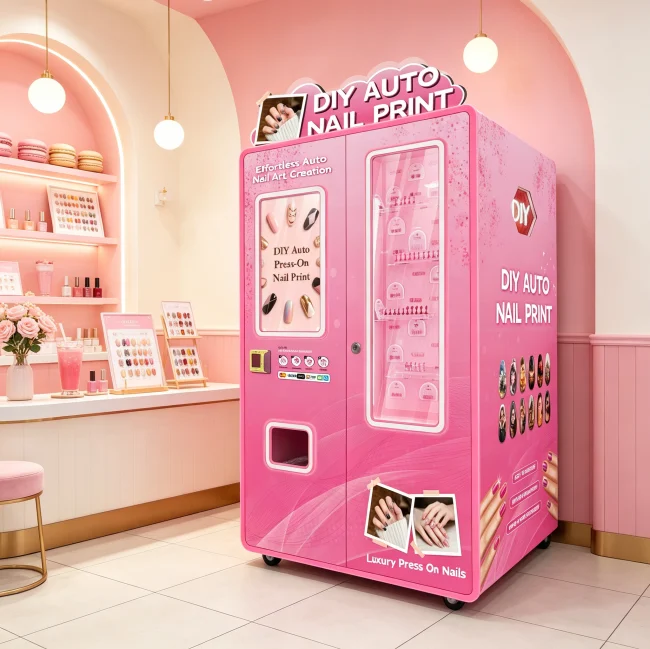
I’ve spent years deploying vending machines across dozens of countries, and I’ve watched nail vending machines go from niche curiosity to mainstream profit center. The Wider Matrix WM860, for instance, is now in over 30 countries, and I’ve personally helped operators fine-tune their setups. This article isn’t a theoretical overview — it’s what I’ve learned from real installations, real mistakes, and real wins.
Why Nail Customization Works in 2026
Let’s start with the obvious: press-on nails are having a moment. The global market is projected to grow at 8-10% annually through 2030, driven by social media, DIY culture, and the demand for affordable luxury. A custom press-on nail set can retail for $8-$15 while costing you roughly $1.30 in materials. That’s a margin most retail categories envy.
But the real opportunity? Automation. Instead of hiring nail artists or managing inventory of pre-made designs, a nail art vending machine lets customers personalize their own set on the spot. No labor, no waste, no unsold stock — just a machine that prints and dispenses in minutes.
What Makes a Nail Vending Machine Different from Other Vending Machines
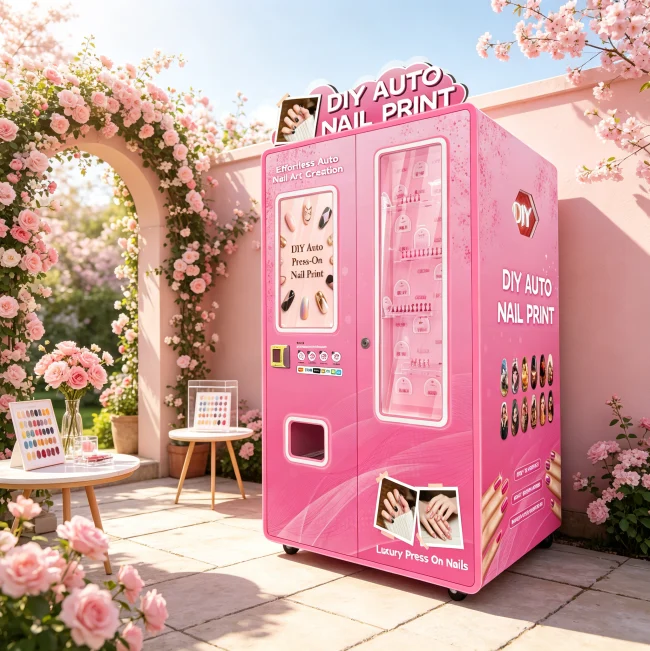
If you’ve run a standard snack machine or even a phone case vending machine, you’ll notice nail vending has its own quirks. Here’s what I’ve learned from field experience:
Print Quality Matters More Than You Think
The WM860 uses an industrial-grade UV F1080 nozzle with 600dpi resolution. I’ve tested cheaper printers, and the difference is obvious: smudges, color shifts, slow output. Our machine prints at 600dpi, which is double the clarity of older models. For a product people will wear on their hands, quality isn’t optional.
Capacity and Inventory
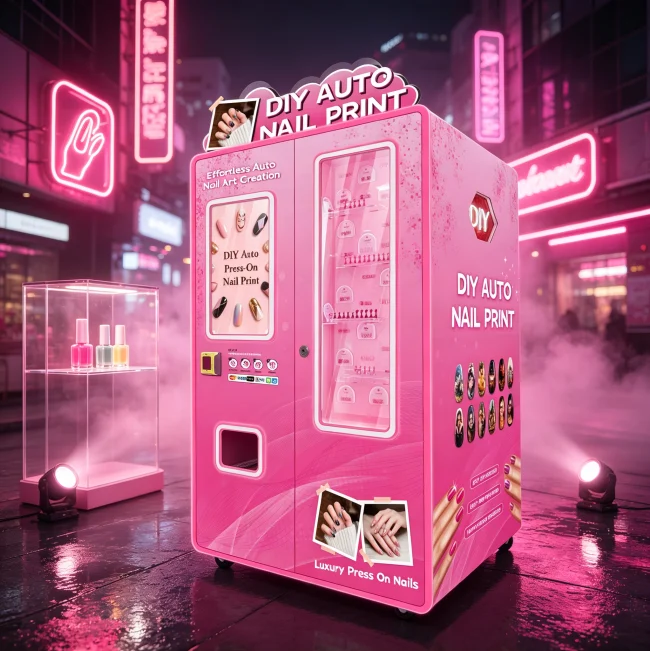
The WM860 holds up to 720 sets of press-on nails. That’s enough for a month of heavy traffic at a mall kiosk. Refilling is straightforward: standard press-on nails (4 styles) cost about $1.00 per set, premium cat eye/diamond styles (16 designs) cost $1.50 each. Add a nail art tool kit ($0.30 per set) and you’re looking at a fully costed product for under $1.80.
Payment and Connectivity
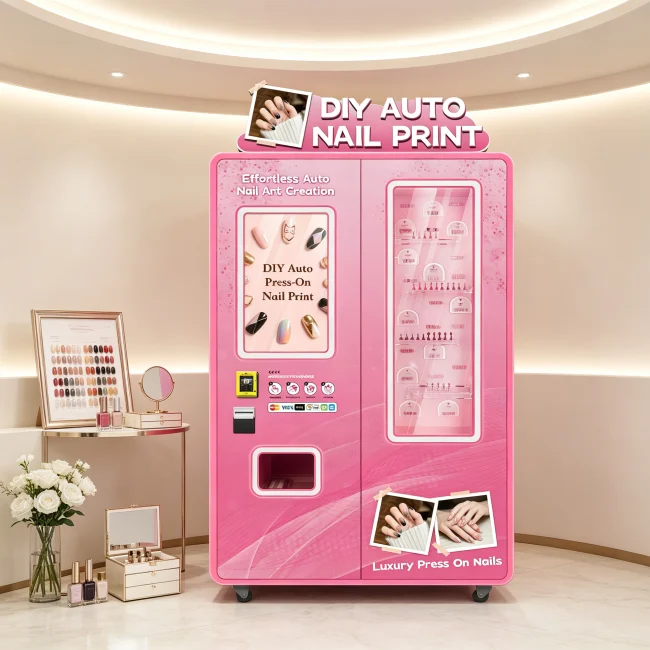
Our machines support coin, banknote, credit card, and QR code — pick whatever works for your market. The 27-inch HD touchscreen makes design selection easy, and the IoT backend lets me check sales and inventory from my phone. I’ve saved operators hours of travel by remotely diagnosing issues before they became problems.
Real-World Deployment: What I’ve Seen Work
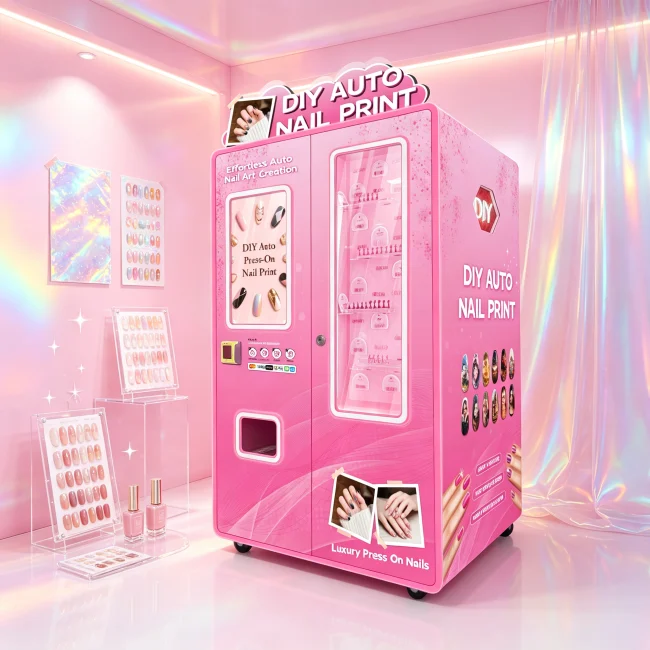
Last year, I helped a salon chain in Tokyo integrate five WM860 units. Their biggest concern was whether customers would actually use a vending machine for nail art. The answer? Yes — but with a twist. They placed the machines near the checkout counter, so customers waiting for their appointment could browse designs and buy a custom set to take home. Average transaction: $12. The machines paid for themselves in 3 months.
Another operator in a US college town started with one unit and scaled to three within six months. Their secret? Offering a “design-your-own” feature where students could upload their own artwork through the touchscreen. The AI design generator (powered by our AWS cloud backend) made it foolproof. Sales spiked during exam season — stress-buying custom nails at 2 AM. Go figure.
Comparing Nail Vending to Other Vending Categories
One question I get often: “Should I start with nail vending or something else?” Here’s a quick comparison based on what I’ve seen across hundreds of operators:
| Machine Type | Unit Price (Reference) | Profit Margin | Daily Sales Potential | Best Venue |
|---|---|---|---|---|
| Nail Art (WM860) | $5,800 | ~85% | 20-40 sets | Malls, salons, colleges |
| Phone Case (WM880) | $5,299 – $6,979 | ~90% | 30-50 cases | Malls, airports, tech stores |
| Cotton Candy (WM980+) | $4,999 | 93-97% | 50-100 candies | Theme parks, events |
| Pizza (WM660+) | $9,600 | ~70% | 30-60 pizzas | Universities, 24hr locations |
Notice anything? Nail vending sits in a sweet spot: moderate entry cost, high margin, and a product that feels premium. It’s not as cheap as cotton candy, but it doesn’t need constant sugar refills or food safety certifications. For a first-time operator, it’s one of the safest bets I recommend.
Common Mistakes I’ve Seen (and How to Avoid Them)
I’ll be honest: not every nail vending machine deployment succeeds. Here are the top three failures I’ve witnessed:
- Ignoring venue traffic patterns. A machine placed in a low-footfall corridor will collect dust. I always tell operators to do a manual headcount for a week before signing a lease. If fewer than 500 people walk past per day, it’s risky.
- Skipping design variety. The WM860 comes with 4 standard and 16 premium nail styles. That’s enough to start, but refresh your designs every month. Stale inventory kills repeat sales.
- Neglecting maintenance. The print head needs automatic cleaning cycles — we build that into the machine, but some operators disable it to save time. Don’t. Clogged nozzles ruin print quality and customer trust.
Is a Nail Vending Machine Profitable in 2026?
Short answer: yes, if you pick the right location and keep your costs in check. Let’s run a quick scenario. Suppose you buy one WM860 at the reference price of $5,800. Each set sells for $12, costing you $1.80 (nail set + tool kit + ink). That’s a gross profit of $10.20 per sale. If you sell 25 sets per day, that’s $255 daily profit. In about 23 days, you’ve covered the machine cost. The rest is profit minus rent and electricity.
Of course, real life isn’t that linear. Some days you’ll sell 10, some days 50. But I’ve seen operators hit payback in under 2 months in decent locations. The key is to test before committing — start with one unit, learn the ropes, then scale.
Customization Options for Your Business
One thing I love about Wider Matrix is that we don’t just sell a box. You can customize the machine’s UI, exterior stickers, and even lightbox branding. If you’re a salon owner, you can skin the machine with your logo and color scheme. If you’re running a chain, we can deploy a dedicated server for your fleet. It’s all available — just ask.
For operators with specific needs, we also offer OEM/ODM services. Want a different print head? We can upgrade to the i3200 (which boosts speed and quality). Need a specific payment system? We’ll integrate it. The machine is designed to adapt, not just sit there.
Getting Started: Your Next Steps
If you’re ready to explore a nail customization business, here’s my honest advice: start with research. Visit a few malls, talk to potential customers, and understand what designs they’d pay for. Then reach out to us. We’ll help you choose the right machine, plan the placement, and even run ROI projections based on your specific venue.
The vending industry is moving fast, and nail art is one of the most exciting categories right now. But don’t take my word for it — try it yourself. Start small, learn fast, and grow from there.
Want a personalized quote or just want to chat about your setup? Drop your WhatsApp number here and one of our vending specialists will reach out directly. Or visit nailvending.com to explore the full lineup. We’re here to help — no pressure, just real advice from people who’ve been in the trenches.
Frequently Asked Questions
How much does a nail vending machine cost?
The Wider Matrix WM860 has a reference price of US$5,800. That’s the single-unit price — contact our team for volume deals or current promotions, as pricing can vary throughout the year.
What kind of profit margin can I expect?
With standard press-on nails costing ~$1.00 and tool kits at $0.30, your total cost per set is about $1.30. Retail prices range from $8 to $15, giving you margins of 80-90% on the product itself.
Do I need technical skills to operate the machine?
Not really. The WM860 has an automatic print head cleaning cycle and ink level alarms. Our team provides video training and remote support. Most operators are up and running within a day.
What kind of venue works best for a nail vending machine?
High-traffic areas with a fashion-conscious audience: shopping malls, beauty salons, nail studios, college campuses, and tourist spots. I’ve seen great results near food courts and clothing stores.
Can I customize the designs offered in the machine?
Yes. The WM860 comes with pre-loaded designs, but you can upload your own via the cloud backend. We also offer custom UI development if you want a branded experience.
What’s the warranty and support like?
We offer a 1-year standard warranty, lifetime technical support, and free replacement of non-man-made damaged parts (shipped by air). Our 24/7 engineer team covers three shifts, so help is always available.
How many nail sets can the machine hold?
The WM860 holds a maximum of 720 sets of press-on nails — plenty for a busy location without constant refilling.
Is the machine suitable for outdoor use?
The standard WM860 is designed for indoor use. If you need an outdoor-rated unit, let us know — we can discuss weatherproofing options during consultation.
Can I use the machine for other products besides nail art?
The WM860 is specifically designed for press-on nails. For other customizable products, check out our phone case (WM880) or puzzle (WM520) vending machines.
How do I get started with Wider Matrix?
Visit our website at nailvending.com or leave your WhatsApp number and we’ll reach out with a personalized quote and advice based on your location and goals.