Phone Case Vending Machine Profit Margins: The Real Numbers for 2026
Phone case vending machine profit margins typically range from 85% to 93% per case, with a regular case costing $1.35 to produce and selling for $15–20 in the US. That’s a gross profit of $13.65 to $18.65 per sale. The math gets even better with magnetic cases — $2.35 cost, $30+ retail — that’s over 92% margin. But let’s be real: those numbers assume you’ve got the right location and decent footfall. I’ve seen operators hit ROI in under a month, and I’ve seen others struggle because they placed the machine in a dead zone. This guide breaks down the actual costs, revenue scenarios, and the gotchas that most articles skip.
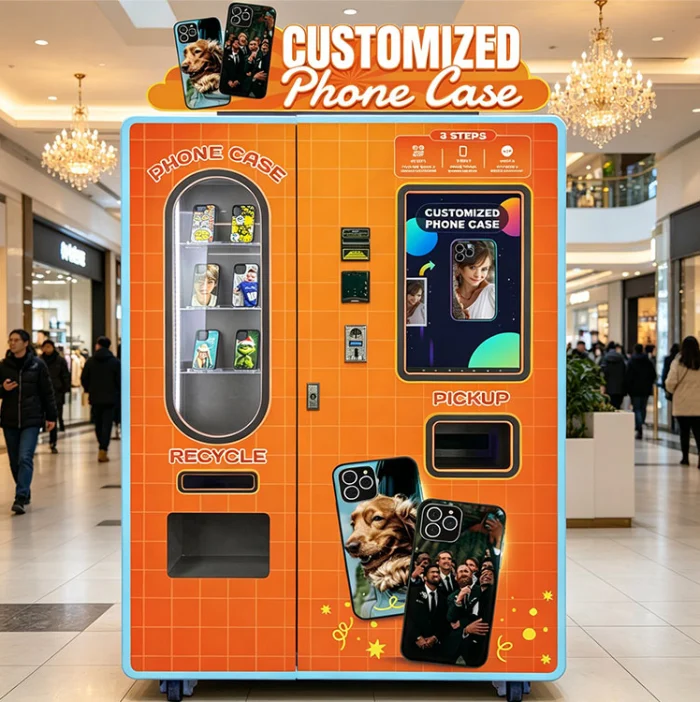
💡 Operator Insight: Don’t assume every mall works. Aim for at least 5,000 daily foot traffic near entertainment zones or food courts. That’s where impulse buys happen.
Breaking Down the Cost Per Case
Every phone case you print has three cost components: the blank case, the ink, and electricity. Here’s how they stack up for the Wider Matrix WM880, a popular choice among operators.
| Item | Cost (USD) |
|---|---|
| Regular TPU+PC case (wholesale, 1000+ units) | $1.30 |
| Ink per case | $0.05 |
| Total cost per regular case | $1.35 |
| Magnetic case (wholesale) | $2.30 |
| Total cost per magnetic case | $2.35 |
Electricity adds maybe $0.02–0.05 per case, depending on your local rates. So your all-in cost is around $1.40 for a regular case. Selling at $15? That’s a 90.7% margin. At $20? 93%. Not bad for a business that runs 24/7 with zero staff.
Revenue Scenarios: What You Can Actually Earn
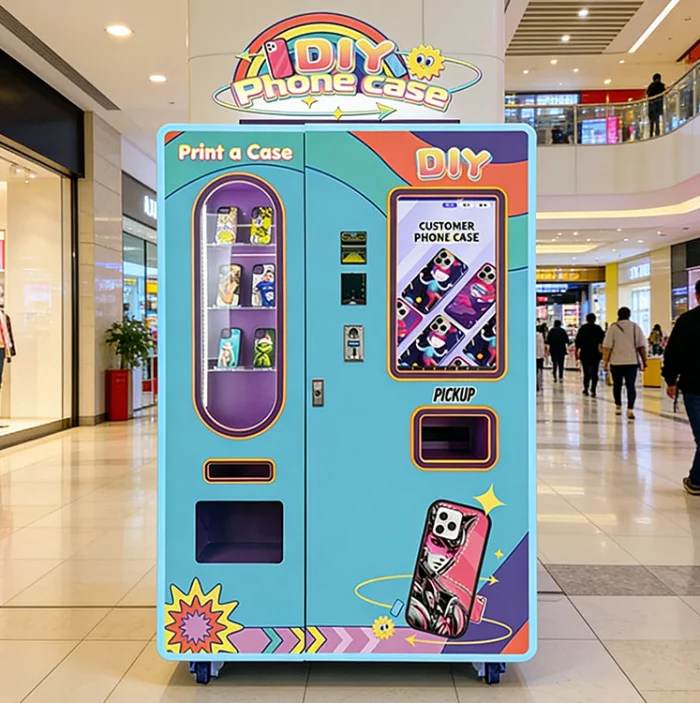
Daily sales depend heavily on location. I’ve worked with operators in US malls who average 30–50 cases a day. Let’s run the numbers for a conservative, moderate, and strong scenario.
| Scenario | Daily Sales | Avg. Price | Daily Revenue | Daily Profit | Monthly Profit |
|---|---|---|---|---|---|
| Conservative | 20 | $15 | $300 | $272 | $8,160 |
| Moderate | 35 | $18 | $630 | $582 | $17,460 |
| Strong | 50 | $20 | $1,000 | $930 | $27,900 |
Notice I’m using a $1.40 cost per case for these calculations. The machine itself (like the WM880 at $6,299) plus shipping, payment system, and initial inventory sets you back around $8,000–9,000. In the moderate scenario, you’d recoup that in about half a month. But — and this is a big but — those numbers assume you’ve got the footfall.
📍 Location Alert: A machine in a low-traffic strip mall might do 5–10 sales a day. That’s still profitable, but payback stretches to 2–3 months. Always scout footfall before signing a lease.
Why Customization Commands a Premium
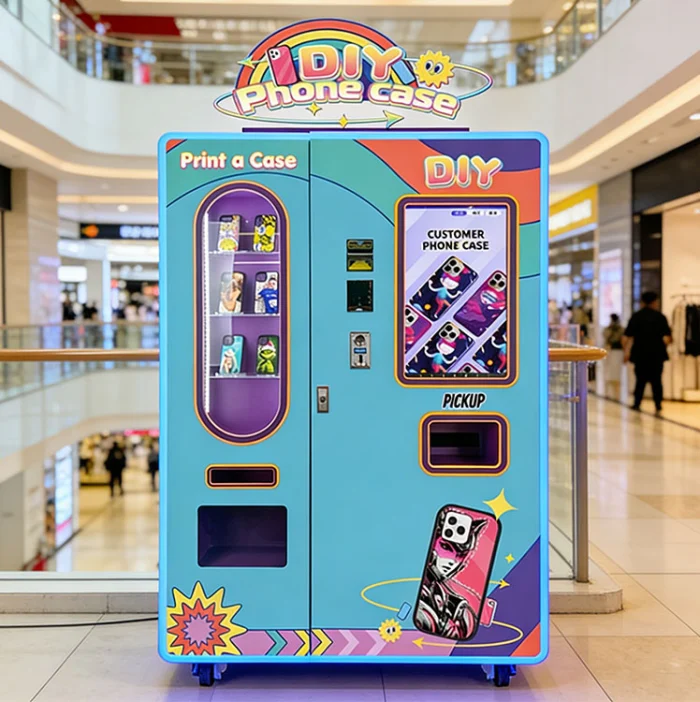
Phone cases are a commodity on Amazon — plain TPU cases sell for $5–8. But a custom-printed case with the customer’s own photo or design? That’s personal. People gladly pay $15–20 for something unique. The vending machine experience — selecting a model, uploading a picture, watching it print — adds perceived value. It’s not just a case; it’s a souvenir. That’s why placement near tourist attractions, cinemas, and event spaces works so well. You’re selling an experience, not a commodity.
Costs That Eat Into Your Margin
No business is all profit. Here are the real costs operators face:
- Location rent: $200–1,000/month depending on footfall. High-traffic malls charge more, but they also deliver higher sales.
- Payment processing: 2–3% per transaction. On a $15 sale, that’s $0.30–0.45.
- Maintenance: Printheads last 1–2 years and cost around $200–300 to replace. Budget $10–15/month.
- Inventory restocking: Time and gas to refill cases. If you’re local, negligible. If you drive an hour, factor it in.
After all that, your net margin still sits around 80–85%. That’s stellar compared to traditional retail, where 50% gross margin is considered good.
🛠️ Buyer’s Note: Always buy a machine with easy refill — the WM880 restocks in minutes, not hours. Complicated reloading kills your effective hourly profit.
Comparing to Other Vending Machine Profits
Wondering how phone cases stack up against other machines? Let’s look at numbers from the Wider Matrix lineup.
| Machine Type | Cost Per Unit | Retail Price | Gross Margin |
|---|---|---|---|
| Phone case (regular) | $1.35 | $15–20 | 90–93% |
| Cotton candy | $0.31 | $5–10 | 94–97% |
| Protein shake | $1.00–1.50 | $5–7 | 60–80% |
| Press-on nail sets | $1.00–1.20 | $14.99 | 87% |
Phone cases sit near the top in margin, but they require more upfront inventory variety (different phone models, case types). Cotton candy is cheaper to produce but has a lower price ceiling. Diversifying across machine types can stabilize your income — but that’s a topic for another day.
Real-World Operator Mistakes
I’ve seen new operators make three common errors that crush their margins. First, they buy cheap blank cases from unknown suppliers. The quality is inconsistent — prints peel, cases crack — and customers complain. Stick with reliable blanks. Second, they underprice. $10 might seem attractive, but you’re leaving money on the table. Third, they ignore machine placement. A phone case machine next to a supermarket entrance can do well, but inside a quiet electronics store? Not so much.
📊 ROI Reality: Most operators see payback in 3–6 weeks at moderate traffic. If you’re not there by week 8, re-evaluate location or pricing.
How to Maximize Your Profit Margin
Here’s what the best operators do differently:
- Bundles: Offer “buy 2, get 10% off” or bundle a case with a screen protector. Higher average order value.
- Seasonal designs: Pre-load holiday themes. Cases sell faster when they’re timely.
- Dynamic pricing: Raise prices during peak hours or events. The machine’s IoT software lets you adjust remotely.
- Monitor inventory: Track which phone models sell best. Stock more of those. The WM880’s real-time inventory tracking is a lifesaver.
Also, consider using the machine as a marketing tool. A unique print-your-phone-case experience generates social media buzz — free advertising.
Frequently Asked Questions
What is the average profit margin for a phone case vending machine?
The gross profit margin ranges from 85% to 93% per case, depending on case type and retail price. After factoring in rent, payment fees, and maintenance, net margin typically lands between 75% and 85%.
How much does a phone case vending machine cost to buy?
A quality commercial-grade machine like the Wider Matrix WM880 costs around US$6,299 (MSRP $8,100). With shipping, payment system, and initial inventory, expect a total startup investment of $8,000–$9,000.
How many cases can I sell per day?
In a high-traffic mall, 30–50 cases per day is common. Low-traffic locations may see 10–15. The key is footfall — aim for 5,000+ daily visitors near your machine.
What phone models should I stock?
Focus on the top 5–10 best-selling models in your region. In the US, that’s iPhone 15/16 series and Samsung Galaxy S24/S25. The WM880 holds 1,000+ cases, so you can cover most popular models.
How long does it take to print a case?
Print time is 1–3 minutes per case. The customer selects their phone model, uploads a photo or picks a design, pays, and receives the finished case within minutes.
What certifications do I need to operate internationally?
Wider Matrix machines come with CE, UKCA, RoHS, KC, and other certifications, making them compliant in most markets. Always check local electrical and safety regulations.
How reliable is the machine? What about maintenance?
Printheads are consumable and last 1–2 years. The machine includes a self-healing system and real-time diagnostics. Wider Matrix offers 24/7 support and ships replacement parts by air under warranty.
Can I operate the machine remotely?
Yes. The machine connects via Wi-Fi or 4G LTE, and you can monitor sales, inventory, and pricing from a cloud dashboard. You can even push promotional discounts without visiting the site.
“Phone case vending machines are one of the highest-margin opportunities in automated retail today. The cost per unit is low, the perceived value is high, and the customization trend isn’t slowing down. But location is everything — a great machine in a bad spot will underperform a mediocre machine in a great spot. My advice: spend as much time scouting foot traffic as you do comparing specs. If you get that right, the margins take care of themselves.”