Phone Case Vending Machine Business Plan: Your 2026 ROI Blueprint
A phone case vending machine business can generate daily revenues of $450–$1,000 at high-traffic locations, with per-case production costs as low as $1.35 and retail prices of $15–$20 in the US market. These self-service kiosks print custom designs on blank cases in 1–3 minutes, letting shoppers create a unique product on the spot. The model works best in malls, entertainment zones, and tourist spots where impulse buying is strong. You don’t need a storefront or staff — just the machine, a supply of blanks, and a good spot.
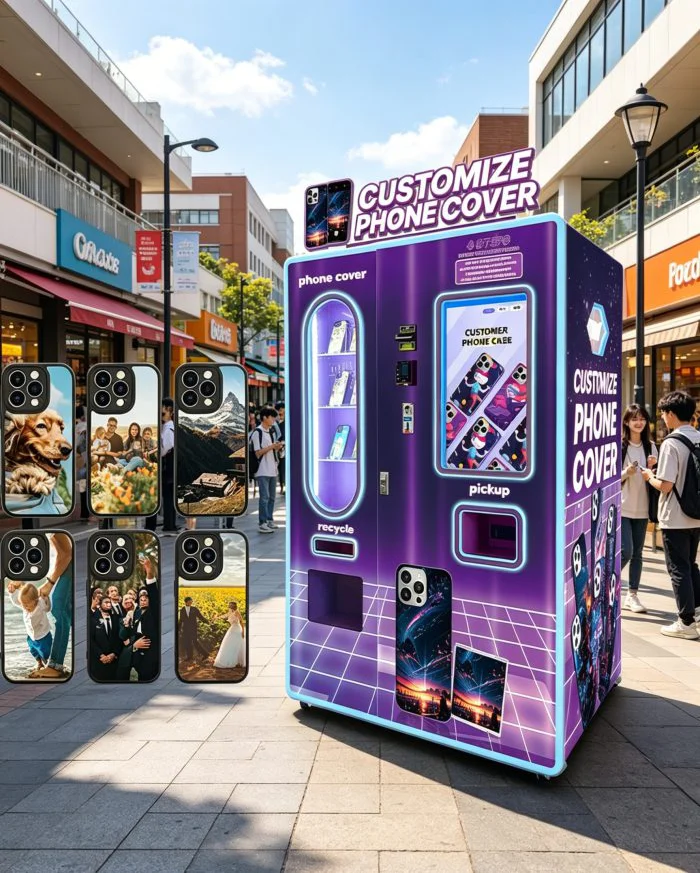
Starting a phone case vending business isn’t complicated, but you need a clear plan. The key variables are machine cost, location footfall, consumables pricing, and daily transaction volume. Let’s walk through each piece so you can build a realistic, profitable operation.
Why Phone Case Vending Works in 2026
Customization is a massive retail trend — consumers happily pay a premium for something made just for them. A phone case vending machine taps right into that. Instead of stocking dozens of generic designs, you offer infinite options: the customer picks a phone model, uploads a photo or chooses from built-in artwork, and walks away with a ready-to-use case. The whole experience takes about two minutes, and the social media appeal is huge — people love sharing their custom cases.
💡 Placement Tip: Look for locations with dwell time — areas where people wait or walk slowly. Near food courts, outside cinemas, and in mall corridors see the highest conversion rates.
Your Startup Investment Breakdown
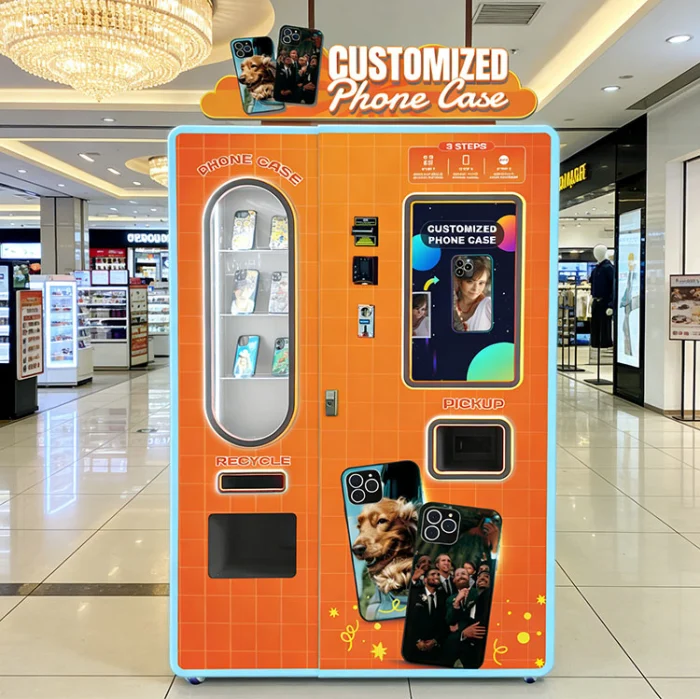
Here’s what you’ll need to budget for a single machine setup in North America or Europe:
| Item | Estimated Cost (USD) |
|---|---|
| Wider Matrix WM880 Machine (MSRP $8,100, current $6,299) | $6,299 |
| Shipping & customs (average) | $800–$1,500 |
| Payment system (Nayax or similar) | $400 |
| Initial inventory: 1,000 blank cases at $1.30 each | $1,300 |
| Ink (2,000ml set, prints ~2,000 cases) | $200 |
| Miscellaneous (signage, installation, insurance) | $500 |
| Total startup | $9,299–$10,000 |
That’s roughly the cost of a used car — and it can start generating revenue the day you plug it in. Compare that to opening a kiosk with staff, rent, and inventory risk, and the math gets interesting fast.
⚠️ Common Mistake: Don’t skimp on the payment system. A reliable, fast card reader (like Nayax) is critical — many operators lose sales because of slow or faulty payment terminals.
Revenue Model & Unit Economics
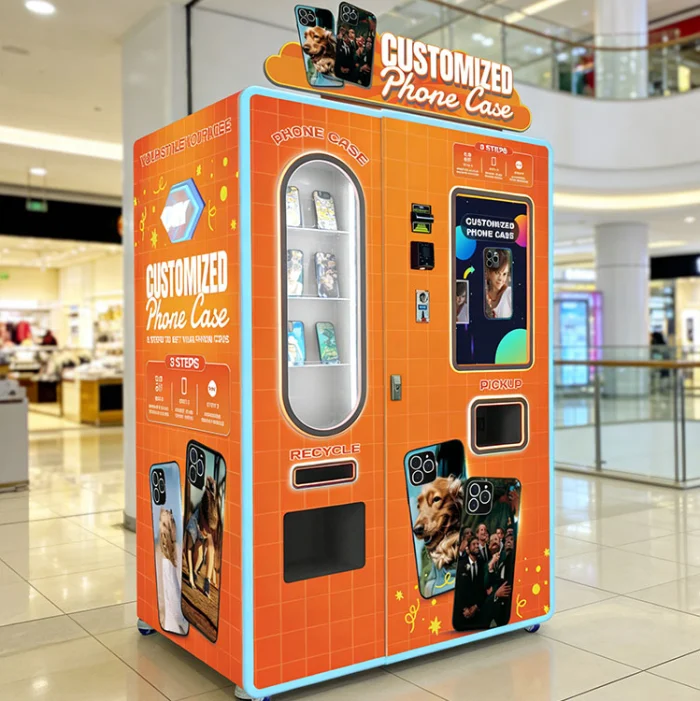
Let’s get into the numbers that matter. A standard TPU+PC phone case costs you $1.30 wholesale. Add $0.05 for ink, and your total cost per sale is $1.35. Sell that case for $15–$20, and your gross profit per transaction is $13.65–$18.65 — that’s a margin of 91–93%. For magnetic cases, your cost is $2.35 and retail can hit $30+, so profit per sale jumps to $27.65+.
How many cases can you sell in a day? At a good mall or tourist location, 30–50 is realistic. At a prime spot near a movie theater or gaming arcade, 50–70 is possible on weekends. Here’s what that looks like in monthly profit:
| Daily Sales | Monthly Revenue (30 days @ $17 avg) | Monthly Cost (cases + ink) | Monthly Gross Profit |
|---|---|---|---|
| 20 | $10,200 | $810 | $9,390 |
| 35 | $17,850 | $1,418 | $16,433 |
| 50 | $25,500 | $2,025 | $23,475 |
Subtract location rent (typically $300–$1,500/month depending on footfall) and credit card processing fees (~2.5%), and your net profit is still very healthy. Most operators recoup their full investment in 4–8 weeks.
Location: The Make-or-Break Decision
You’ve heard it before: location is everything. For a phone case vending machine, you need places with high foot traffic and a demographic that values personalization — teens, young adults, families. The best spots I’ve seen are:
- Regional shopping malls — near the food court or entertainment zone. Footfall of 50,000+ per week is ideal.
- Tourist attractions — boardwalks, theme parks, aquarium lobbies. Tourists love souvenir custom cases.
- Cinema multiplexes — people arrive early for movies and have time to browse.
- College campuses — student unions, library entrances. Students are heavy phone case buyers.
- Airport terminals (post-security) — high-spending travelers, $30+ price points work.
Approach the property manager with a revenue share proposal (10–20% of gross) or a flat monthly rent. Offering to install a machine that draws attention and adds entertainment value often gets you a yes.
📍 Location Alert: Avoid low-footfall strip malls or office buildings. Your machine needs 500+ passersby per day to hit 30 transactions. Always do a footfall count before signing a lease.
Operations: What Daily Management Looks Like
One big advantage of phone case vending is how easy it is to run. The Wider Matrix WM880 holds over 1,000 blank cases and 2,000ml of ink — enough for 2,000+ prints. You’ll refill blanks every 2–4 weeks at peak volume. Ink lasts about 3–4 weeks. The machine sends you low-inventory alerts via its IoT system, so you never run out unexpectedly.
Here’s a typical weekly routine:
- Day 1: Visit the machine, top up blanks if needed, check ink levels, run a test print.
- Day 3: Remote check via dashboard — sales data, error logs, inventory.
- Day 5: Quick visit to clean the touchscreen and wipe down the exterior (takes 10 minutes).
Total time investment: about 2–3 hours per week per machine. That’s why you see operators running 5–10 machines as a side business while keeping their day jobs.
Scaling Your Phone Case Vending Business
Once you’ve proven the model with one machine, scaling is straightforward. Buy additional machines (volume discounts apply), negotiate better blank case pricing at 5,000+ units, and expand to new locations. Some operators build a network of 20+ machines across a city, generating $100k+ monthly revenue.
The beauty of phone case vending is that the product never gets stale — the customer designs it, so there’s no inventory risk. You’re not sitting on unsold stock. Every case sold is a fresh, unique item.
🚀 Scale Tip: When you add a second machine, place it in a complementary location (e.g., a different mall or tourist spot). Don’t put two machines in the same zone — you’ll cannibalize sales.
Risks to Know Before You Start
No business is risk-free, and I want you to go in with eyes open. Here are the main challenges:
- Location risk: If footfall drops (seasonal shifts, new competition), your sales will dip. Have a 3-month rent cushion.
- Machine downtime: Printheads are consumable and may need replacement every 1–2 years (~$200). Wider Matrix includes a 1-year warranty and lifetime support, so you’re covered for most issues.
- Payment system fees: Card processing eats ~2.5% of revenue. Cashless is mandatory for this business; budget for it.
- Product quality: Use good-quality blank cases. Cheap blanks can cause print defects and customer complaints. Stick with TPU+PC from a reliable supplier.
That said, these risks are manageable. The margins are fat enough to absorb bumps, and the market for custom phone cases keeps growing — there’s no sign of slowing down.
Frequently Asked Questions
How much does a phone case vending machine cost?
The Wider Matrix WM880 is priced at $6,299 (MSRP $8,100). With shipping, payment system, and initial inventory, expect to invest around $9,300–$10,000 for a ready-to-operate setup.
What is the ROI period for a phone case vending machine?
At 30 sales per day with a $17 average retail price, you can recoup your investment in 4–6 weeks. Even at 20 sales per day, payback happens within 2–3 months. Actual ROI depends on location footfall and pricing.
What phone models does the machine support?
The WM880 is compatible with all latest iPhone and Android models. It uses auto print area recognition to handle different case shapes and sizes without manual adjustment.
Do I need a business license to operate one?
Yes, you’ll need a general business license and possibly a sales tax permit. Since you’re not preparing food, health permits are not required. Check local regulations for vending machine operation.
How long does it take to print a phone case?
About 1–3 minutes from payment to finished product. The customer chooses their model, uploads or selects a design, pays, and the machine prints and dispenses the case.
What maintenance is required?
Weekly cleaning of the touchscreen and exterior, plus occasional printhead cleaning. Refill blanks and ink every 2–4 weeks. The machine has self-diagnostics and alerts for any issues.
Can I use my own phone case blanks?
It’s recommended to use the TPU+PC blanks supplied by Wider Matrix or their approved partners to ensure print quality and proper fit. Using unbranded blanks may void the warranty.
What kind of warranty and support does Wider Matrix offer?
1-year warranty covering non-user damage, with replacement parts shipped by air at no cost. Lifetime technical support via 24/7 engineer team. Installation training and operation guidance included.
“I’ve been in automated retail since 2016, and phone case vending is one of the few models where the unit economics work even in moderate-traffic locations. The key is understanding that you’re selling an experience, not just a product. A machine that prints in front of customers creates a theater effect — people gather, watch, and buy impulsively. Combine that with a good location and reliable hardware, and you’ve got a business that runs itself.”