What Machine Makes Cotton Candy in Vending Machines — 2026 Buyers Guide
The machine that makes cotton candy in vending machines is a fully automated robotic cotton candy vending machine, with the Wider Matrix WM980 Plus priced at US$4,999 and capable of producing fresh cotton candy in 60-90 seconds. These machines operate 24/7 without human intervention, using a sealed chamber to spin sugar into fluffy treats while accepting credit cards and mobile payments.
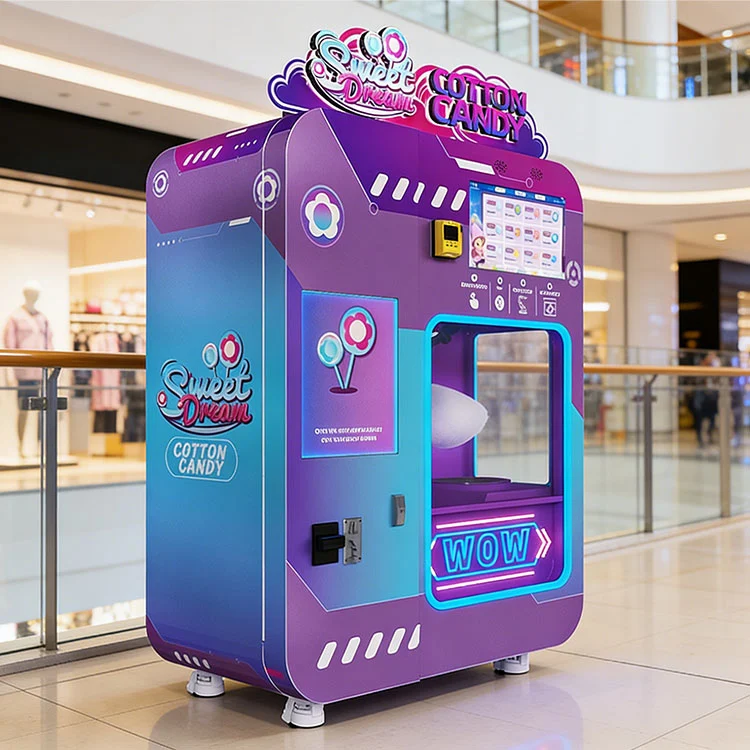
Think of it as a mini cotton candy factory packed into a box. You walk up, tap your phone, wait about a minute, and grab fresh cotton candy from a slot. No messy clean-up, no labor costs, and no sticky fingers for the operator.
What Exactly Is a Cotton Candy Vending Machine?
This isn’t your carnival cotton candy machine with a person spinning a cone. A cotton candy vending machine is a fully automated, self-contained unit that:
- Stores raw sugar in a hopper
- Heats and spins it into fine threads
- Collects the floss on a stick automatically
- Dispenses the finished product through a sealed door
The entire process happens inside a hygienic, enclosed chamber. Customers never touch the machine’s internal parts. It’s like a coffee vending machine, but way more fun.
Most commercial models, like the WM980 Plus, measure about 1.46 meters wide by 0.7 meters deep — roughly the footprint of two parking spaces. They weigh around 250-300 kg, so they’re solid but manageable with a pallet jack.
How Does It Actually Work?
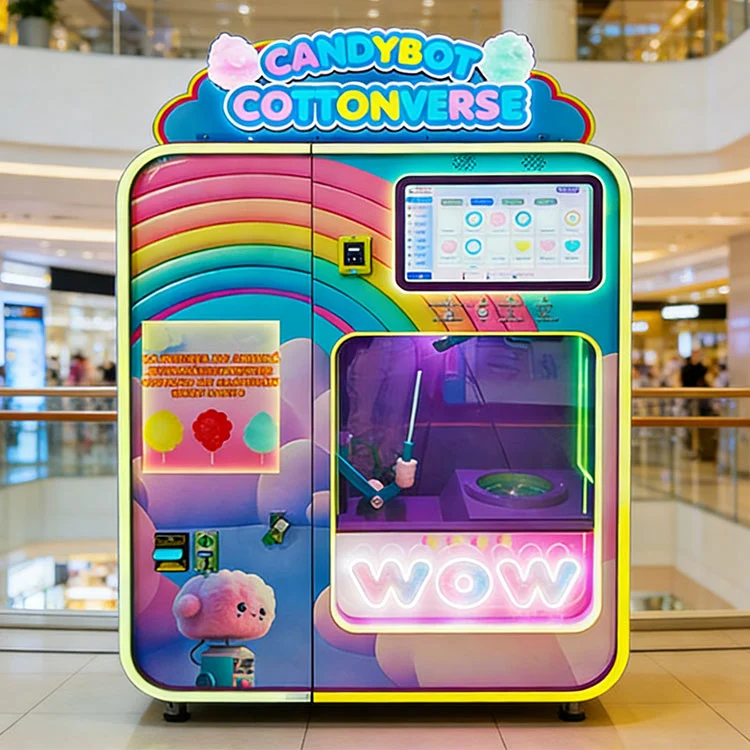
Here’s the step-by-step process, broken down simply:
- Customer selects flavor on the touchscreen (options like milk, strawberry, orange, or Hami melon)
- Payment is processed via card, phone, or cash
- The machine heats up the sugar to exactly the right temperature
- Spinning begins — the sugar melts and is forced through tiny holes, creating thin threads
- A paper stick rotates inside the chamber, collecting the floss into a fluffy ball
- The finished cotton candy drops into a pickup slot
The whole thing takes 70-90 seconds from payment to pickup. Compare that to a human-operated stand where you might wait 3-5 minutes during a rush.
Key Specs You Need to Know
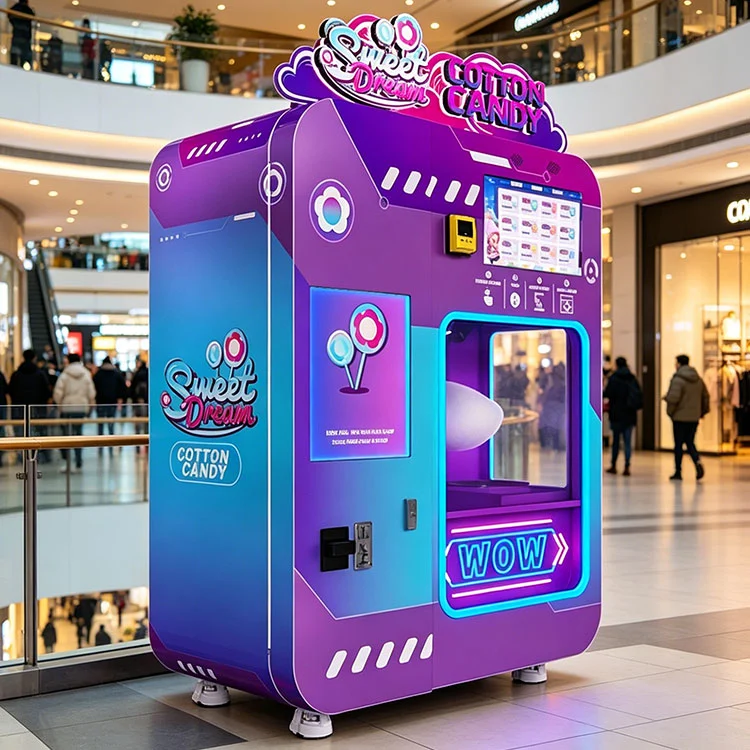
If you’re serious about buying one, here’s what matters:
| Specification | Typical Range |
|---|---|
| Production time | 60-90 seconds per candy |
| Sugar capacity | 6×2kg bags (12 kg total) |
| Power consumption | 500W standby, 2500W working |
| Flavors | 4 standard (customizable) |
| Stick size | 300mm length × 10mm diameter |
| Space required | ~2 square meters |
The production cost per cotton candy is roughly US$0.31 — that includes sugar, stick, and electricity. The suggested retail price ranges from US$5 to US$10. Do the math: that’s a 93.8% to 97% profit margin.
💡 Profit Tip: At just 20 sales per day with a $5 price point, you’re looking at $94 daily profit. In a busy mall, 50 sales per day is realistic — that’s $235 daily or over $7,000 monthly.
Why Businesses Are Switching to These Machines
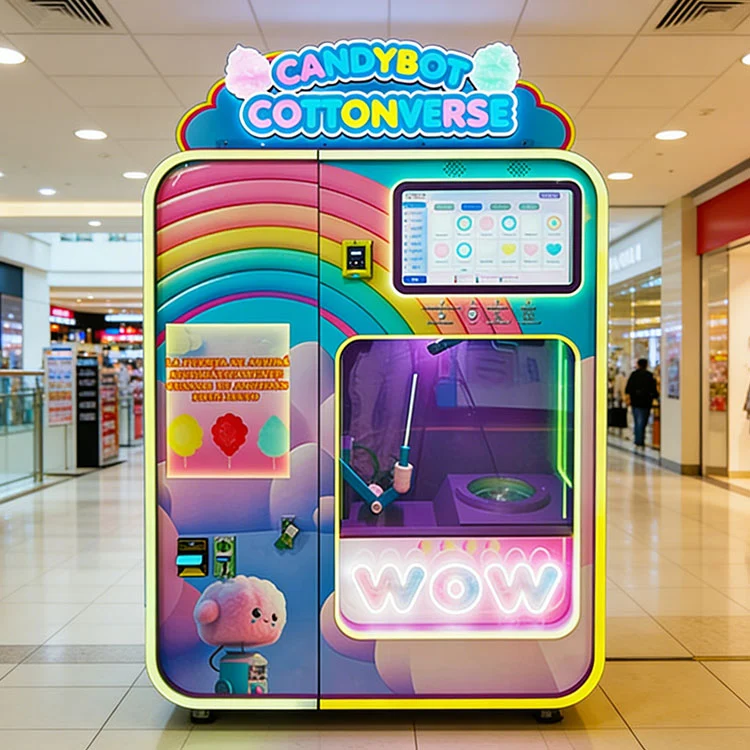
Traditional cotton candy stands have major pain points: labor is expensive, hygiene is questionable, and consistency varies by employee. A vending machine solves all that.
No labor costs. The machine works 24/7. You don’t need to pay someone to stand there for eight hours. You just refill sugar and sticks once a week.
Consistent quality. Every cotton candy comes out the same size and fluffiness. No burnt batches, no undersized portions.
Hygiene advantage. The sealed production chamber means no dust, no insects, and no customer complaints about hair or foreign objects. This matters more now than ever.
Location flexibility. You can put these in places where a human-operated stand wouldn’t work — office building lobbies, hospital waiting areas, university cafeterias, and even hotel corridors.
What About the Sugar and Consumables?
The machines use specific sugar granules — 1.2 to 1.7mm in diameter. Standard cotton candy sugar works, but you’ll get best results with the manufacturer’s recommended supply.
Most suppliers offer four standard flavors:
- Milk (classic white)
- Orange
- Strawberry
- Hami Melon
Paper sticks are 300mm long with a 10mm diameter. You’ll go through these quickly — about 50-100 per day depending on location.
Water is needed for some models to control humidity. Ordinary drinking water works fine.
Here’s the good news: warehouses in California, Quebec, Israel, and the UK stock these consumables. So if you’re in North America or Europe, shipping is fast and affordable.
How Much Money Can You Actually Make?
Let’s run realistic numbers. I’m not going to promise you’ll be a millionaire overnight, but the math is solid.
Scenario A: Low traffic location (10 sales/day)
- Revenue: $50-100 daily
- Cost: $3.10 daily
- Daily profit: $46.90-96.90
- Monthly profit: $1,407-2,907
Scenario B: Medium traffic (20 sales/day)
- Revenue: $100-200 daily
- Cost: $6.20 daily
- Daily profit: $93.80-193.80
- Monthly profit: $2,814-5,814
Scenario C: High traffic (50 sales/day)
- Revenue: $250-500 daily
- Cost: $15.50 daily
- Daily profit: $234.50-484.50
- Monthly profit: $7,035-14,535
The machine itself costs around US$4,999 for the WM980 Plus. Add shipping (US$900-1,300 to North America), a payment system ($400 for Nayax), and initial consumables ($200-300). Total startup cost: roughly US$6,500-7,000.
At 20 sales per day, you recoup your investment in about 2-3 months. At 50 sales per day, it’s closer to 3-4 weeks.
⚠️ Caution: Location is everything. A machine in a quiet suburban laundromat won’t perform like one in a busy shopping mall. Test different spots before committing to a long-term lease.
What Makes a Good Supplier?
Not all cotton candy vending machines are created equal. Here’s what to look for:
International certifications. CE, UKCA, RoHS, KC, BRC, Kosher, HALAL — these aren’t just alphabet soup. They mean the machine meets safety and quality standards in different markets. Wider Matrix, for example, has all these certifications on their products.
Real experience. The company behind the machine matters. Wider Matrix has been in the automation industry since 2016 and has exported over 3,000 machines to more than 130 countries. That’s a track record you can verify.
After-sales support. What happens when something breaks? Look for suppliers offering:
- 1-year warranty
- Lifetime technical support
- Spare parts shipped by air (at their cost for non-abuse issues)
- Step-by-step video guides
- 24/7 engineer support (multiple shifts)
Customization options. Can they modify the machine for your specific needs? Wider Matrix offers custom software and hardware solutions — useful if you want different flavors, unique branding, or integration with your existing payment system.
Where Should You Place One?
The best locations combine high foot traffic with a captive audience:
- Shopping malls — especially near food courts or children’s play areas
- Amusement parks — cotton candy is practically mandatory here
- Movie theaters — people want snacks before shows
- Bowling alleys and arcades — family entertainment venues
- Airport terminals — travelers with time to kill
- Hospital waiting rooms — comfort food for stressed families
- University campuses — students love cheap treats
The machine needs about 2 square meters and access to a standard power outlet (110V or 220V, depending on your region). No water connection required for most models.
Common Questions Buyers Ask
Q: Do I need special training to operate it?
A: No. The machine is designed to be plug-and-play. Refilling sugar takes about 5 minutes. The touchscreen interface guides you through everything. Most suppliers provide training videos and a quick-start guide.
Q: How often do I need to clean it?
A: Weekly cleaning is recommended. The sugar chamber needs to be wiped down to prevent buildup. The stick mechanism should be checked for residue. It’s a 15-minute job.
Q: What happens if the machine jams?
A: Most modern machines have self-diagnostic systems. They’ll display an error code on the screen. Common issues like a stuck stick or low sugar are easy to fix. For serious problems, you call the 24/7 support line.
Q: Can I customize the flavors?
A: Yes, within reason. The standard machines support four flavors. Some suppliers can modify the hopper system for additional flavors. You can also source specialty sugars (blue raspberry, bubble gum, etc.) as long as the granule size matches.
Q: Is the machine weatherproof?
A: Indoor use only. These machines aren’t designed for outdoor placement. Temperature and humidity affect the sugar spinning process. Keep them in climate-controlled environments.
Q: How long does the machine last?
A: With proper maintenance, 5-8 years is realistic. The heating elements and motors are rated for hundreds of thousands of cycles. The touchscreen might need replacement after 3-4 years of heavy use.
Q: Can I rent the machine instead of buying?
A: Some suppliers offer lease-to-own options. It’s less common for specialized machines like cotton candy venders. Buying outright is usually more cost-effective if you plan to operate for more than 6 months.
Q: What payment systems work?
A: Most machines support credit/debit cards, Apple Pay, Google Pay, and cash. Nayax is the industry standard for payment processing. Coin acceptors cost about $40, bill acceptors range from $180 to $350 depending on quality.
💡 Key Takeaway: The cotton candy vending machine market is still relatively small. Getting in early with a reliable machine and good locations gives you a real advantage over competitors who haven’t discovered this niche yet.
Expert Insight
“After working with vending machine operators for over a decade, I’ve noticed one consistent pattern: the businesses that succeed focus on equipment reliability above everything else. A machine that breaks down twice a week will kill your profits — not just from lost sales, but from the frustration of constant maintenance. When evaluating cotton candy vending machines, don’t just look at the price tag. Look at the build quality, the certifications, and the support infrastructure behind it. A $4,999 machine that runs for years is far cheaper than a $3,000 machine that needs monthly repairs.”
— David Chen, Vending Industry Consultant with 12 years experience in automated retail solutions