Máquina de nail art instantáneo: reseña sincera de 2026 y guía empresarial
Una máquina de decoración de uñas instantánea puede generar más de $13 de ganancia por venta, y algunos propietarios de negocios afirman haber recuperado totalmente su inversión en menos de 30 días. Esa es la realidad comercial que se esconde tras los llamativos anuncios de 30 segundos. Si ya has superado el impacto inicial y te estás preguntando si esta tecnología es un negocio viable o una forma confiable de conseguir unas uñas con calidad de salón, estás en el lugar adecuado. Dejaremos de lado el bombo publicitario y compararemos lo que realmente importa: los costos reales, la calidad de impresión y qué modelo se adapta mejor a tus objetivos, ya seas un comprador o un emprendedor.
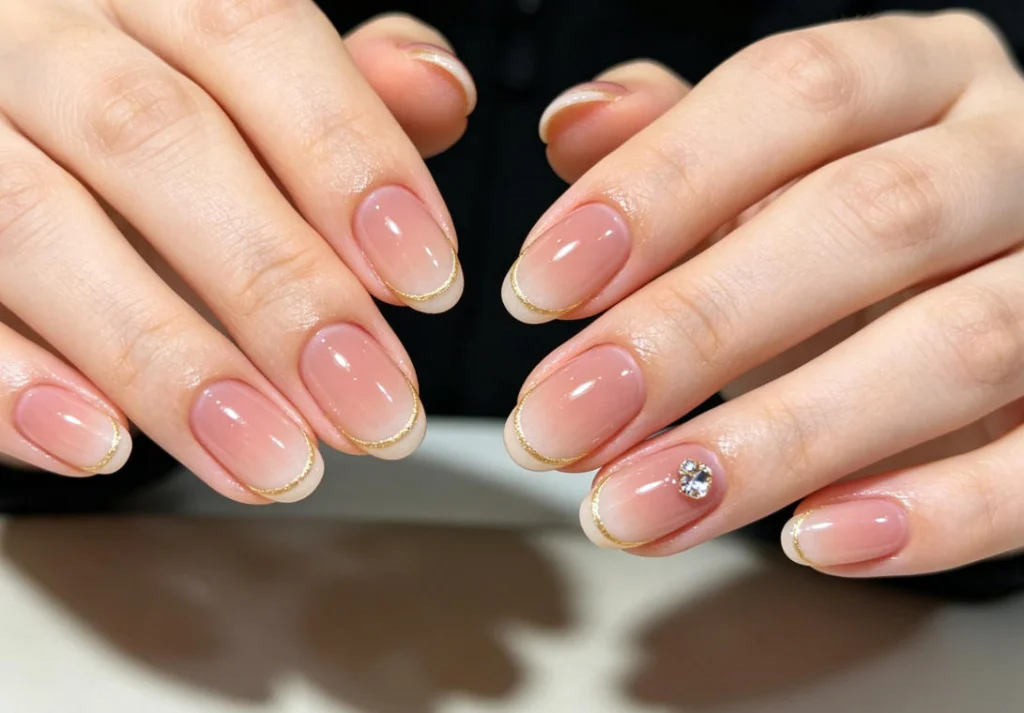
Olvídate de los manuales complicados. El proceso básico es sorprendentemente sencillo, y es el mismo tanto si usas un dispositivo doméstico como el Nailbot como si utilizas una máquina expendedora comercial. El cliente elige un diseño, ya sea de una galería preinstalada o subiendo su propia imagen. Luego, la máquina utiliza un cabezal de impresión especializado (por lo general, UV o de inyección de tinta) para aplicar el diseño directamente sobre una uña postiza o una uña natural recubierta de gel. Una luz LED UV incorporada seca la tinta al instante, lo que la hace resistente a las manchas y duradera.
La clave —y donde las máquinas marcan una gran diferencia— está en los detalles: la alineación. Los modelos más económicos requieren un posicionamiento manual que resulta frustrante y que a menudo provoca errores de impresión. Las unidades comerciales avanzadas, como las que desarrollamos en Wider Matrix, utilizan Reconocimiento inteligente con IA para detectar automáticamente la uña y colocar el diseño a la perfección, lo que elimina los errores y el desperdicio de materiales. Todo el proceso, desde el pago hasta la recogida, dura unos 5 minutos en una máquina expendedora bien diseñada.
💡 Consejo clave: Busca máquinas con alineación automática. El posicionamiento manual es la principal causa de quejas de los clientes y del desperdicio de consumibles.
Comparativa: Aparato doméstico frente a máquina expendedora comercial
Probablemente estés viendo dos tipos distintos de dispositivos en línea: los pequeños aparatos para “imprimir en casa” y los quioscos de venta automática más grandes y sin personal. Cada uno tiene una finalidad totalmente diferente. Analicémoslo.
Un dispositivo doméstico, como los que se anuncian en Instagram, es un aparato de belleza personal. Se compra una sola vez por unos cientos de dólares. El gasto continuo recae en los cartuchos de tinta exclusivos y las puntas de uñas en blanco. Es ideal para aficionados a quienes les encanta cambiar de look constantemente, pero el área de impresión es pequeña y la curva de aprendizaje para alinear el dispositivo puede ser bastante pronunciada.
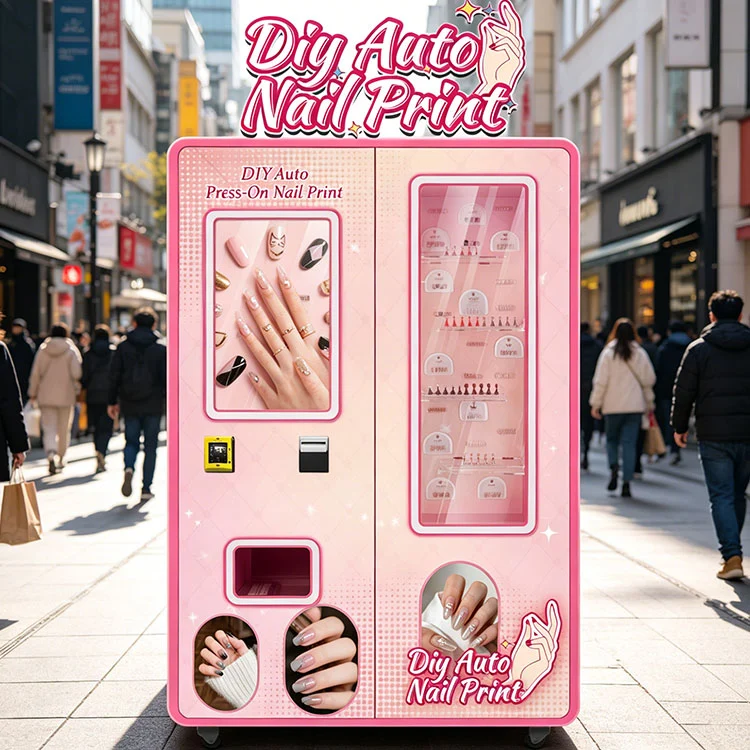
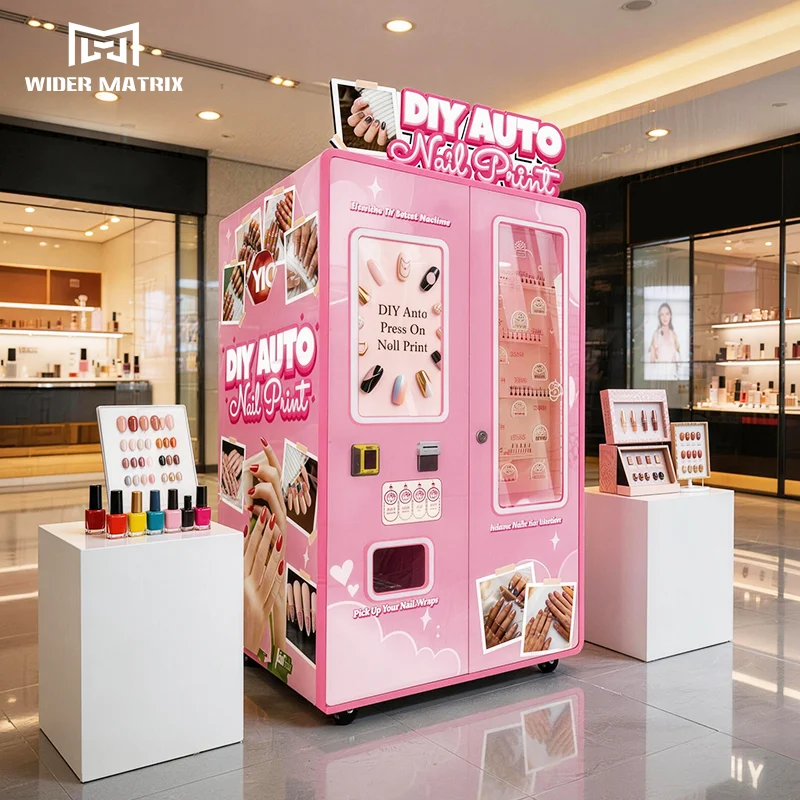
Una máquina expendedora comercial de productos para decorar las uñas, como la nuestra Modelo WM860, es un negocio que genera ingresos. Con un precio de $5,800, es una inversión seria con un rendimiento considerable. Tiene capacidad para 720 juegos de uñas, funciona las 24 horas del día, los 7 días de la semana, y está diseñado para ofrecer una gran durabilidad en lugares muy transitados, como centros comerciales y aeropuertos. El modelo de negocio es la diferencia clave: tú no eres el usuario; tus clientes lo son. Te pagan un promedio de $14,99 por un juego que te cuesta aproximadamente $1,02 producir, lo que genera un margen de ganancia de más de $13.
Aquí tienes una breve comparación:
| Característica | Impresora de uñas doméstica (p. ej., Nailbot) | Máquina expendedora comercial (p. ej., WM860) |
|---|---|---|
| Objetivo principal | Uso personal / Aficiones | Negocio minorista automatizado |
| Costo inicial | $200 – $600 | $5,800+ (incluye la puesta en marcha del negocio) |
| Usuario | Tú | Tus clientes de pago |
| Métrica clave | Coste por diseño | Beneficio por venta / Cronología del ROI |
| Ideal para | Personas a las que les encanta el arte de las uñas «hazlo tú mismo» | Emprendedores que buscan ingresos pasivos |
El desglose del costo real: no se trata solo de la máquina
Aquí es donde la mayoría de los contenidos de marketing se vuelven imprecisos. Hablemos de cifras reales, sobre todo en lo que respecta a la oportunidad que ofrecen las máquinas expendedoras comerciales. El precio de la máquina es solo el principio.
Es probable que tu capital inicial total ronde los $10,900. Esto incluye la máquina WM860 (1 800 TP4T), el envío a Norteamérica (900-1 300 TP4T), un sistema de pago inteligente como Nayax (~400 TP4T), y su inventario inicial de juegos de uñas, tinta y kits de herramientas (~$2,000-$3,000).
El número áureo es tu coste por venta. Para un operador comercial que utilice un WM860:
Cuando ves cifras como esas, las proyecciones del retorno de la inversión cobran sentido. Con 20 ventas al día, podrías recuperar tu inversión inicial en aproximadamente un mes. Con 50 ventas al día, ese plazo se reduce a menos de dos semanas.
💡 Información importante: Calcule siempre el ROI basándose en beneficio por venta, no los ingresos. Ten en cuenta los gastos de alquiler y electricidad de tu local, que suelen ser bajos en el caso de las máquinas expendedoras.
Guía para compradores: qué hay que tener en cuenta (más allá del precio)
Ya sea que compres para uso personal o profesional, no te dejes deslumbrar por la pantalla. Presta atención a estas especificaciones técnicas y de soporte.
💡 Consejos prácticos: Solicite una demostración en vivo o pida referencias de clientes. Ver la máquina en funcionamiento, especialmente su proceso de alineación, le dará más información que cualquier hoja de especificaciones.
Solución de problemas comunes antes de que se produzcan
Estar preparado ahorra dinero y frustraciones. A continuación, te presentamos los problemas más comunes y cómo evitarlos.
Una visión más amplia: por qué esta tecnología ha llegado para quedarse
El nail art instantáneo no es una moda pasajera; forma parte de una tendencia más amplia hacia el comercio minorista hiperpersonalizado y bajo demanda. Para los consumidores, supone una gratificación inmediata y una forma única de expresarse. Para los emprendedores, es un negocio compacto y de alto margen con una rentabilidad muy atractiva.
Desde 2016 nos hemos especializado en soluciones de automatización y máquinas expendedoras, y hemos enviado más de 3.000 máquinas a más de 130 países. Esa experiencia global nos ha demostrado que el éxito depende de fiabilidad y experiencia del usuario. Todas las máquinas de Wider Matrix, incluidas nuestras unidades de decoración de uñas, cuentan con certificaciones internacionales (CE, UKCA, RoHS) y cuentan con el respaldo de un equipo de cadena de suministro con amplia experiencia para garantizar que recibas la asistencia que necesitas, estés donde estés.
💡 Conclusión final: Haga sus cálculos, priorice la fiabilidad por encima del precio más bajo y elija un socio con un servicio de asistencia global de confianza. La máquina adecuada no es un gasto, sino un activo.
Preguntas frecuentes
P: ¿Cuánto tiempo dura un juego de uñas comprado en una máquina expendedora?
R: Si se aplican correctamente con el pegamento incluido, las uñas postizas de una máquina de calidad pueden durar entre 7 y 14 días, al igual que las que se colocan en un salón de belleza. La durabilidad depende de la preparación de las uñas, el nivel de actividad y la calidad del adhesivo.
P: ¿La tinta es segura para mis uñas?
R: Las máquinas de calidad utilizan tintas no tóxicas e inodoras que se secan al instante con luz ultravioleta, creando una capa endurecida y segura. Nuestros materiales cumplen con normas internacionales de seguridad y respeto al medio ambiente, como la RoHS.
P: ¿De verdad se puede ganar dinero con una máquina expendedora de uñas?
R: Sí, si se elige la ubicación adecuada. Las zonas muy transitadas, como centros comerciales, campus universitarios y aeropuertos, son ideales. Con un margen de ganancia de ~87% ($13 de ganancia por cada $14,99 de venta), vender 20 juegos al día puede generar ingresos considerables.
P: ¿Cuál es la diferencia entre la impresión UV y la impresión por inyección de tinta para las uñas?
R: La impresión UV utiliza tintas que se endurecen (curan) al instante con luz ultravioleta, lo que proporciona de inmediato un acabado duradero y resistente a las manchas. Algunos sistemas de inyección de tinta utilizan tintas de secado más lento. En el sector de las máquinas expendedoras, el curado UV-LED es el estándar profesional en cuanto a velocidad y calidad.
P: ¿Con qué frecuencia debo rellenar la máquina?
R: Depende del volumen de ventas. Nuestro modelo WM860 tiene capacidad para 720 juegos de uñas. Si vendes 20 juegos al día, tendrías que reponer existencias aproximadamente cada 36 días. El sistema de gestión en la nube envía alertas cuando el inventario está bajo.
P: ¿Qué pasa si la máquina se descompone?
R: Por eso es fundamental elegir bien al proveedor. Busque una garantía completa (nosotros ofrecemos 1 año) y asistencia técnica las 24 horas del día, los 7 días de la semana. Nuestras máquinas también cuentan con un sistema de autorreparación capaz de diagnosticar automáticamente y reiniciarse ante muchos fallos de software comunes.
P: ¿Pueden los clientes subir cualquier diseño?
R: Sí, dentro de lo razonable. El software permite subir imágenes mediante un código QR. Por lo general, el sistema guía a los usuarios para recortar y colocar el diseño. Los logotipos protegidos por derechos de autor o las imágenes inapropiadas se pueden filtrar mediante ajustes personalizados del software.
P: ¿Son difíciles de manejar y mantener estas máquinas?
R: Para nada. La interfaz para el cliente está totalmente automatizada. Para el propietario, el mantenimiento rutinario consiste en reponer las piezas de uña y los cartuchos de tinta cada pocas semanas, lo cual lleva solo unos minutos. Se proporcionan videos con instrucciones detalladas paso a paso y asistencia remota.
Cita de un experto
“El mercado de las máquinas de nail art instantáneo se está dividiendo en dos. Por un lado, están los dispositivos de consumo que satisfacen las ganas de crear a nivel personal. Por otro, se encuentran los equipos comerciales de alta gama que están generando nuevas oportunidades para las pequeñas empresas. Los emprendedores que tienen éxito son aquellos que lo tratan como un negocio minorista real. Buscan meticulosamente las ubicaciones, comprenden la economía de sus unidades y, lo más importante, se asocian con proveedores de equipos que ofrecen una gran fiabilidad y un verdadero servicio posventa. Recortar gastos en la calidad de fabricación de la máquina o en la tecnología de alineación puede ahorrar unos cuantos miles de dólares inicialmente, pero conduce a reparaciones constantes, reembolsos a los clientes y, en última instancia, al fracaso del negocio. La tecnología está probada; lo que importa es la ejecución”.”
— Michael Chen, asesor sénior para los sectores de la automatización minorista y las máquinas expendedoras